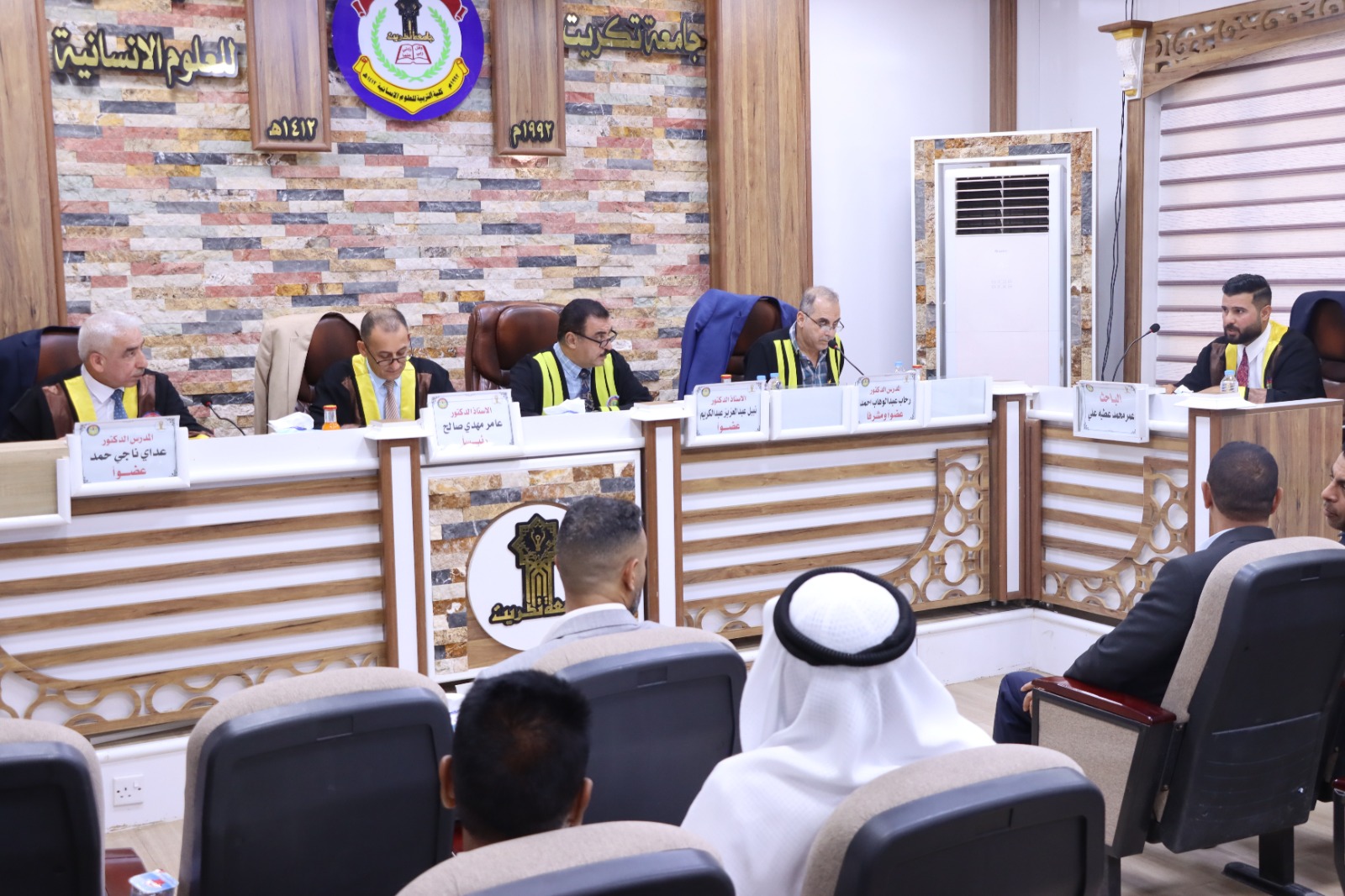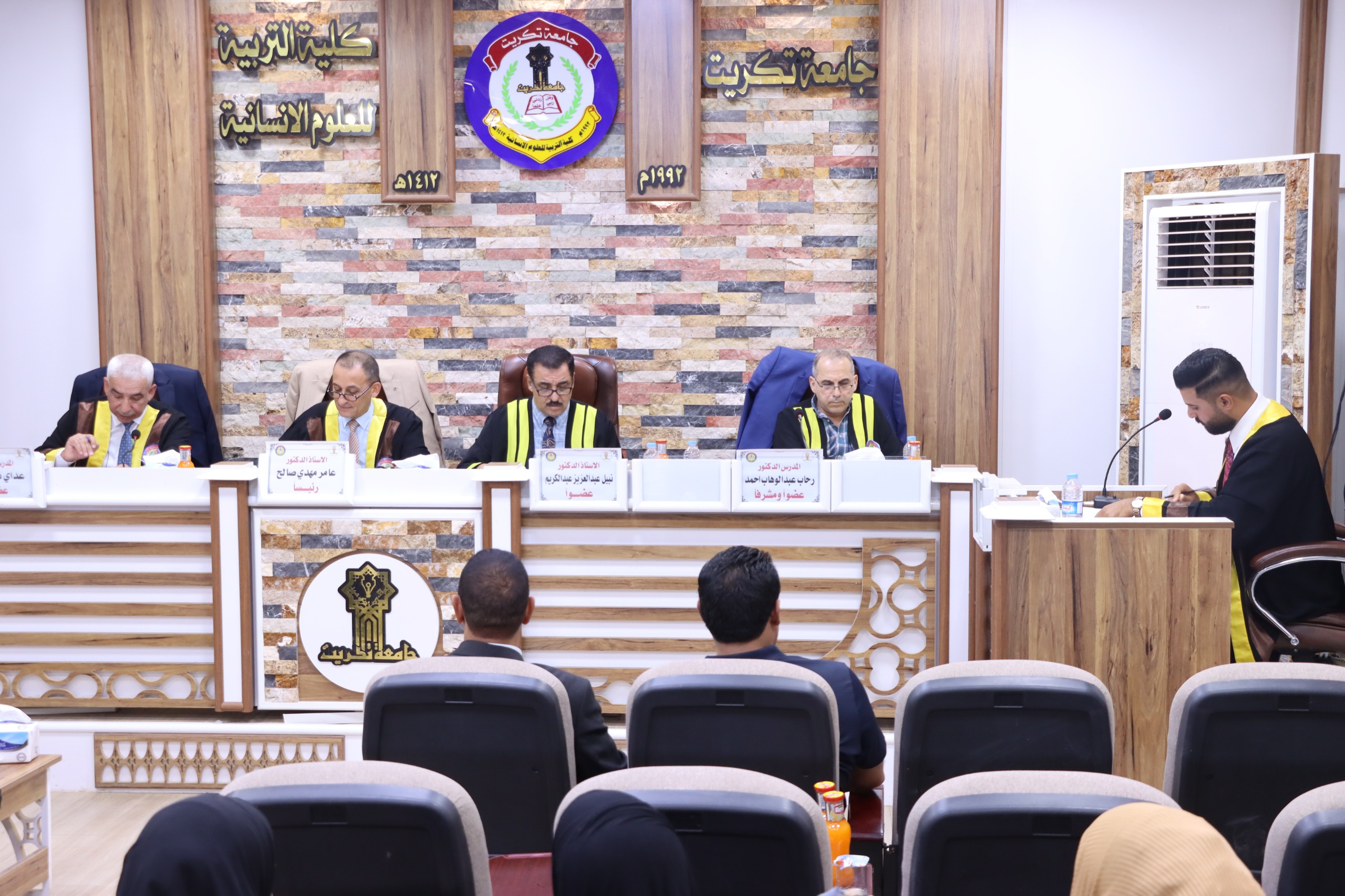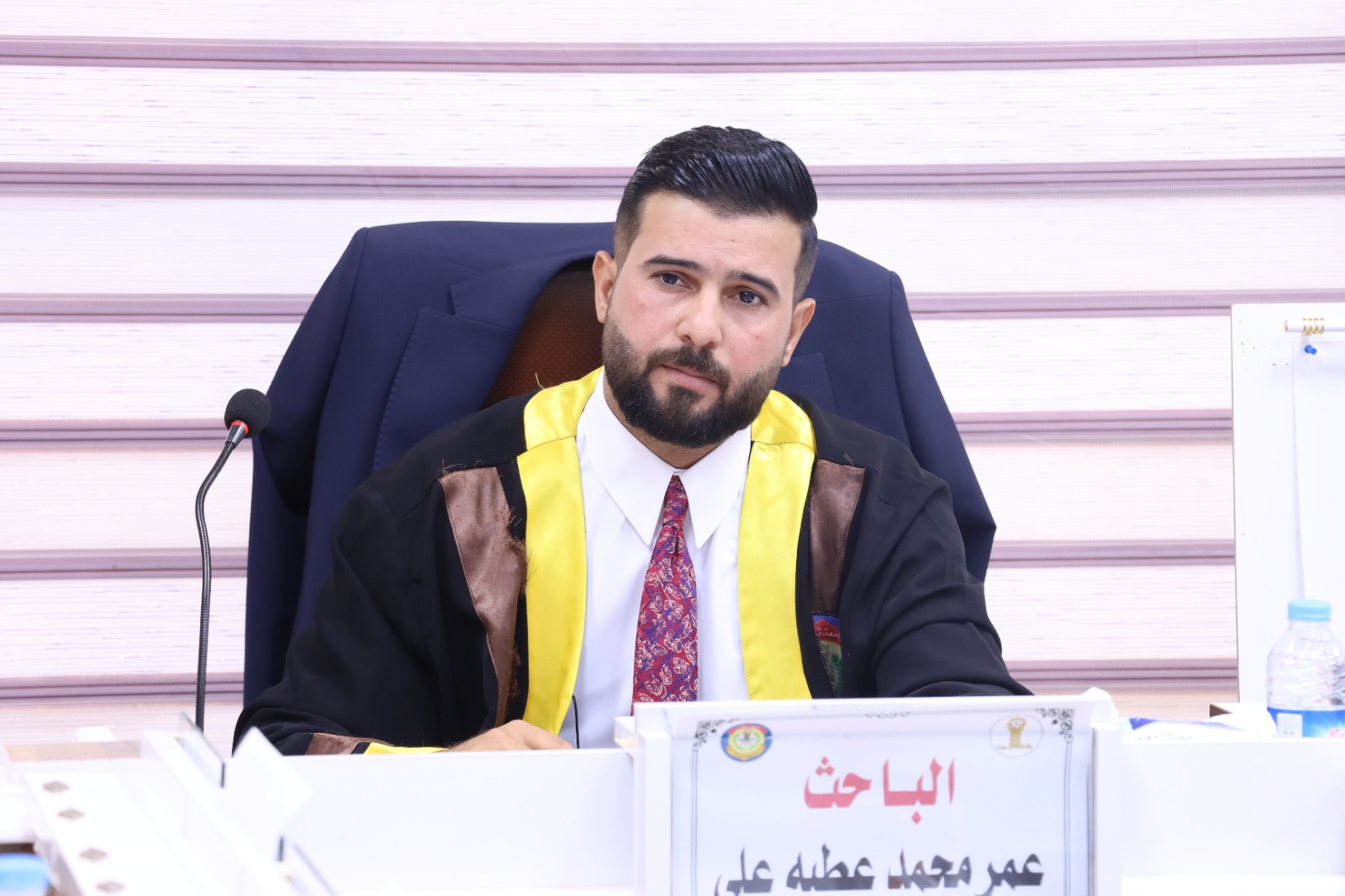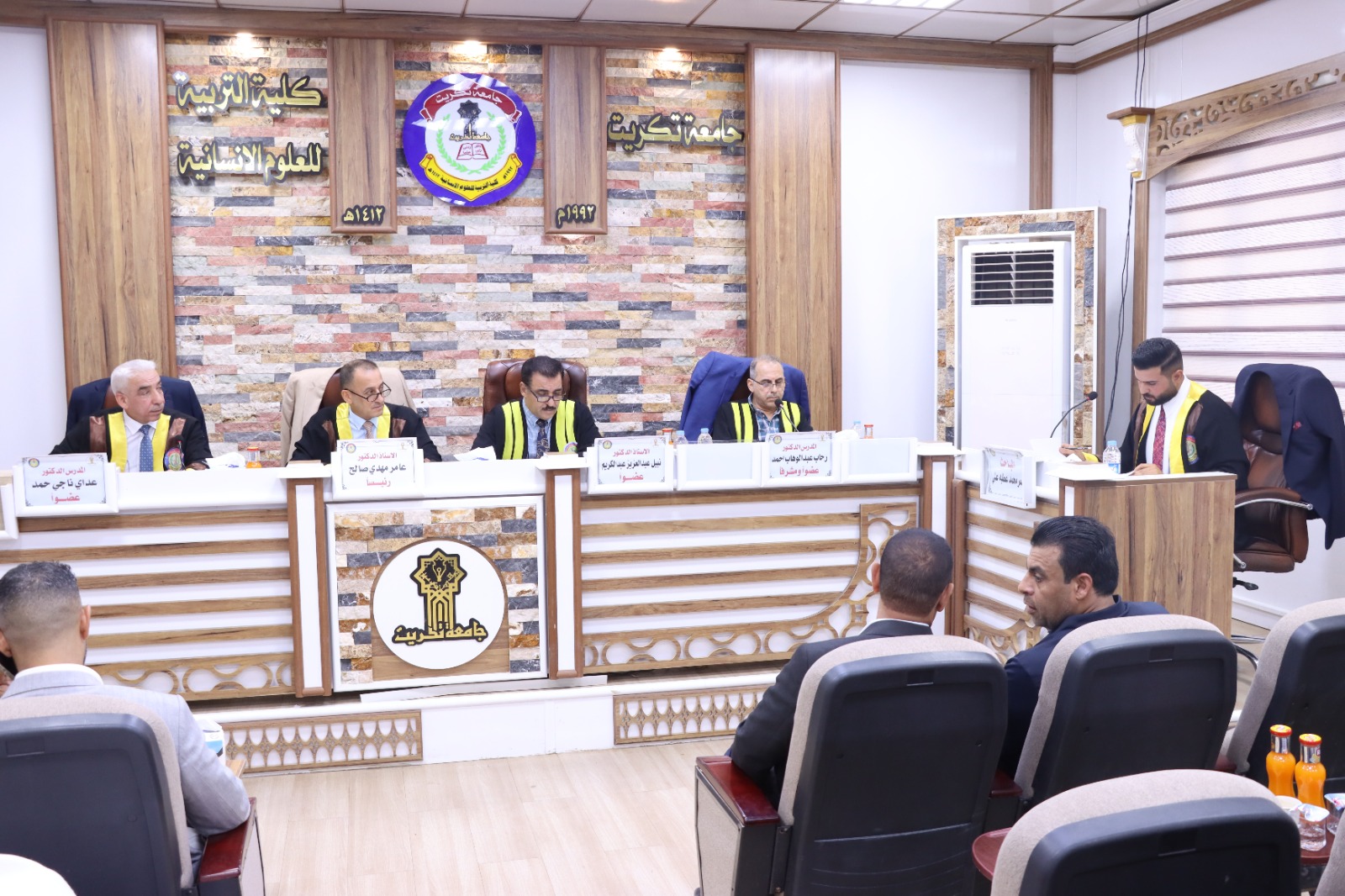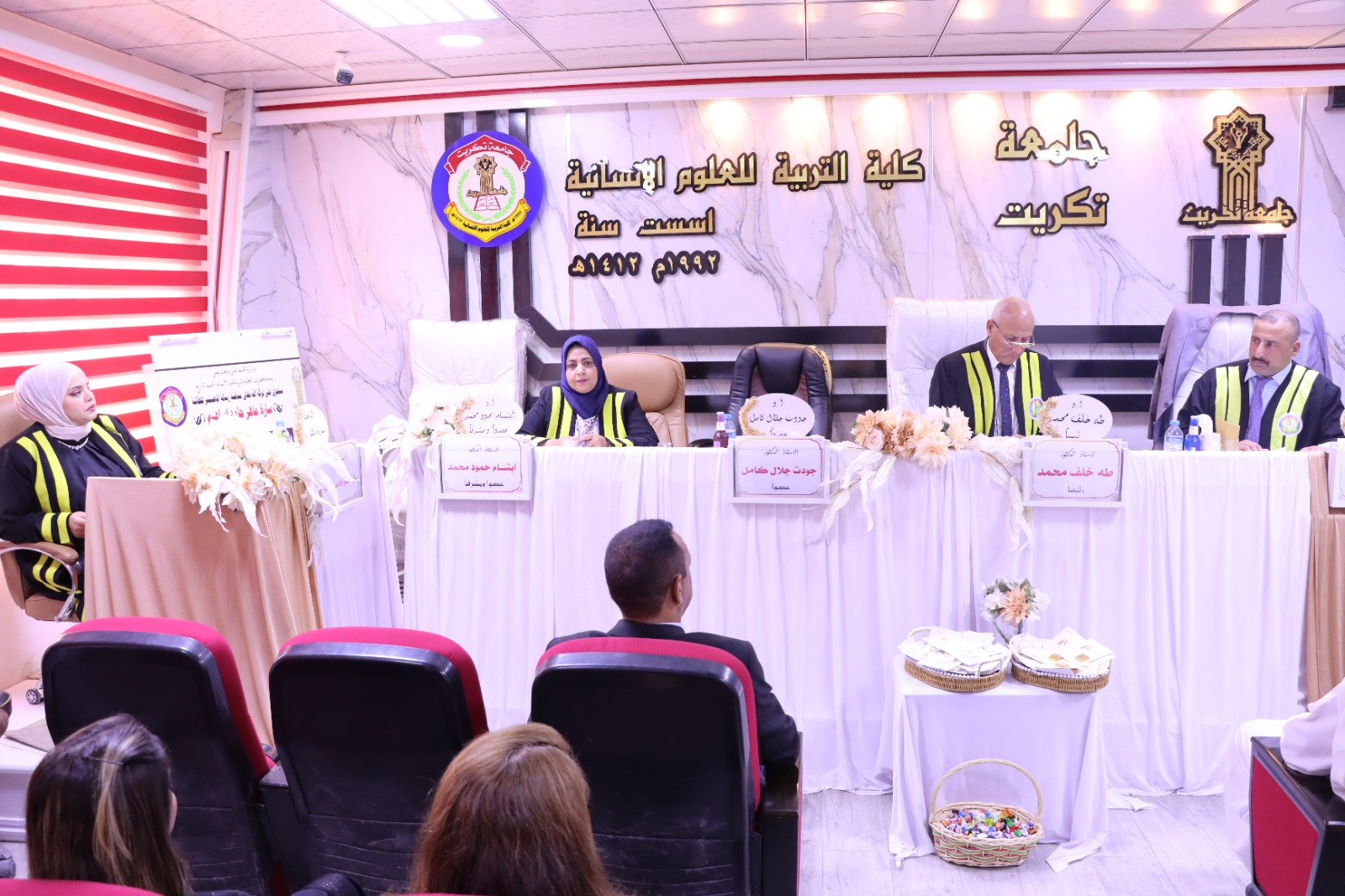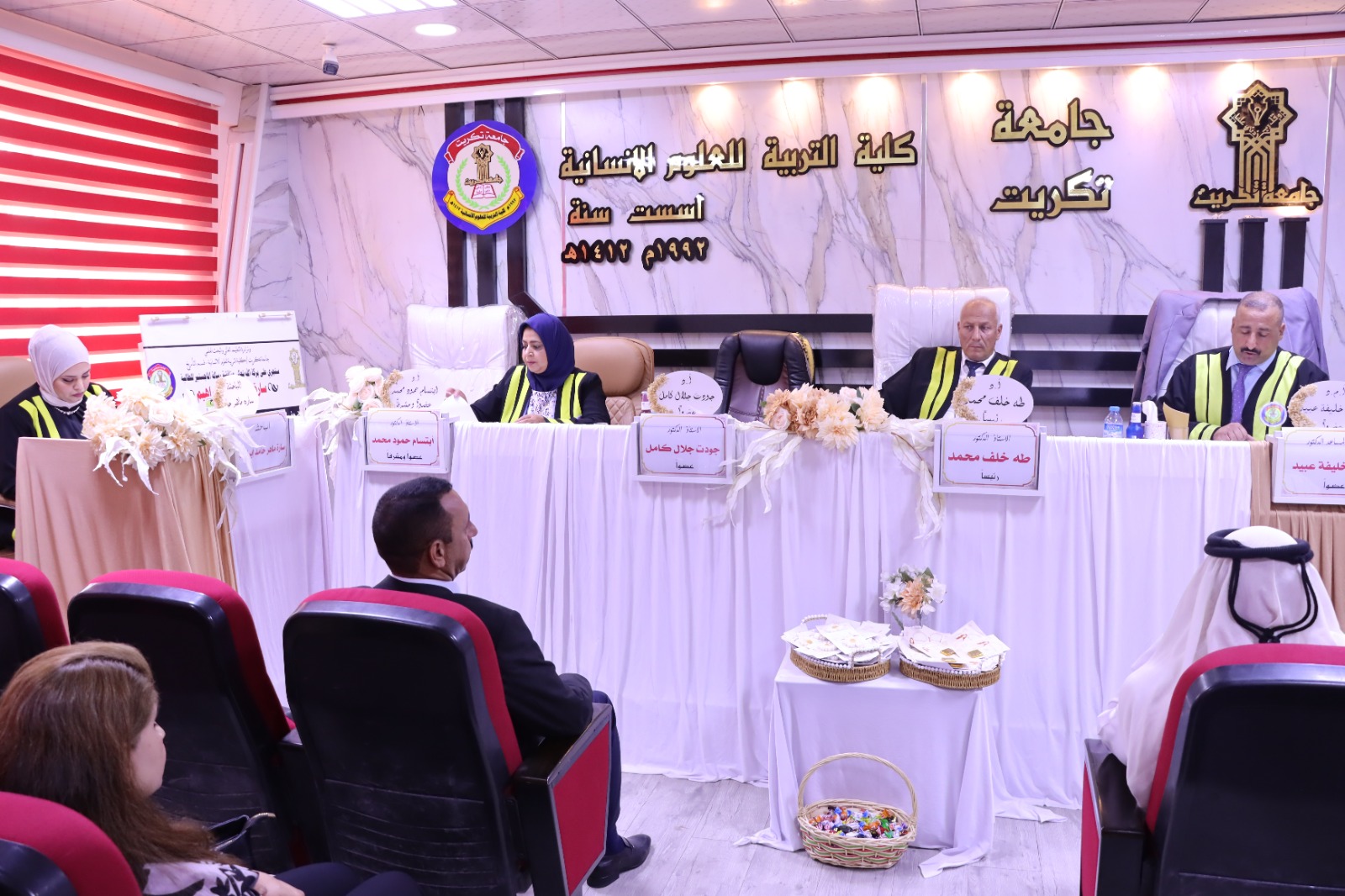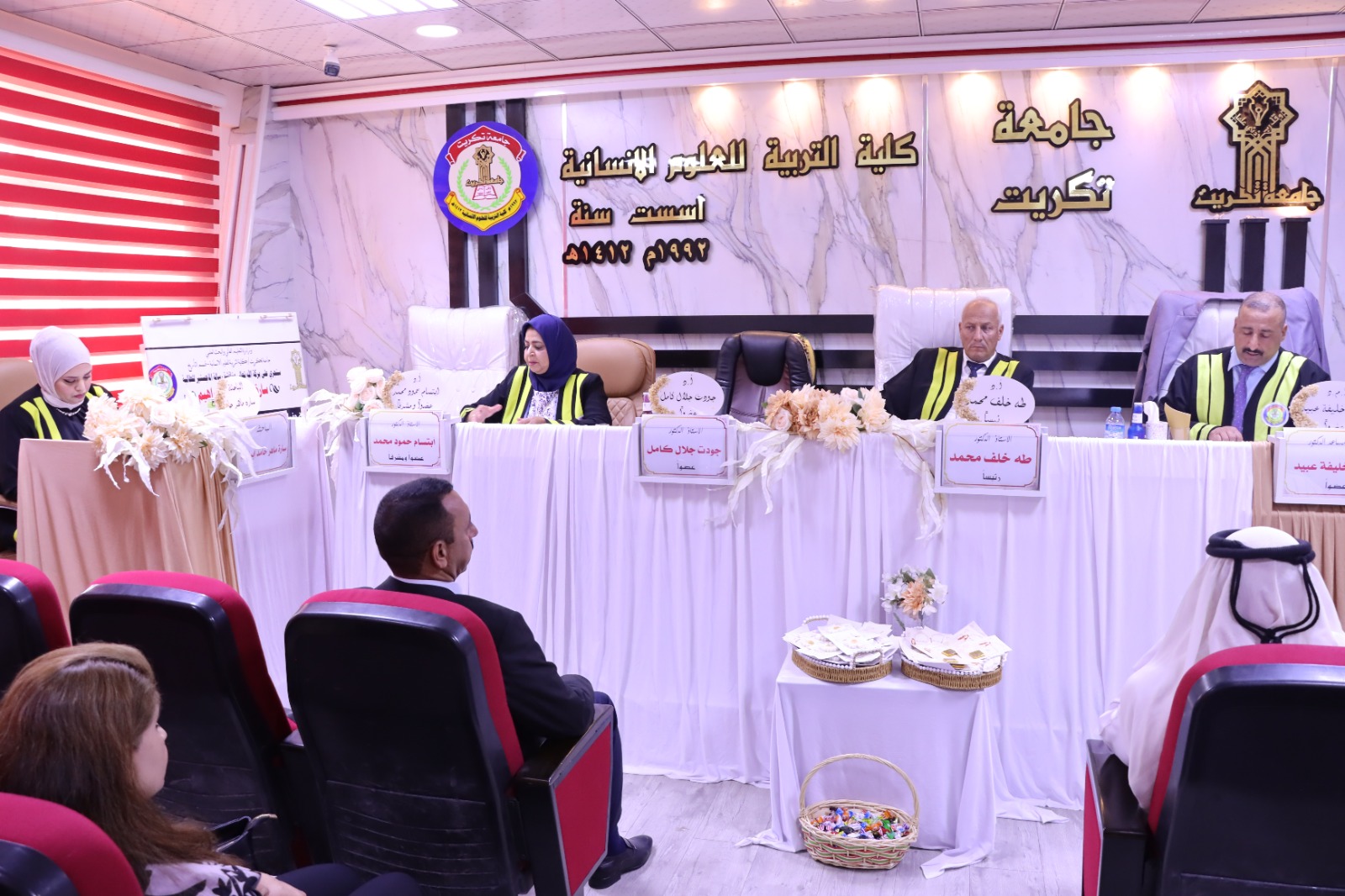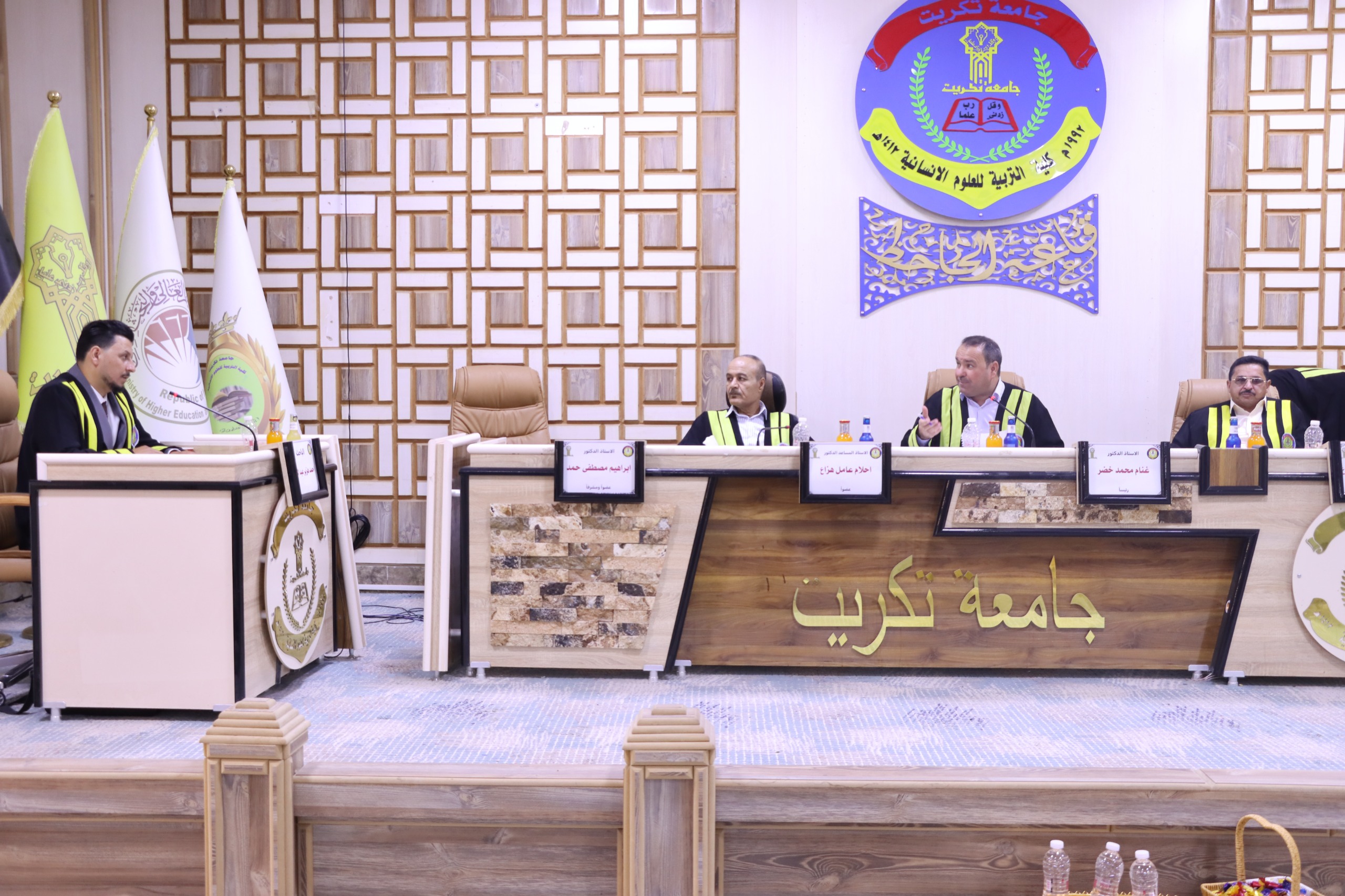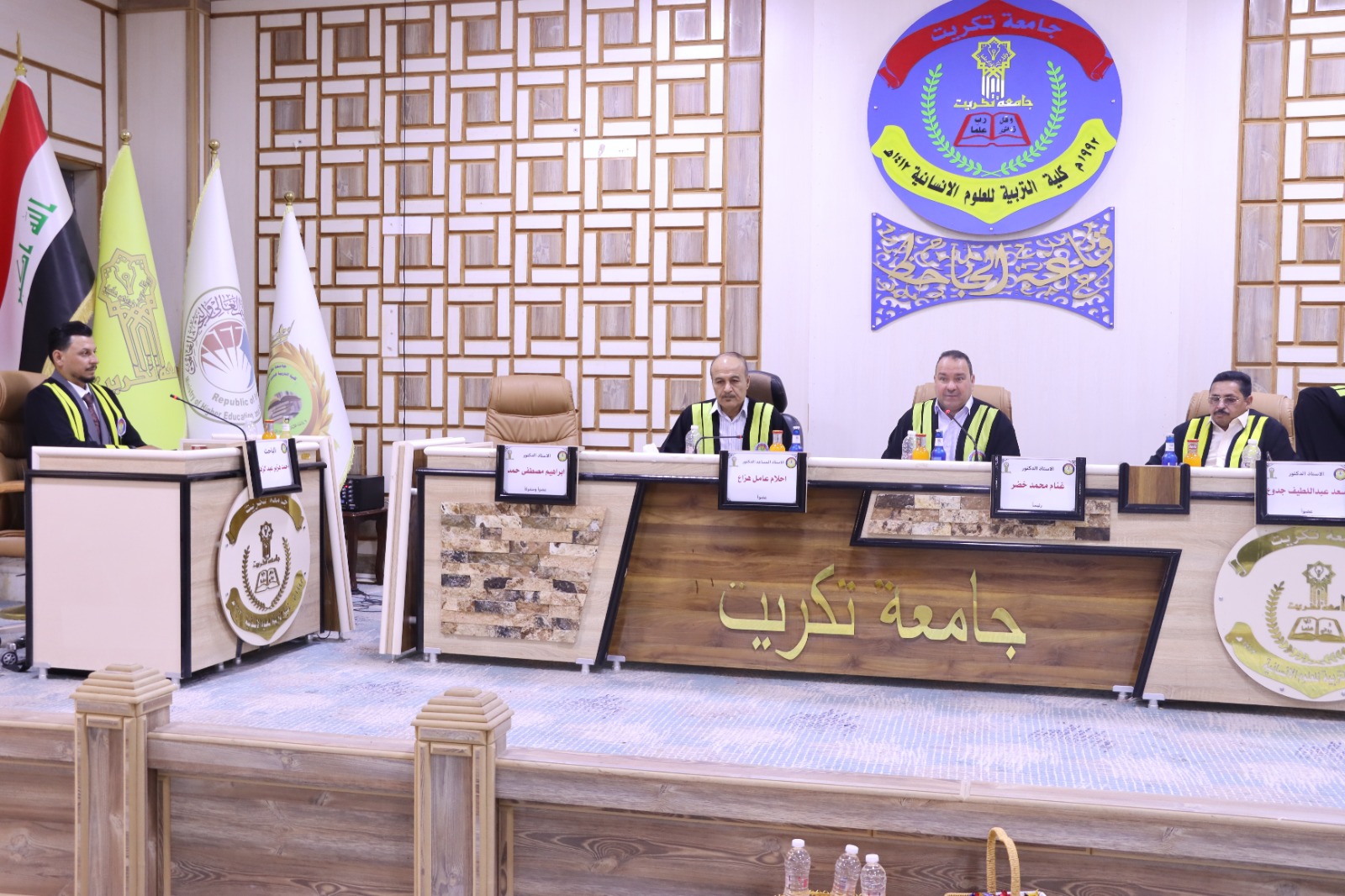
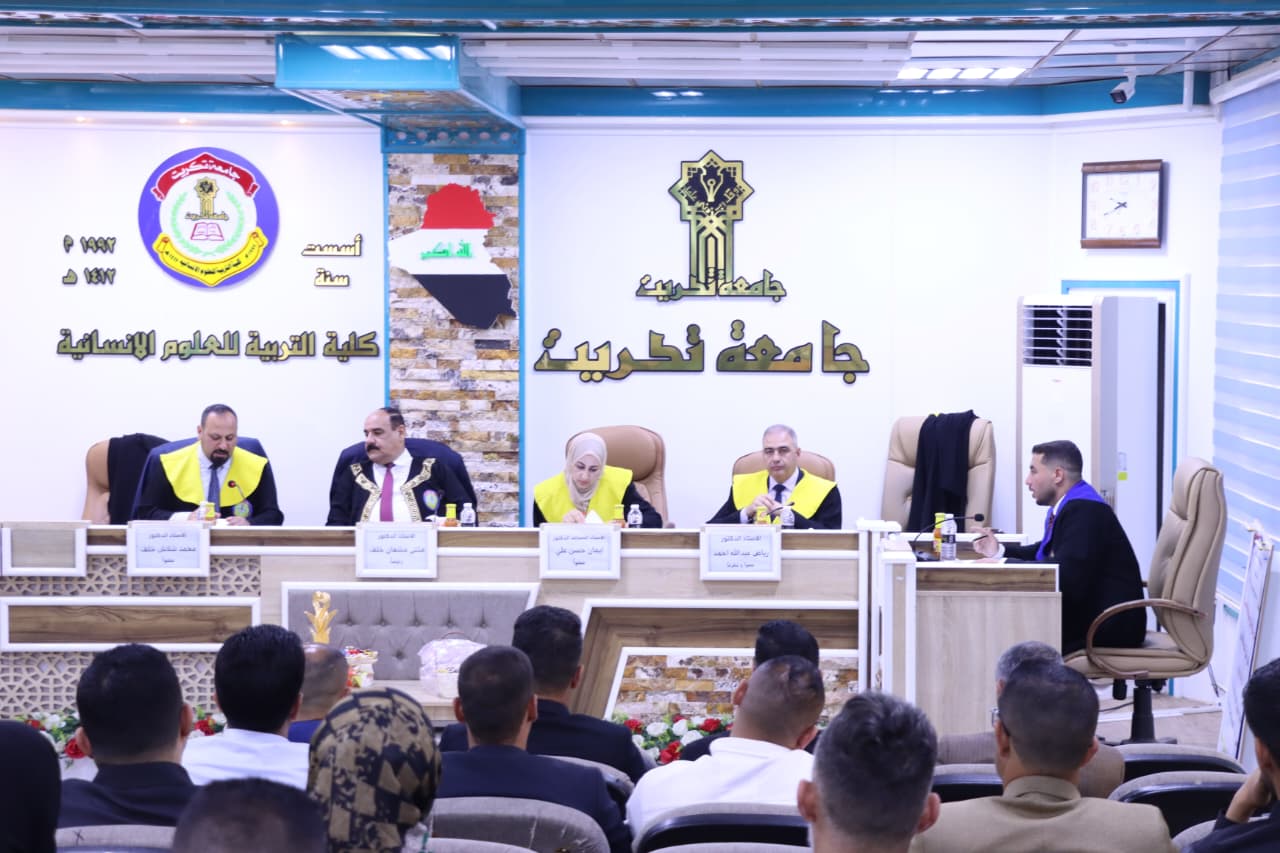
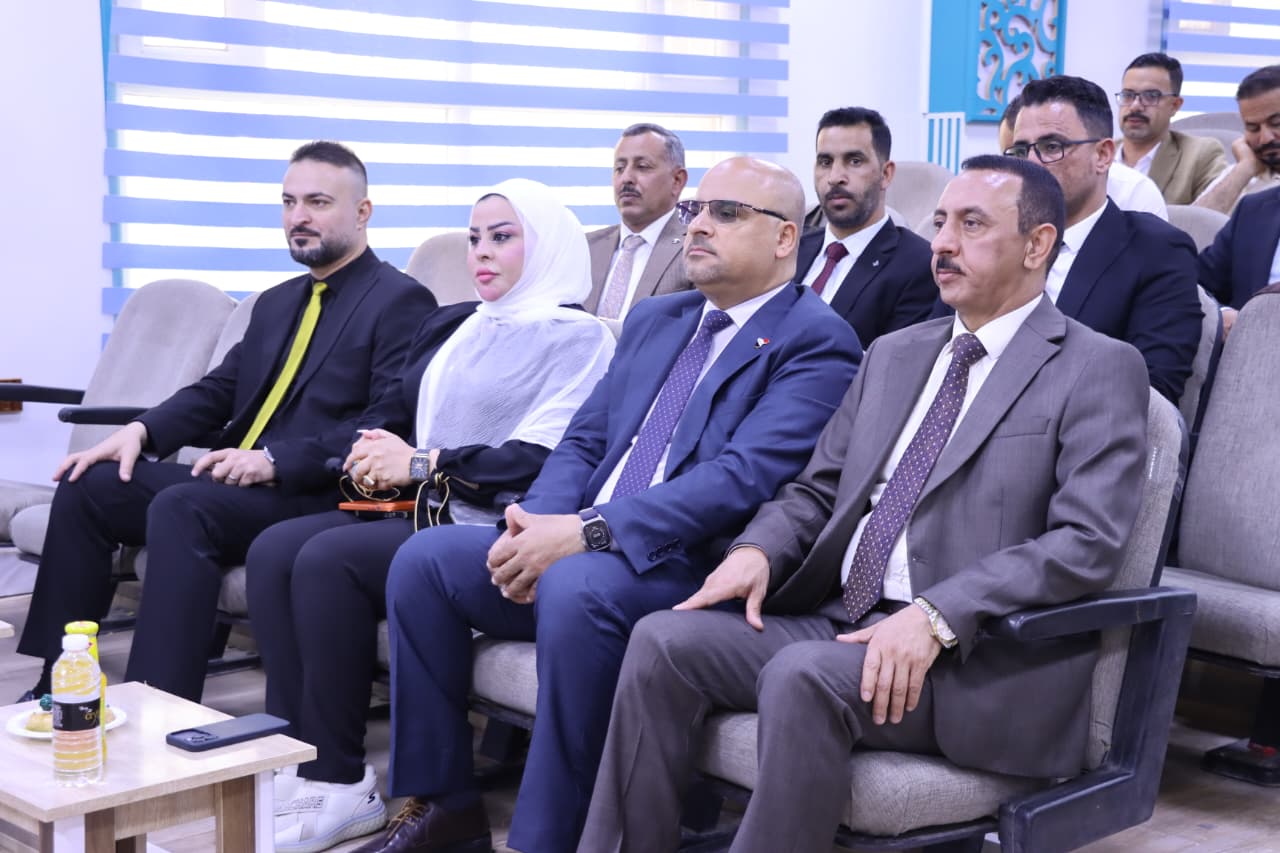
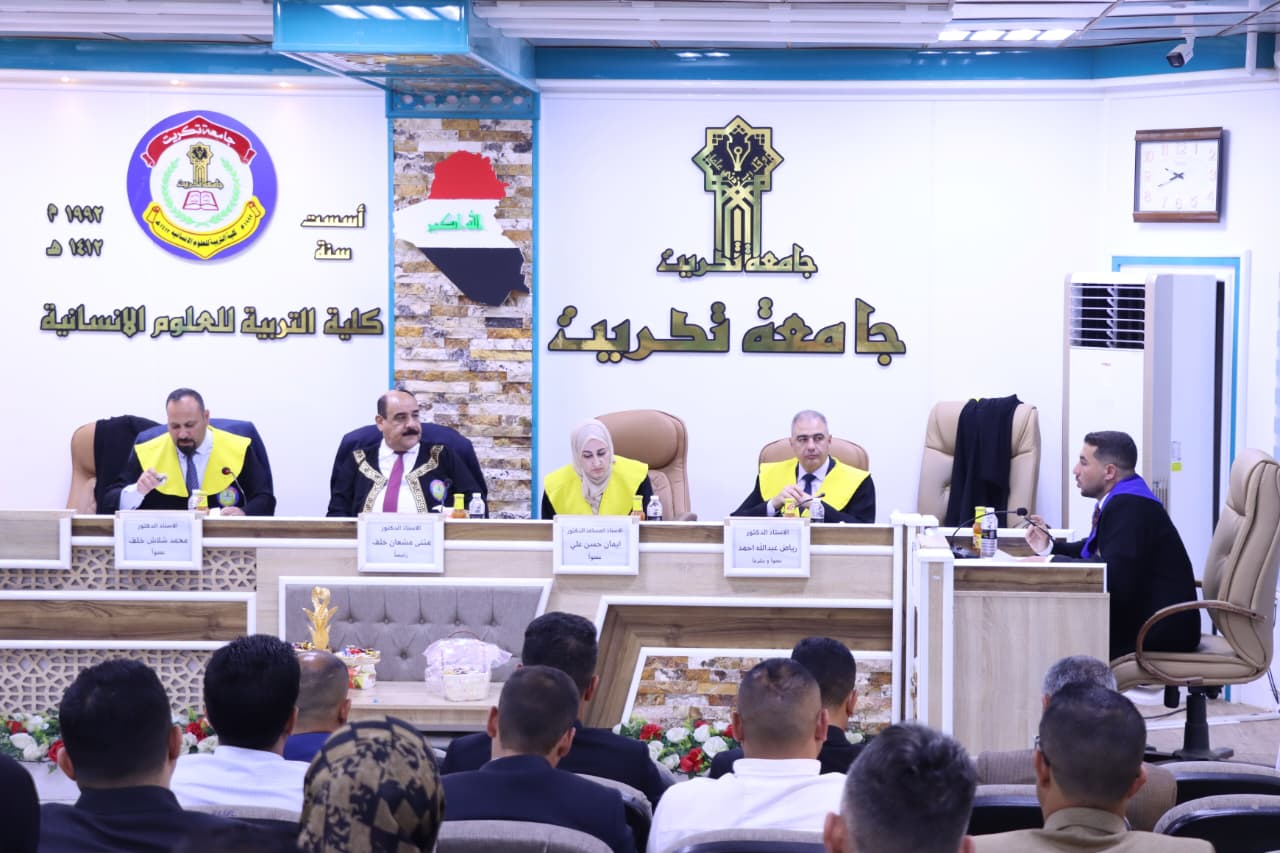
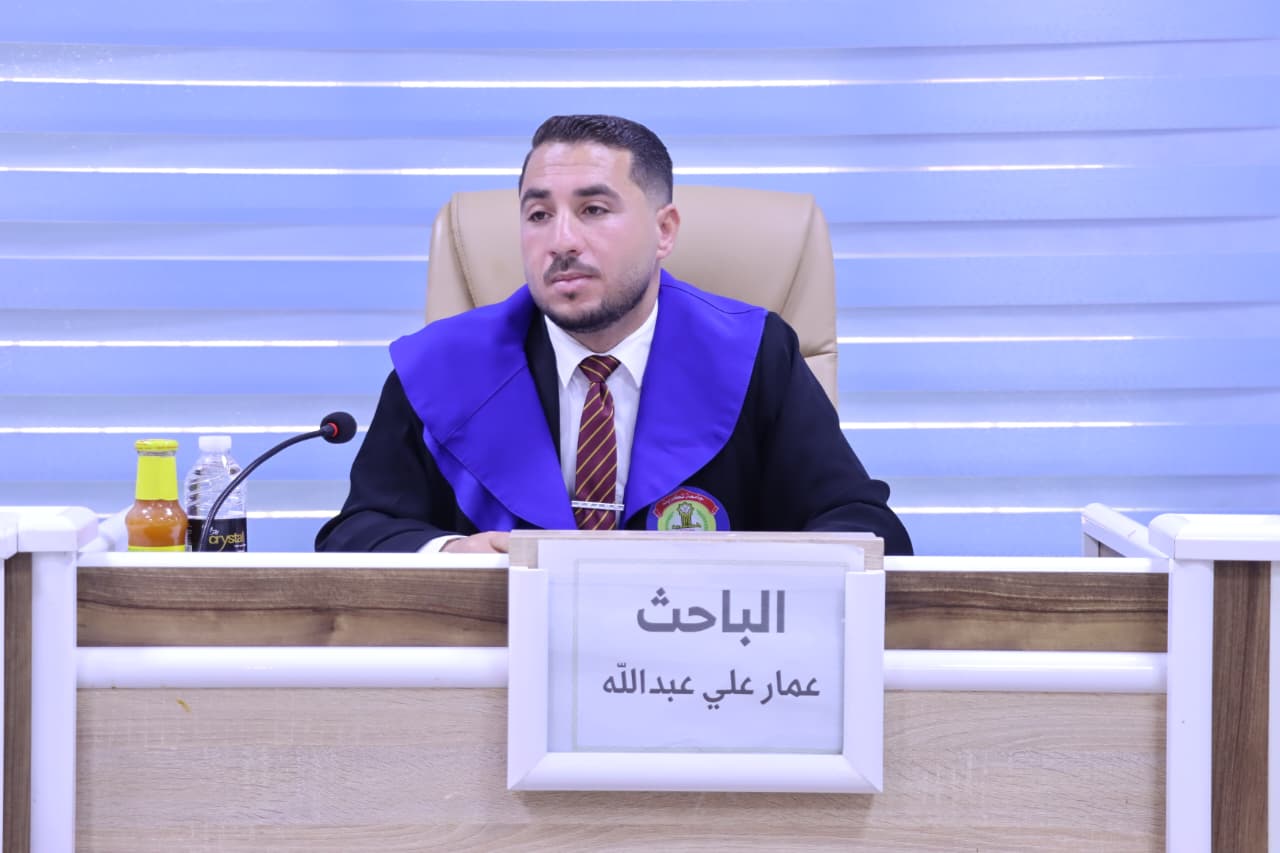
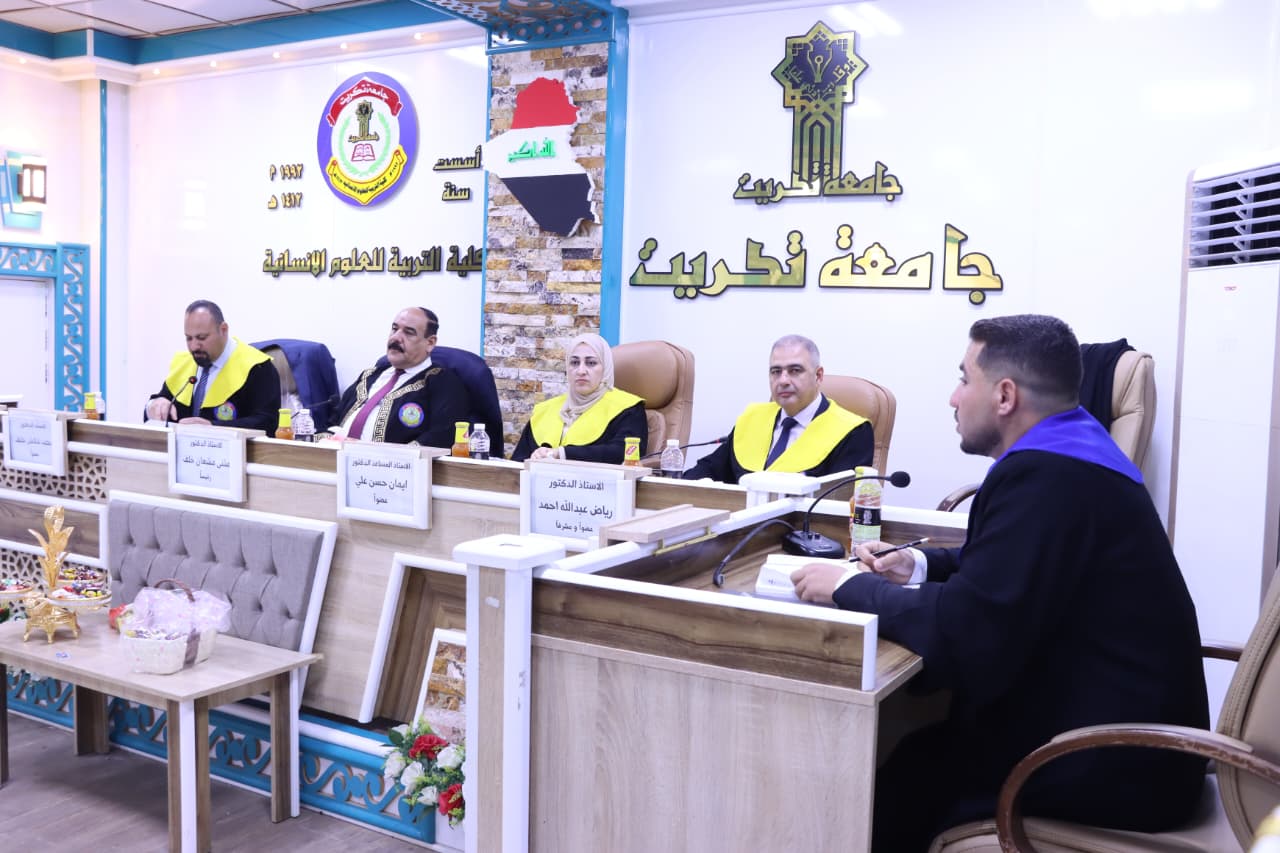
A Master’s thesis was discussed on Sunday, April 19, 2026, at the Department of Geography, College of Education for Humanities, by the student Ammar Ali Abdullah Al-Sabawi, entitled:
“Spatial Analysis of the Rural–Urban Fringe of Al-Hawija City and Prospects for Its Development.”
Al-Hawija City has witnessed notable urban and population growth as a result of transportation development and the expansion of urban sprawl beyond its municipal boundaries toward the surrounding rural areas. This has led to the emergence of a rural–urban fringe zone, where rural and urban characteristics have become increasingly intertwined, making it difficult to distinguish between them. This transformation has been reflected in changing land uses and the emergence of mixed, predominantly unplanned urban patterns.
The city occupies a strategically important geographic location within Kirkuk Governorate, serving as a link between Tikrit and Kirkuk, which has enhanced its urban role and accelerated its growth. The rural–urban fringe covers an area of approximately 3,060.20 hectares (about 30.60 km²), equivalent to roughly 30,602,000 square meters, with a population of 28,620. The zone includes six suburbs, five of which fall within the fringe—Al-Bakkarah, Al-Bu Mafraj, Al-Akeedat, Al-Mashroo‘, and Al-Dibs—along with Al-Salam (formerly Al-Aithat). It also encompasses urban extensions stretching westward (Al-Mustaqbal and Al-Sayyadah) and eastward (Al-Ibrahimiyah).
The study reached several key findings, including:
- Al-Hawija City suffers from a clear weakness in the governmental role in regulating urban growth and addressing informal settlements, which has resulted in widespread housing violations and unplanned expansion beyond official planning frameworks.
- The city has experienced rapid urban expansion beyond the boundaries of its master plan, particularly after 2011, in the absence of an updated master plan that accommodates demographic and economic changes, leading to تجاوزات on planned growth limits.
- Continuous expansion has led to the merging of the city with surrounding rural suburbs, in the absence of clearly defined municipal boundaries. This has contributed to the emergence of a rural–urban fringe characterized by overlapping urban and social features, resulting in administrative challenges in land management.
The examination committee consisted of the following faculty members:
- Prof. Dr. Muthanna Mishaan Khalaf / Tikrit University – College of Education for Humanities / Chairperson
- Assist. Prof. Dr. Mohammed Shalash Khalaf / Kirkuk University – College of Education for Humanities / Member
- Assist. Prof. Dr. Iman Hassan Ali / Tikrit University – College of Education for Humanities / Member
- Prof. Dr. Riyadh Abdullah Ahmed / Tikrit University – College of Education for Humanities / Member and Supervisor
Media and Government Communication Division
College of Education for Humanities – Tikrit University