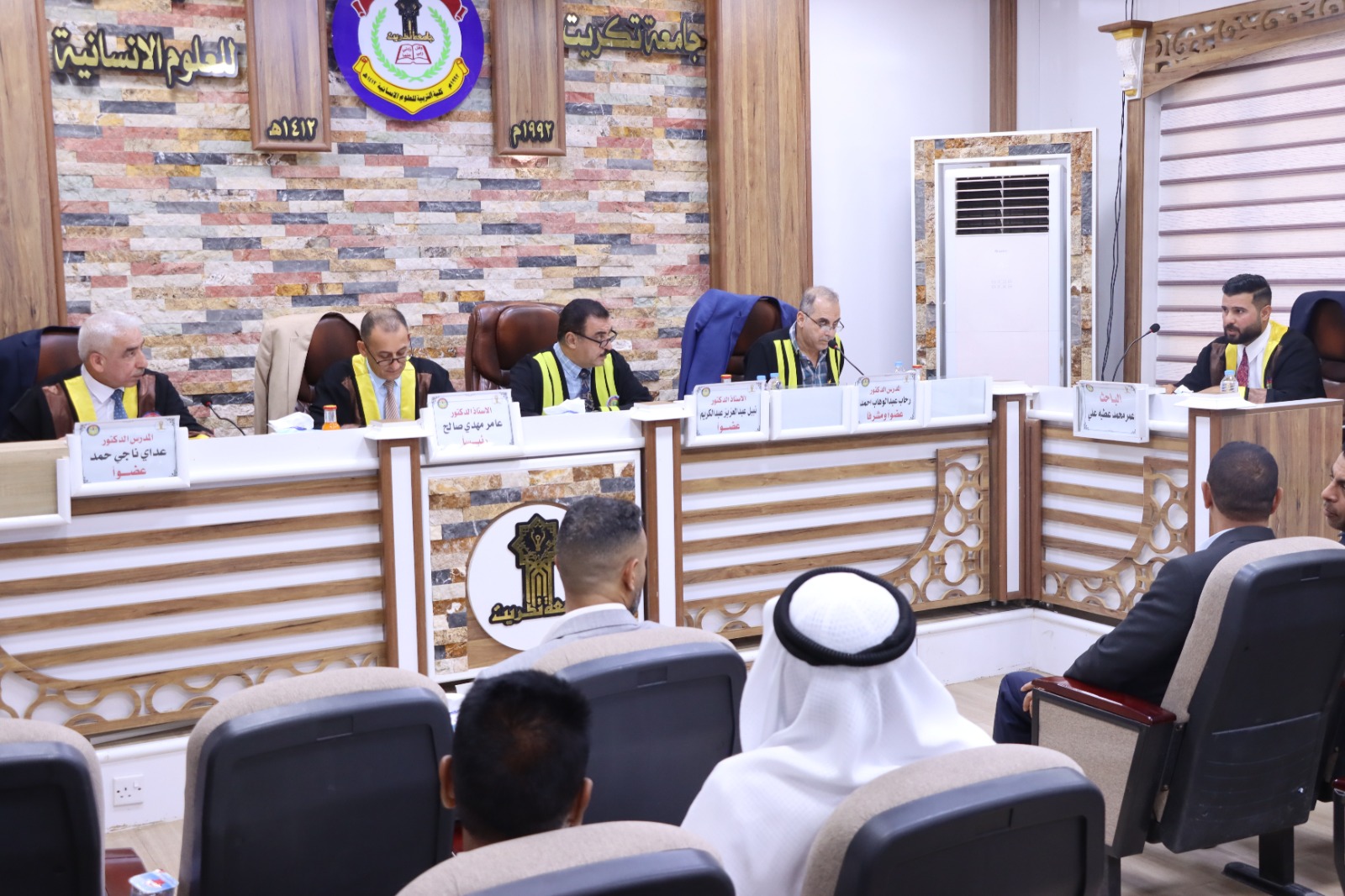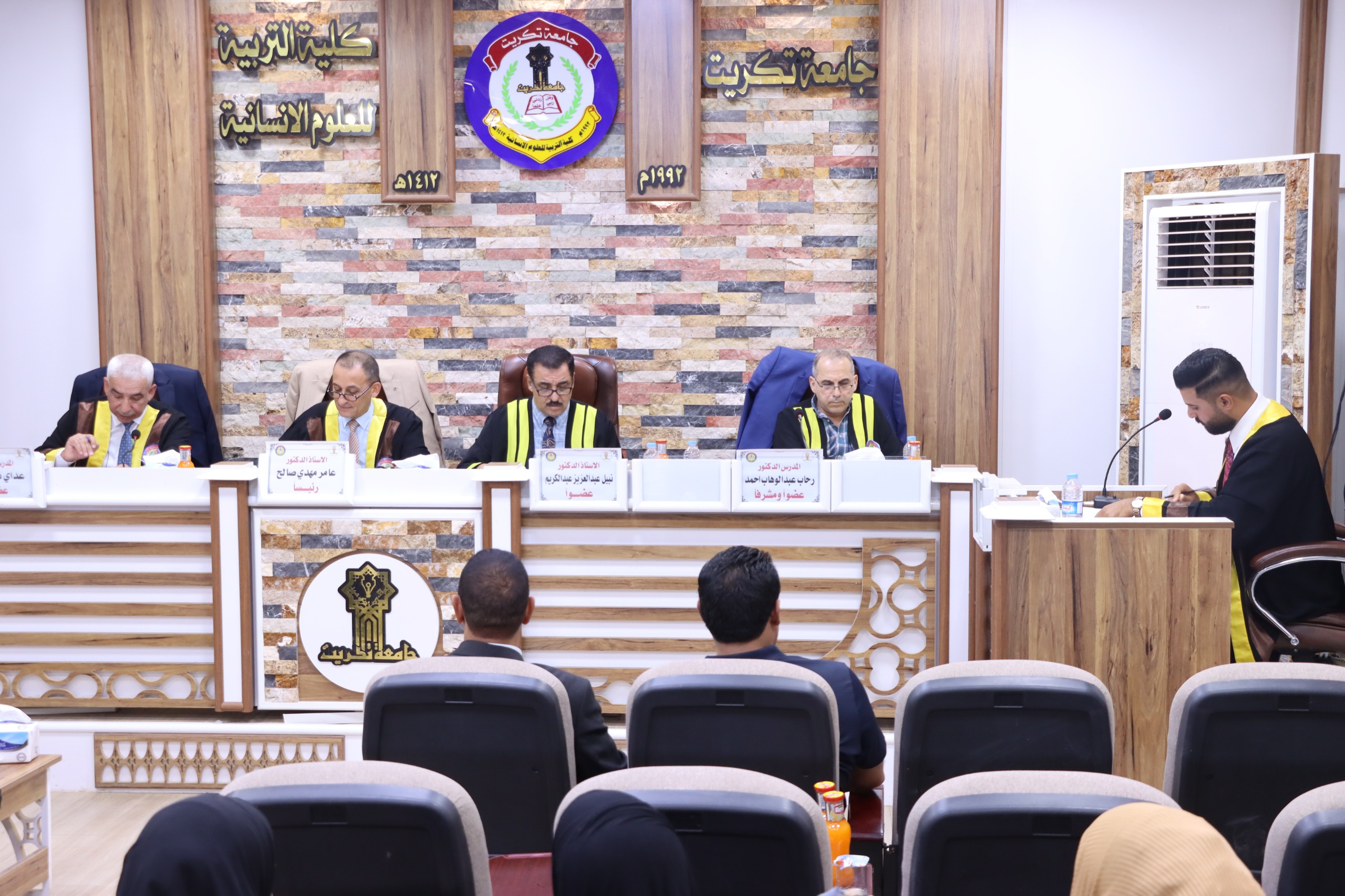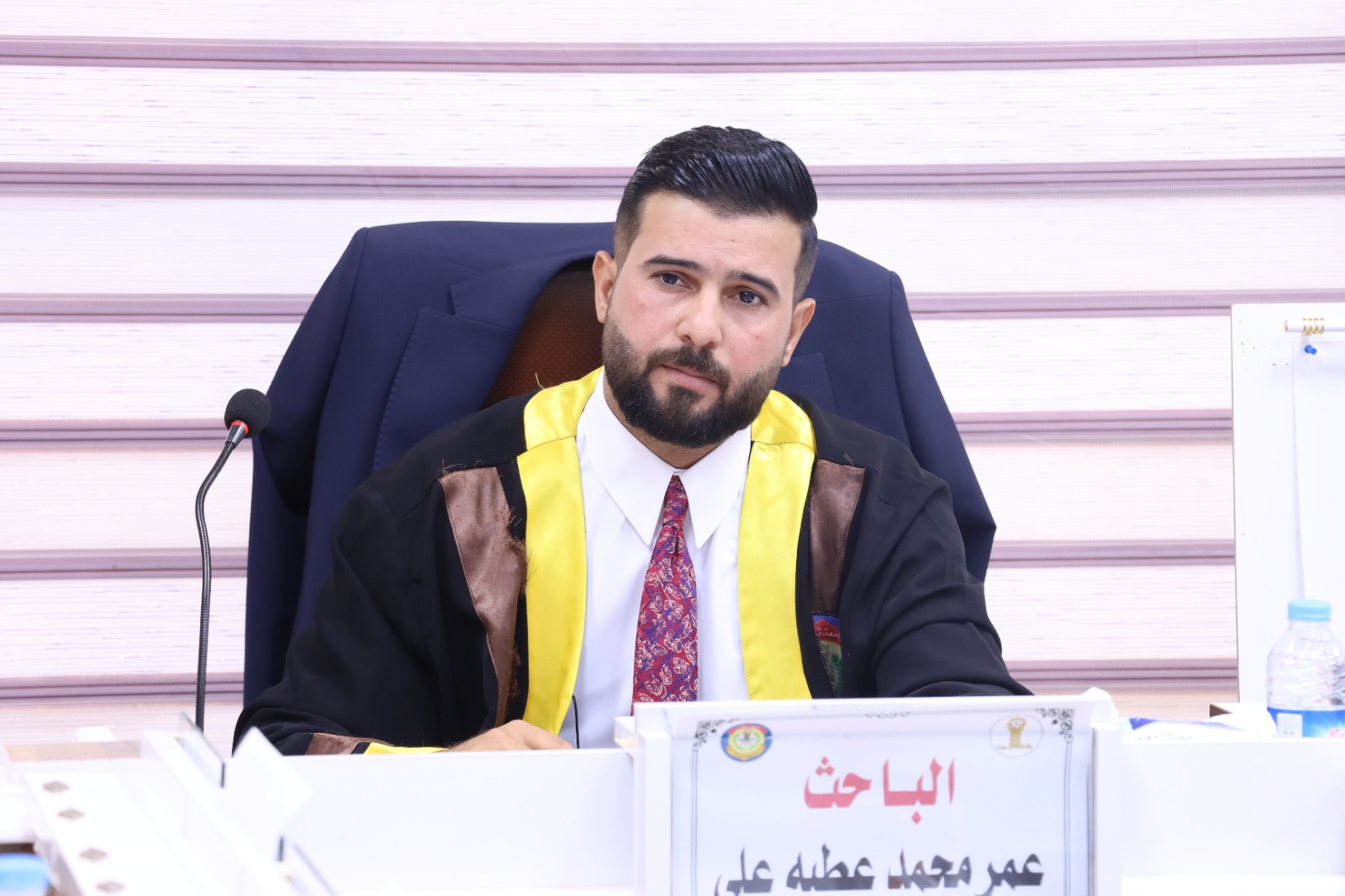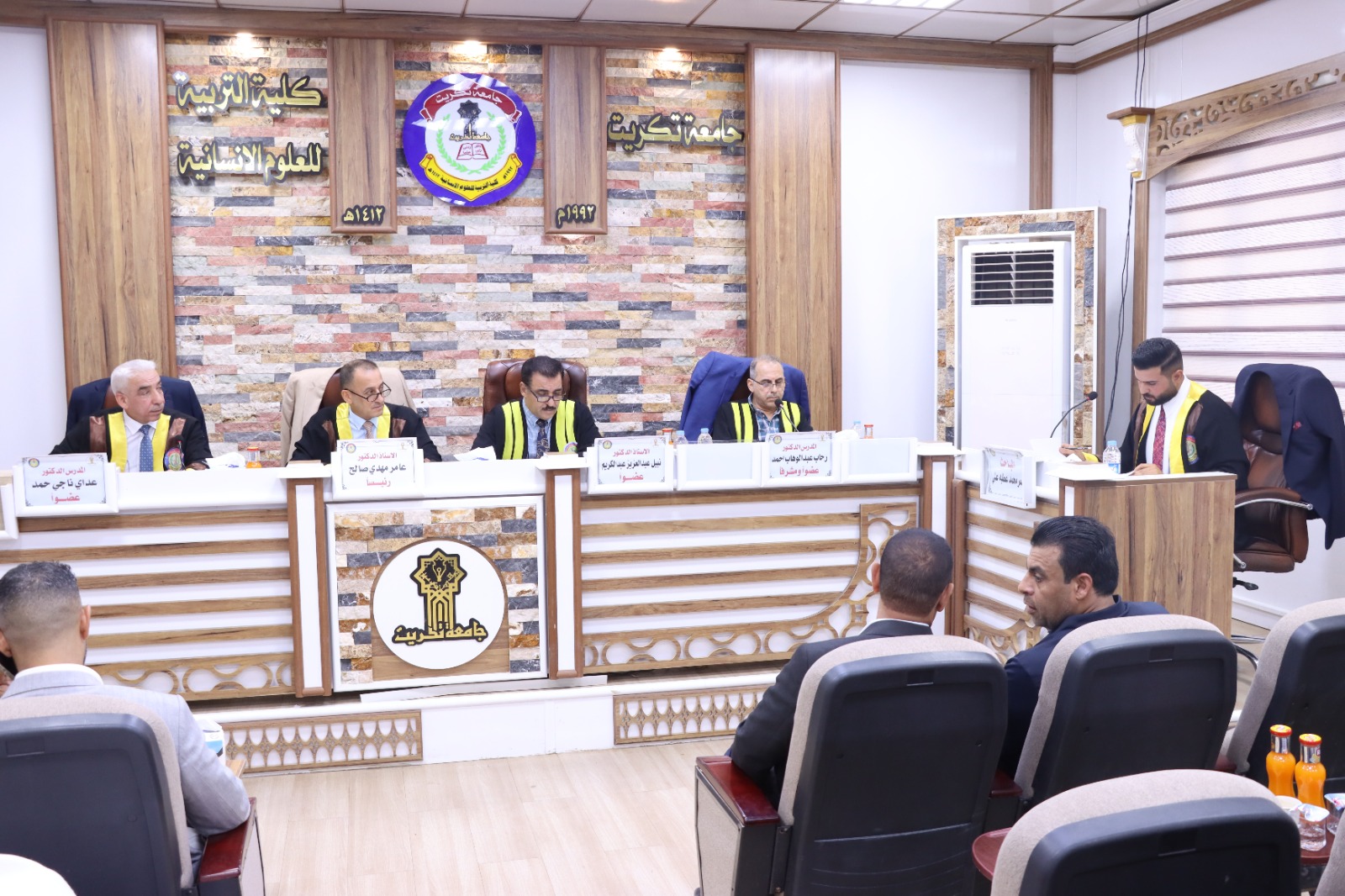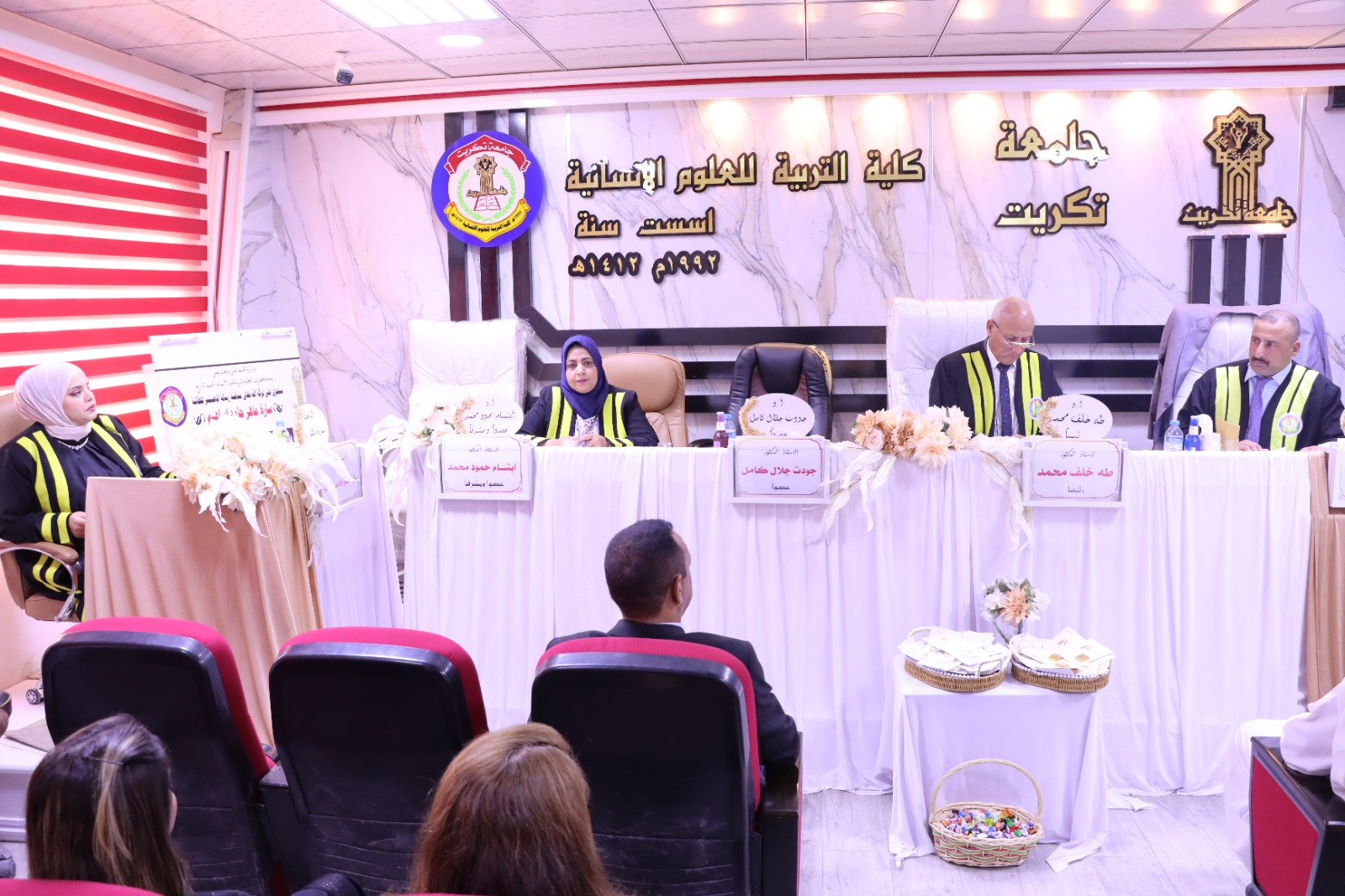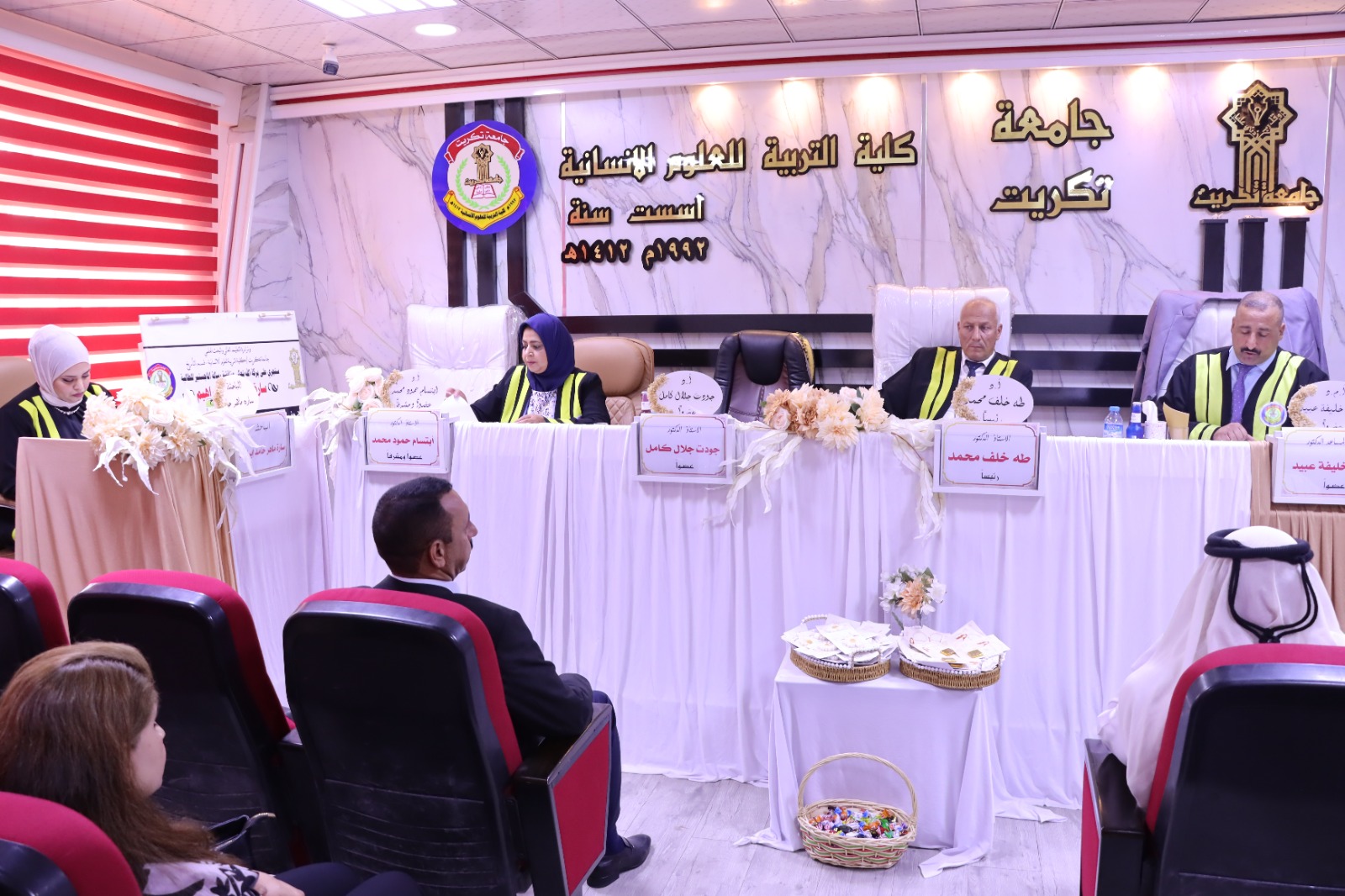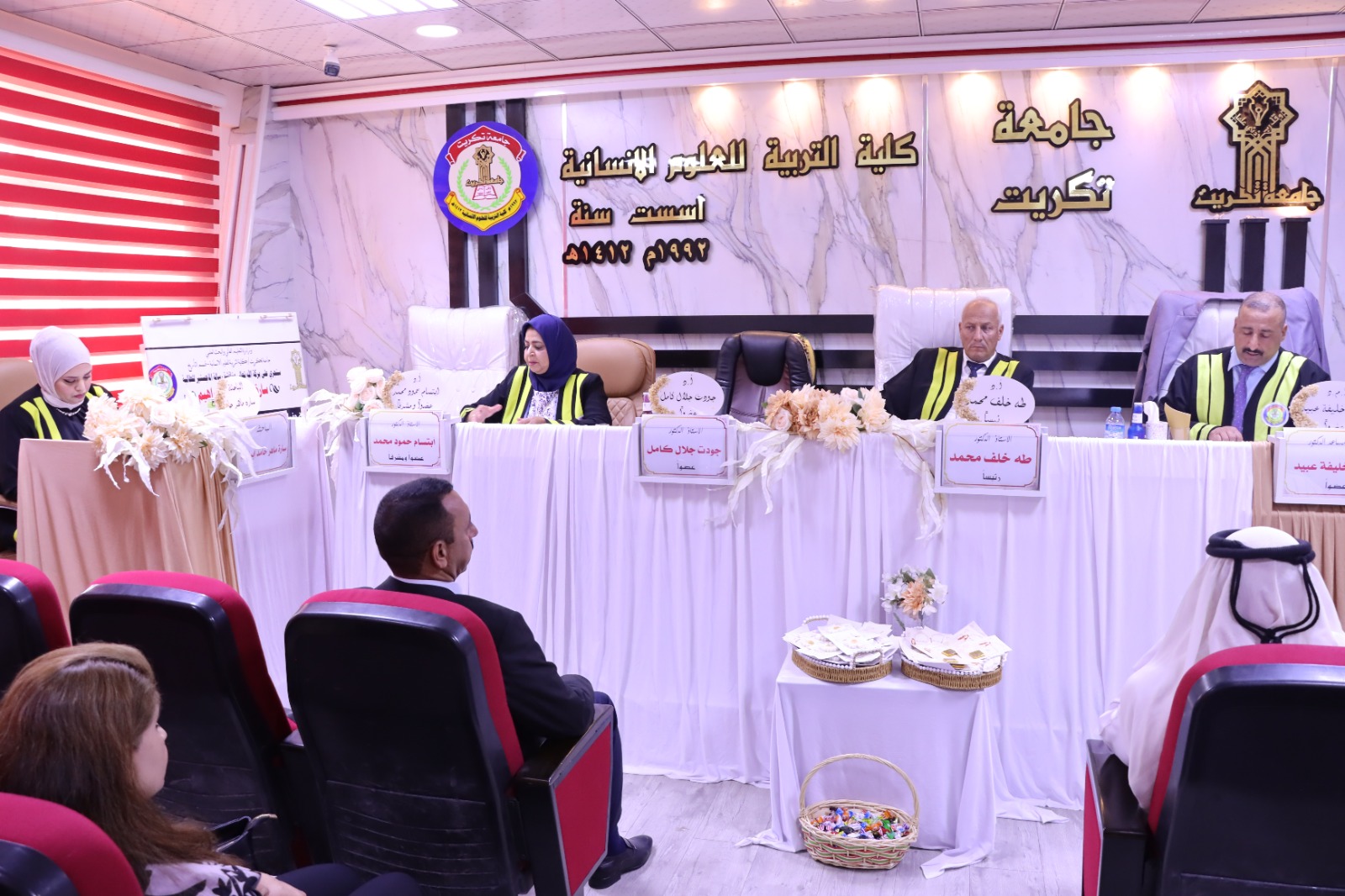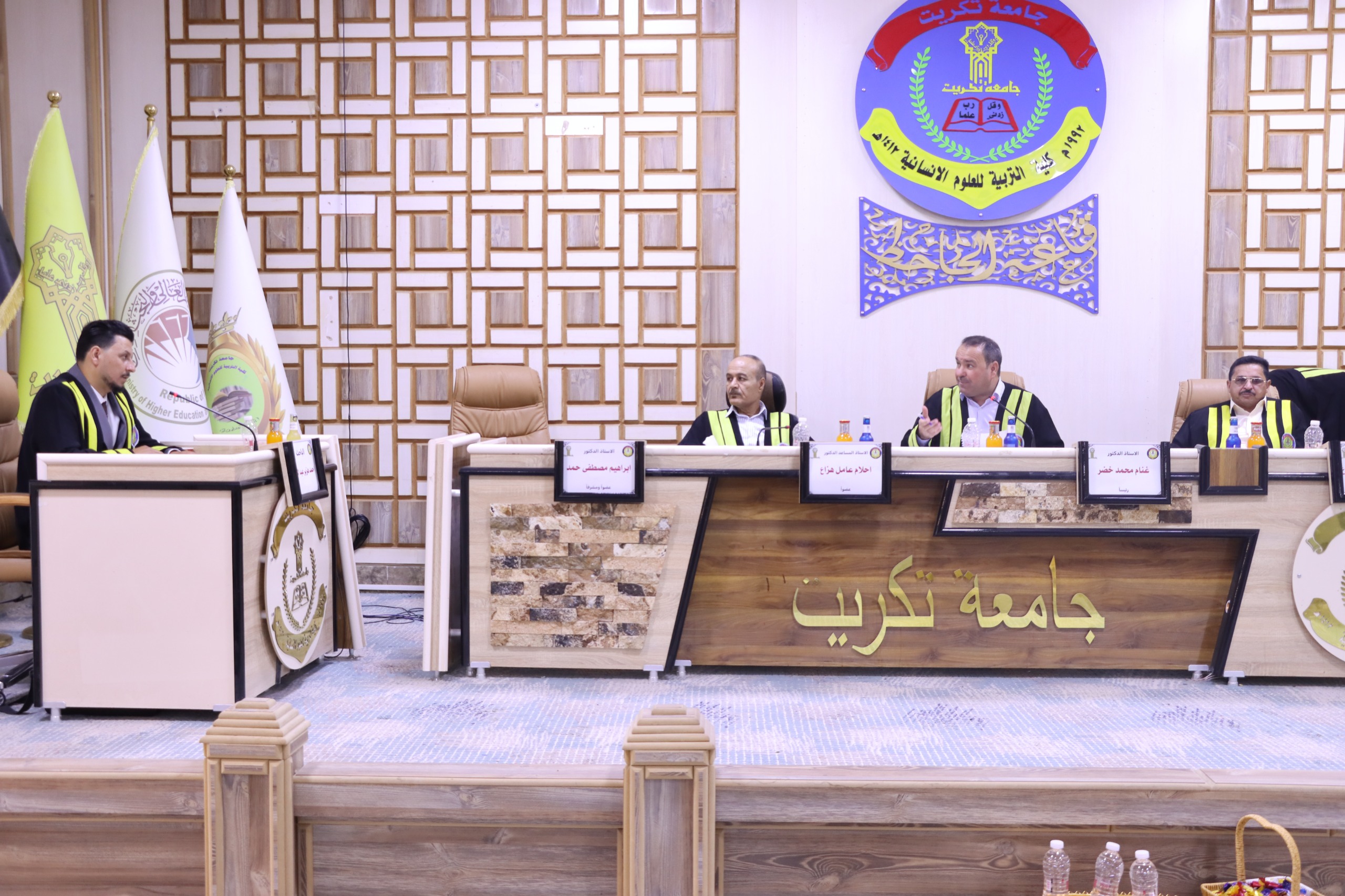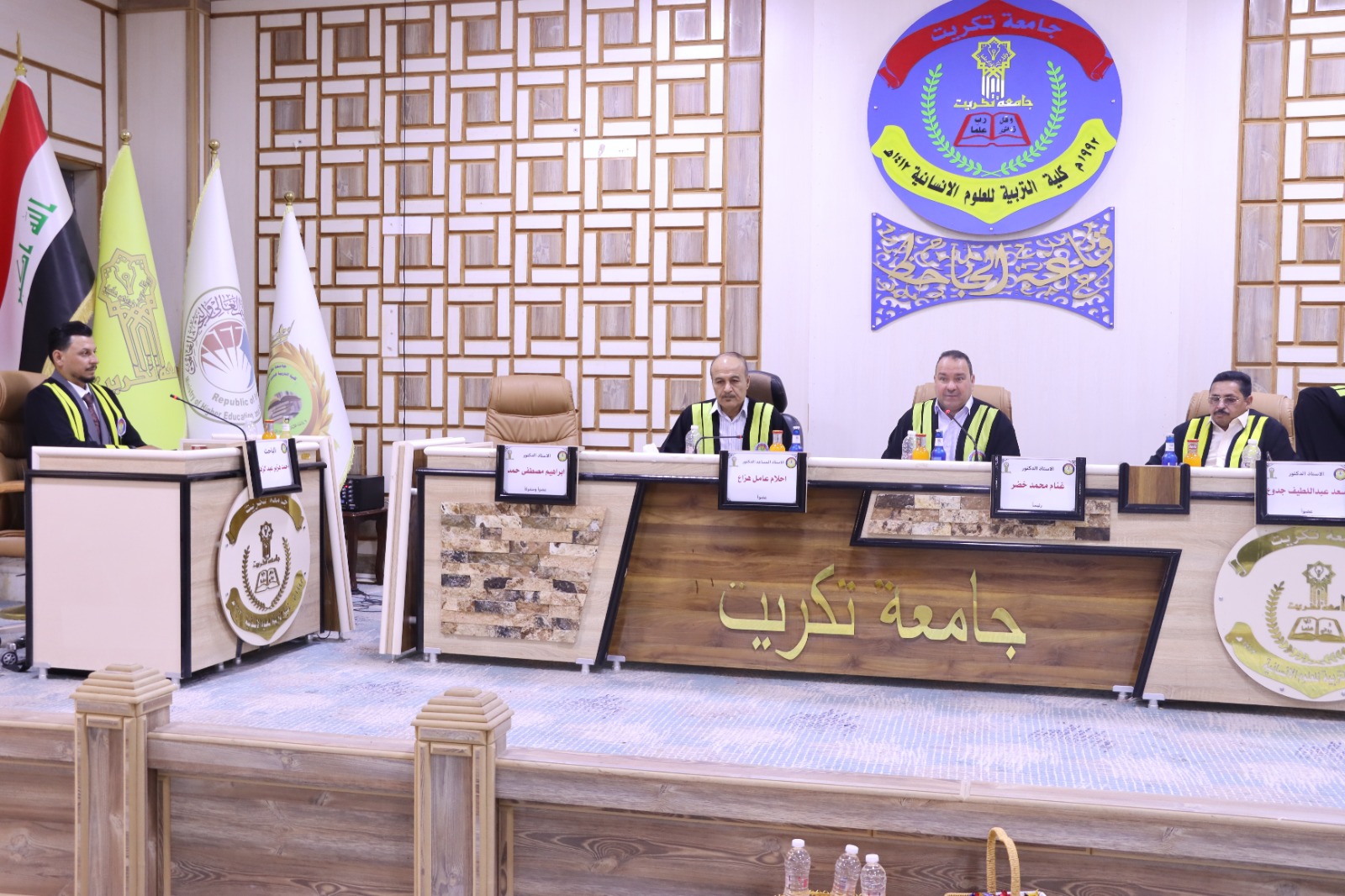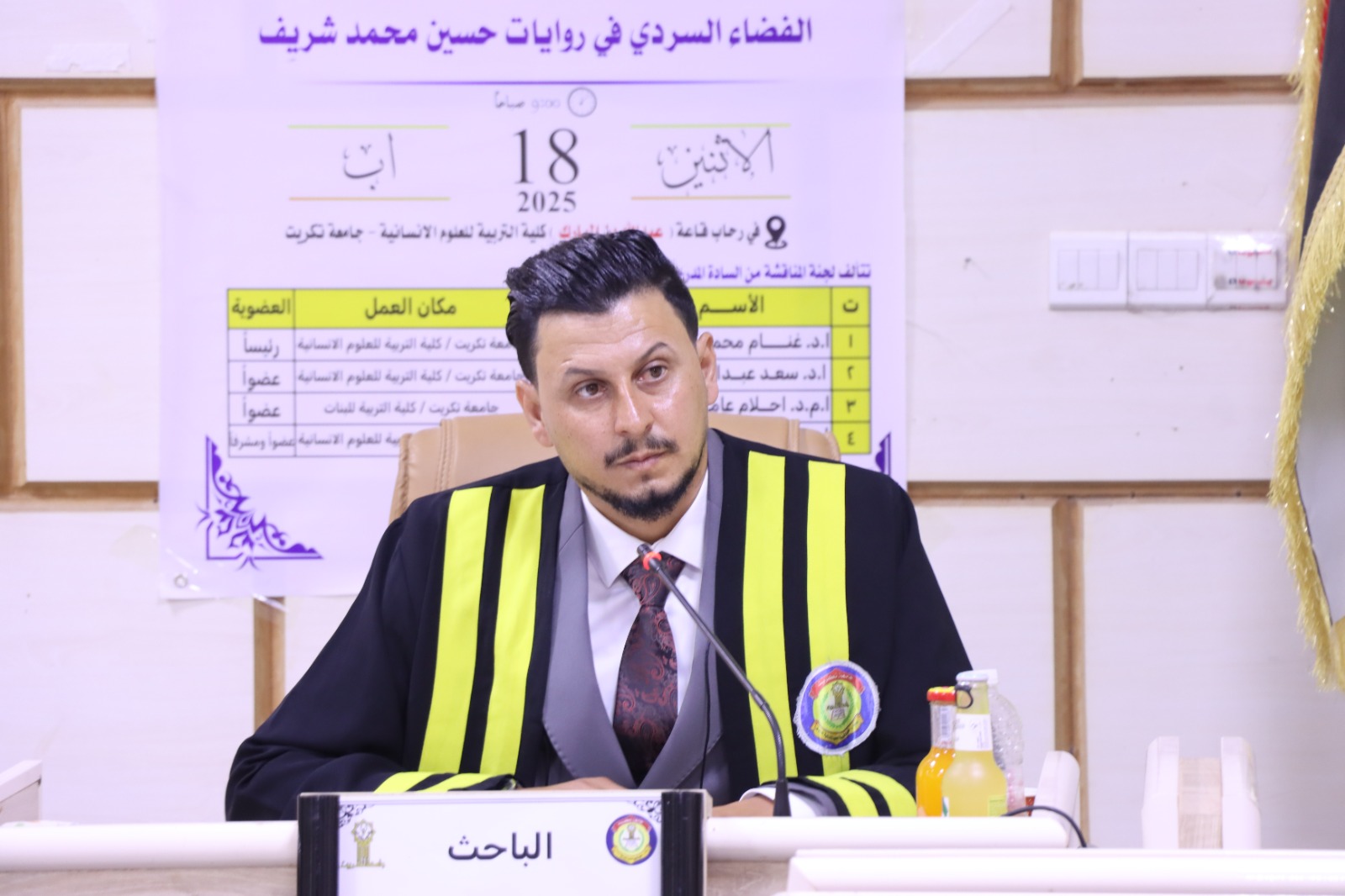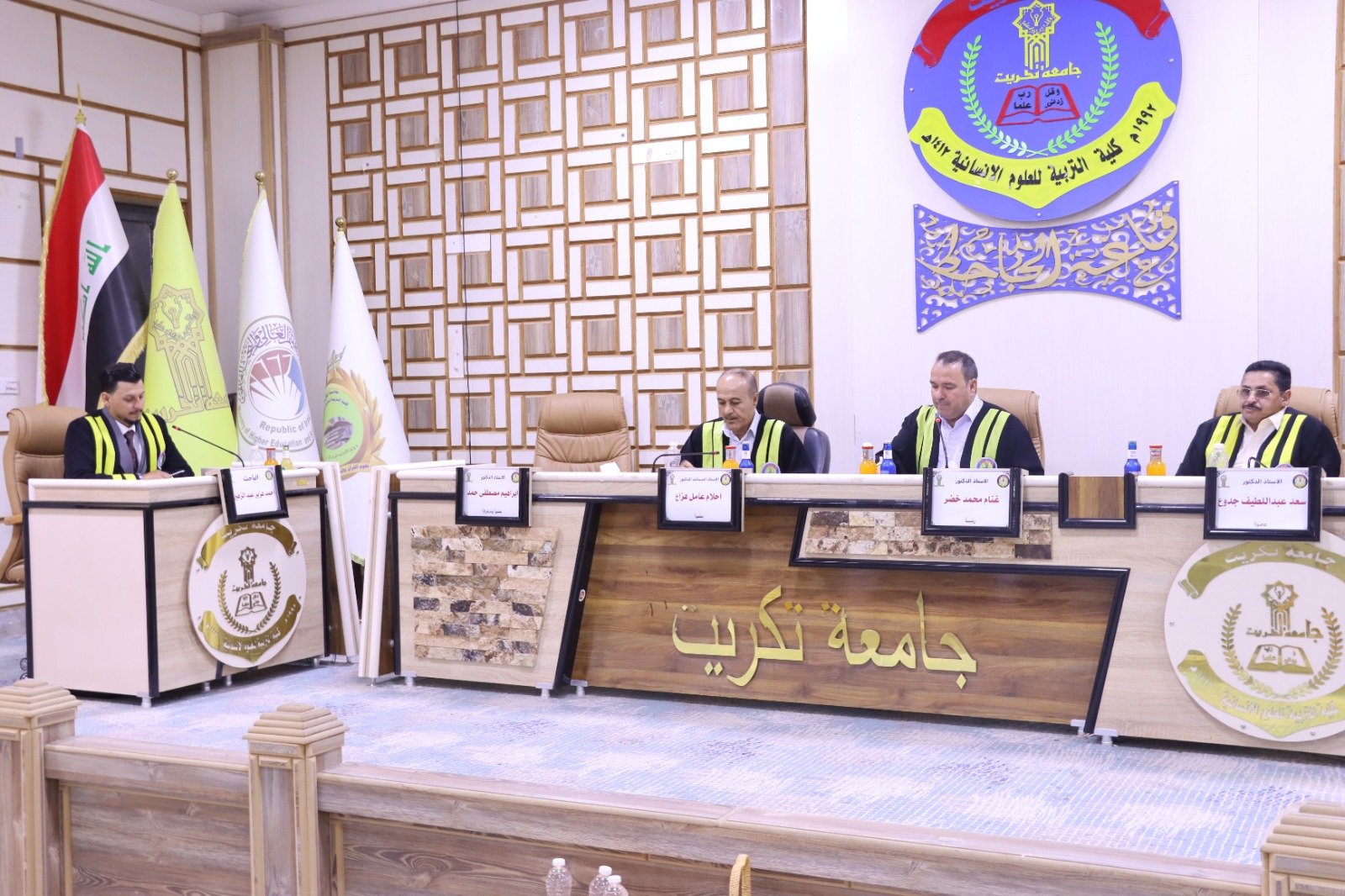
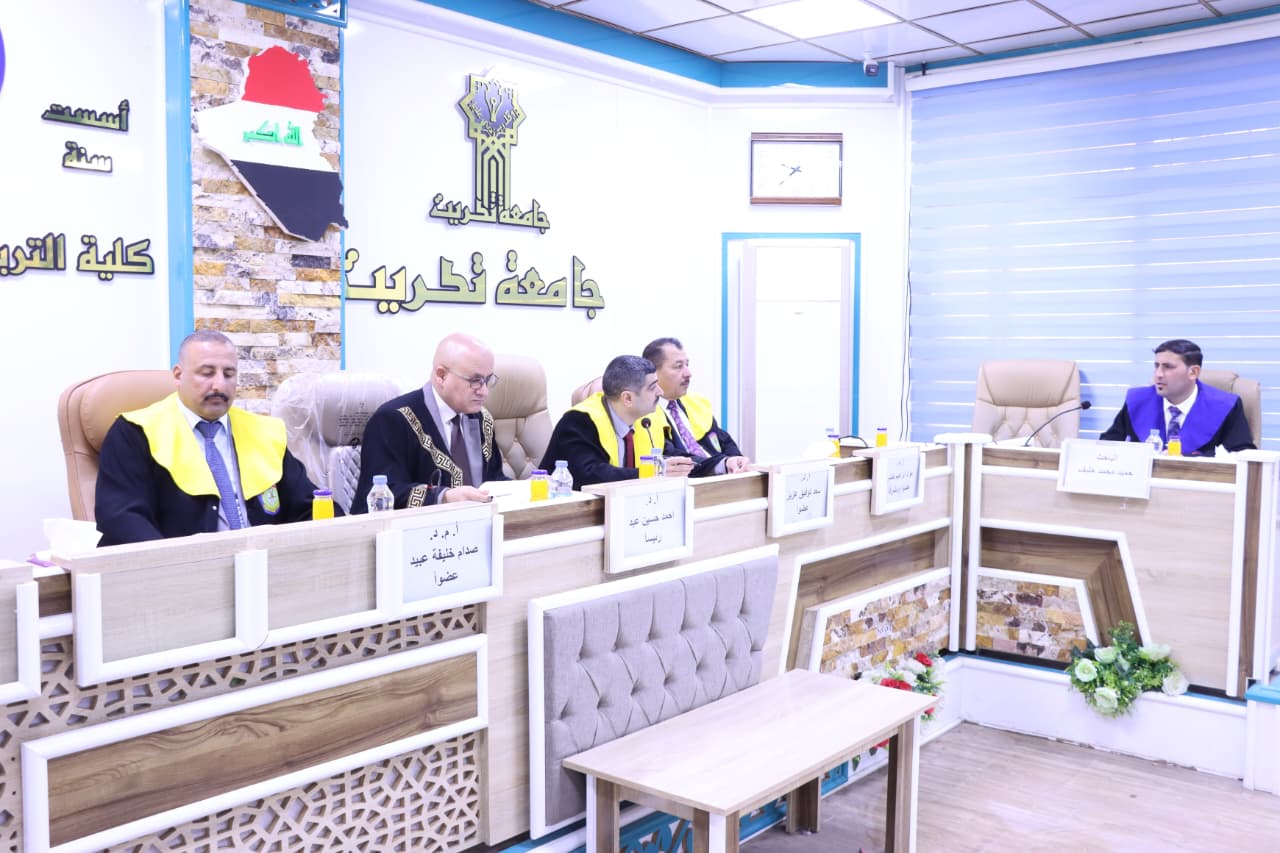
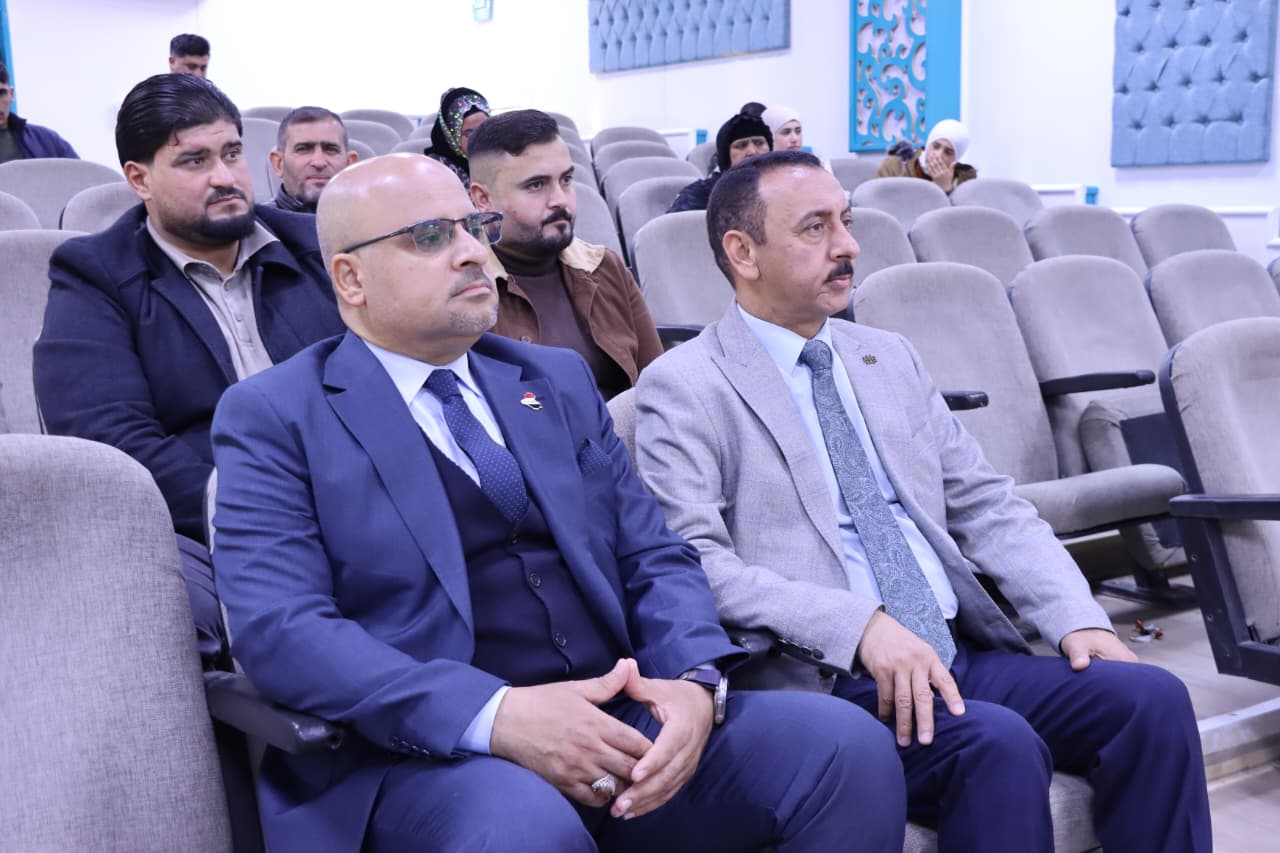
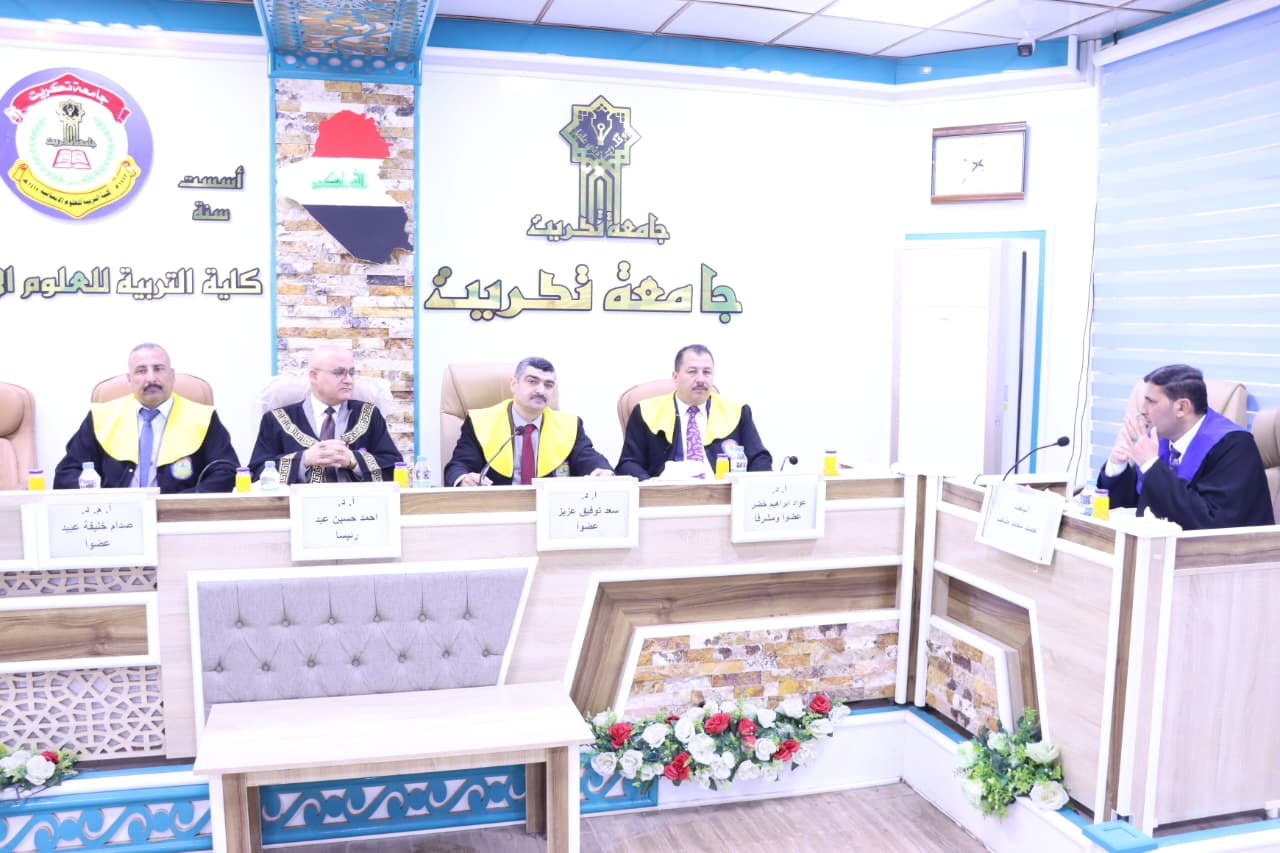
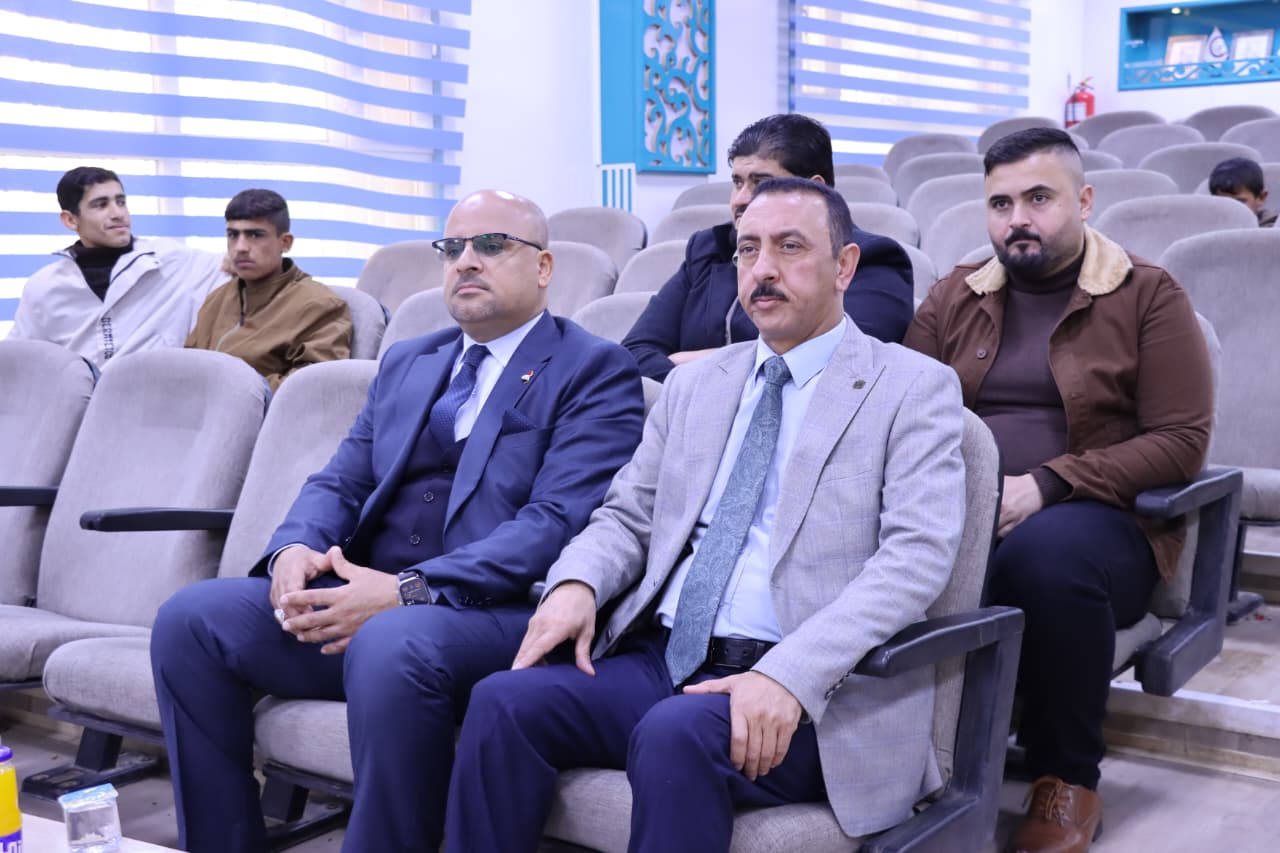
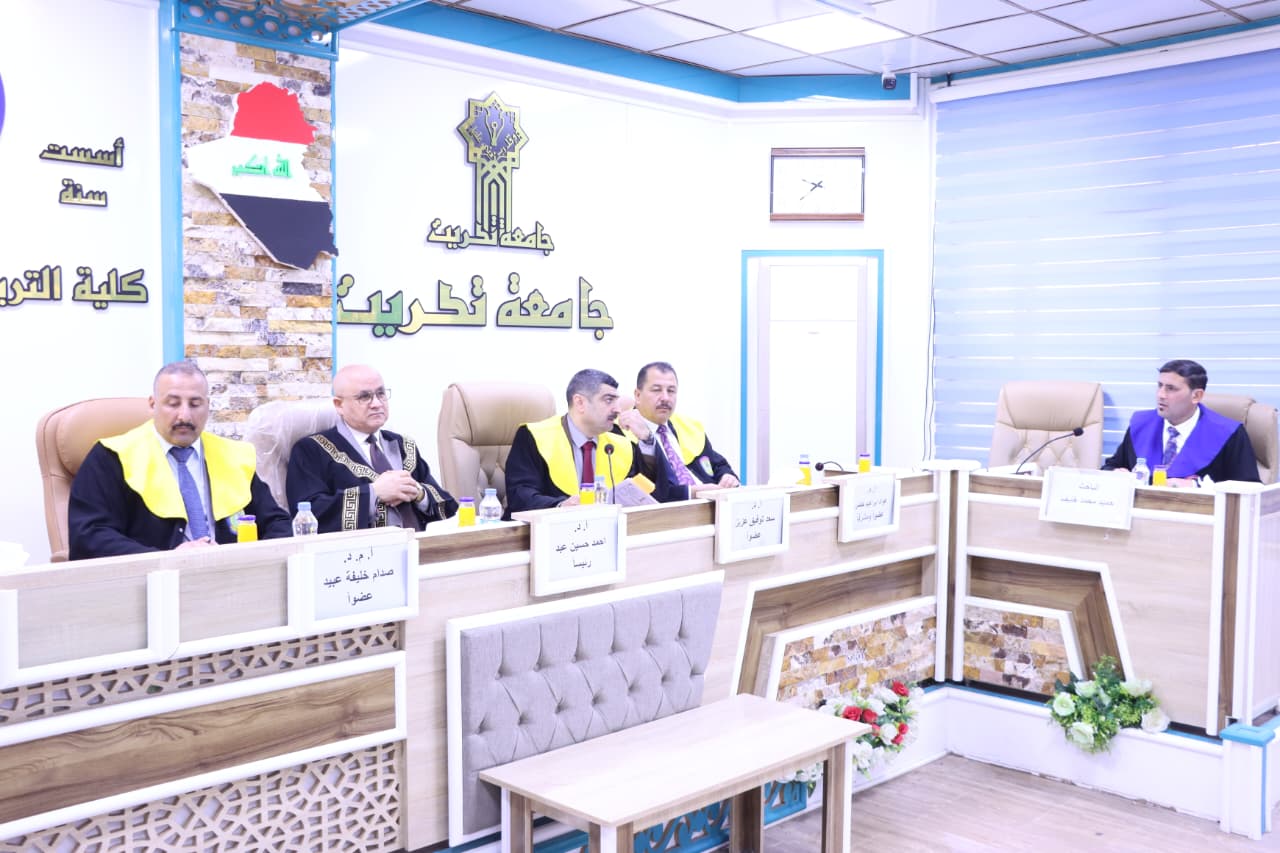
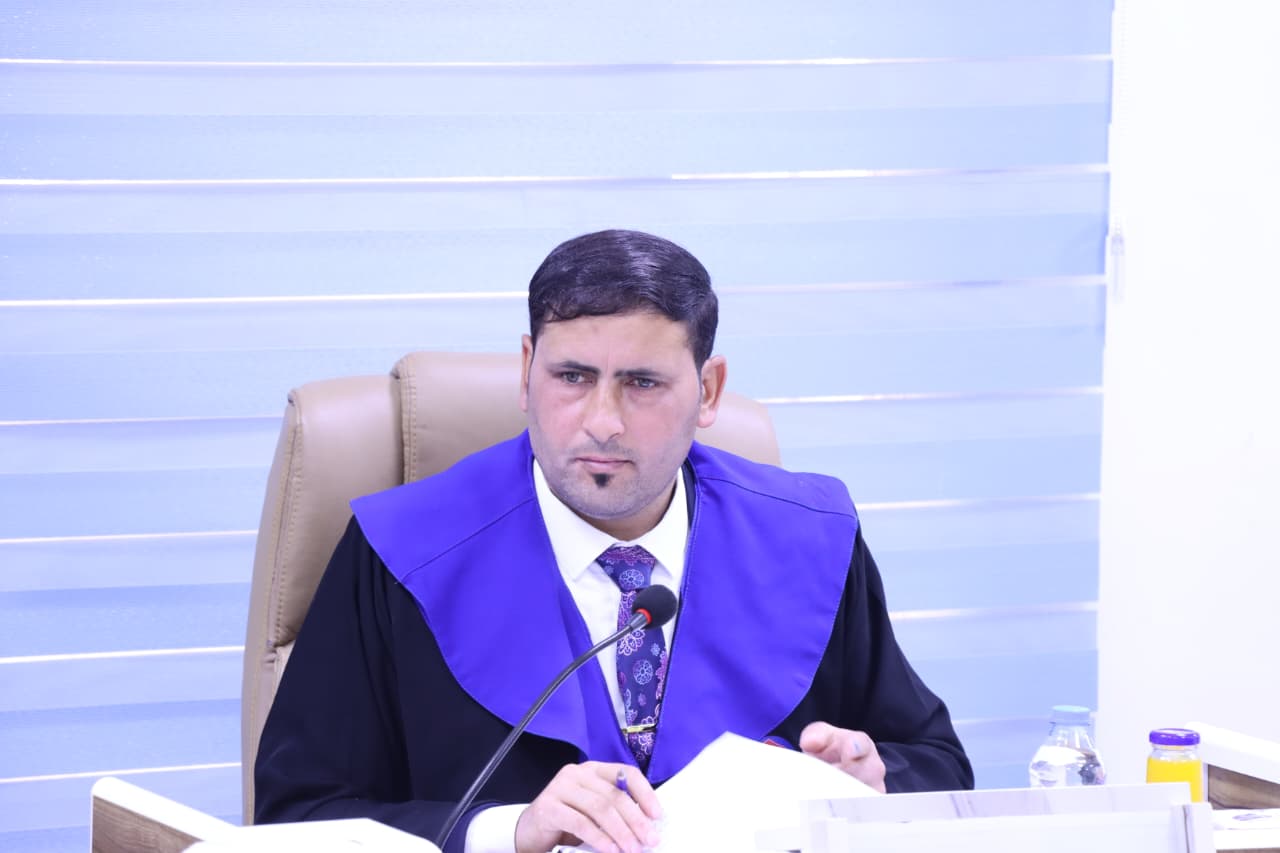
The College of Education for Humanities, Department of History, discussed on Sunday (15 February 2026) the Master’s thesis submitted by the student Hamid Mohammed Khalif Al-Jubouri, entitled “The Phenomenon of Political Assassinations in the Kingdom of Morocco (1956–1999).”
Following independence, the Kingdom of Morocco witnessed numerous political events and profound social upheavals that shaped a historical phase characterized by struggles over power and the internal consolidation of the newly established state. The modern Moroccan state faced a series of political assassinations and arrests that targeted party leaders, trade union figures, and opposition personalities. These events were utilized by the ruling system in various ways to secure political and security gains, consolidate the structure of authority, and tighten control over the political sphere, while countering attempts by certain parties to monopolize power.
The study argues that the regime benefited from this climate of instability to weaken political parties, reshape the balance of the political landscape, and maintain its position as the dominant authority capable of managing the country’s general affairs. These developments had significant repercussions on the overall situation in Morocco and contributed to recurring political crises that persisted until the death of Hassan II in 1999.
The research reached several key findings, including:
- Political assassinations were not isolated or incidental events; rather, they were closely linked to periods of acute tension accompanying state-building after independence.
- Political assassinations left profound effects on the broader political environment of the Moroccan regime.
- The early governments headed by Mbarek Bekkai after independence faced significant challenges that impacted stability in the Kingdom of Morocco.
- The Maghreb region witnessed a series of complex rebellions and armed protests after independence, largely due to deteriorating economic and social conditions.
- Morocco experienced two attempted coups that nearly brought an end to monarchical rule, the first in 1971 and the second in 1972.
The examination committee consisted of the following faculty members:
- Prof. Dr. Ahmed Hussein Abd – Tikrit University, College of Education for Humanities – Chair
- Prof. Dr. Saad Tawfiq Aziz – University of Mosul, College of Arts – Member
- Assist. Prof. Dr. Saddam Khalifa Ubaid – Tikrit University, College of Education for Humanities – Member
- Prof. Dr. Awad Ibrahim Khudair – Tikrit University, College of Education for Humanities – Member and Supervisor
The discussion concluded with in-depth scholarly deliberations that reflected the academic value of the thesis and its contribution to contemporary historical studies.
Media and Government Communication Division
College of Education for Humanities
Tikrit University