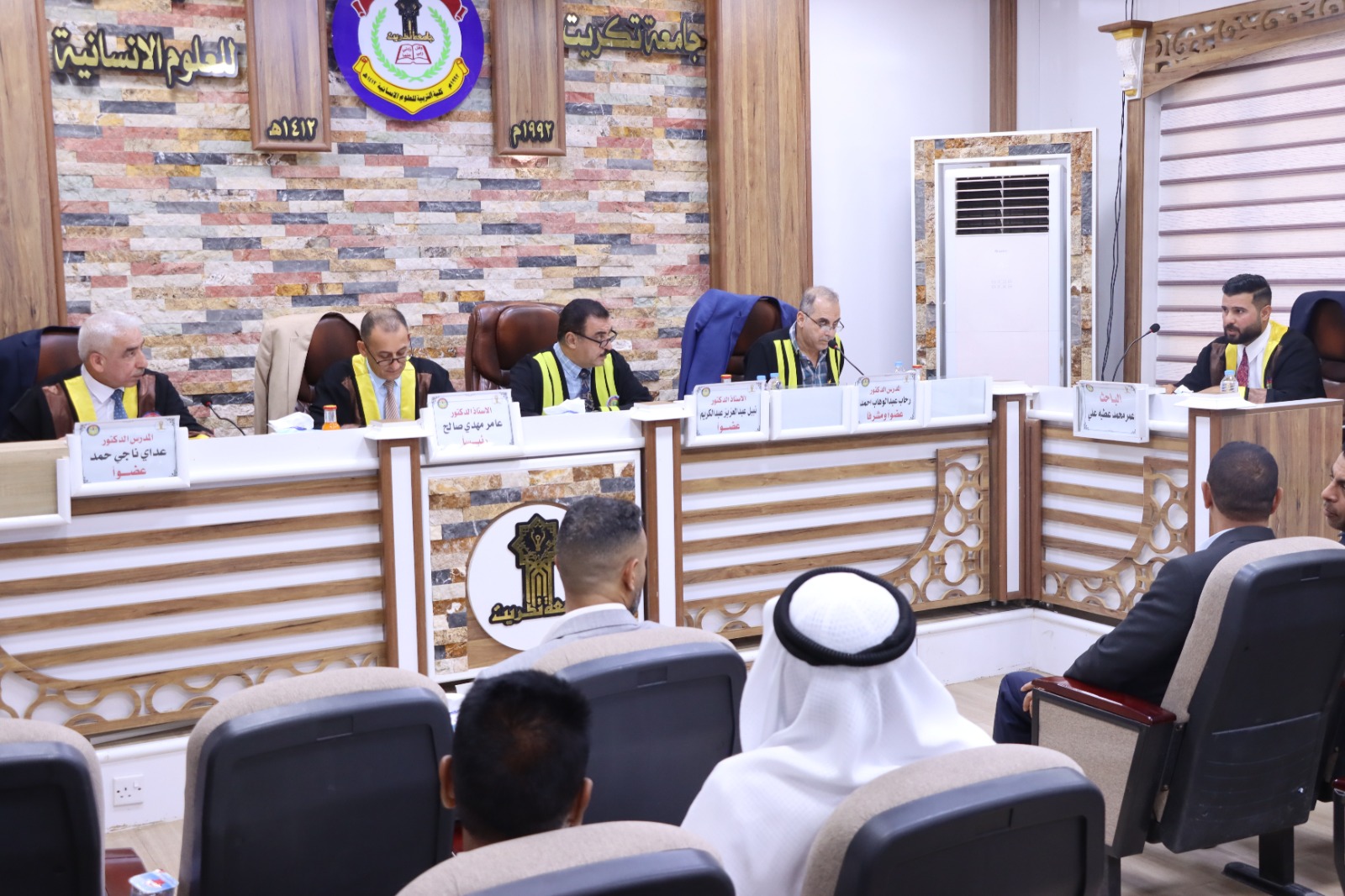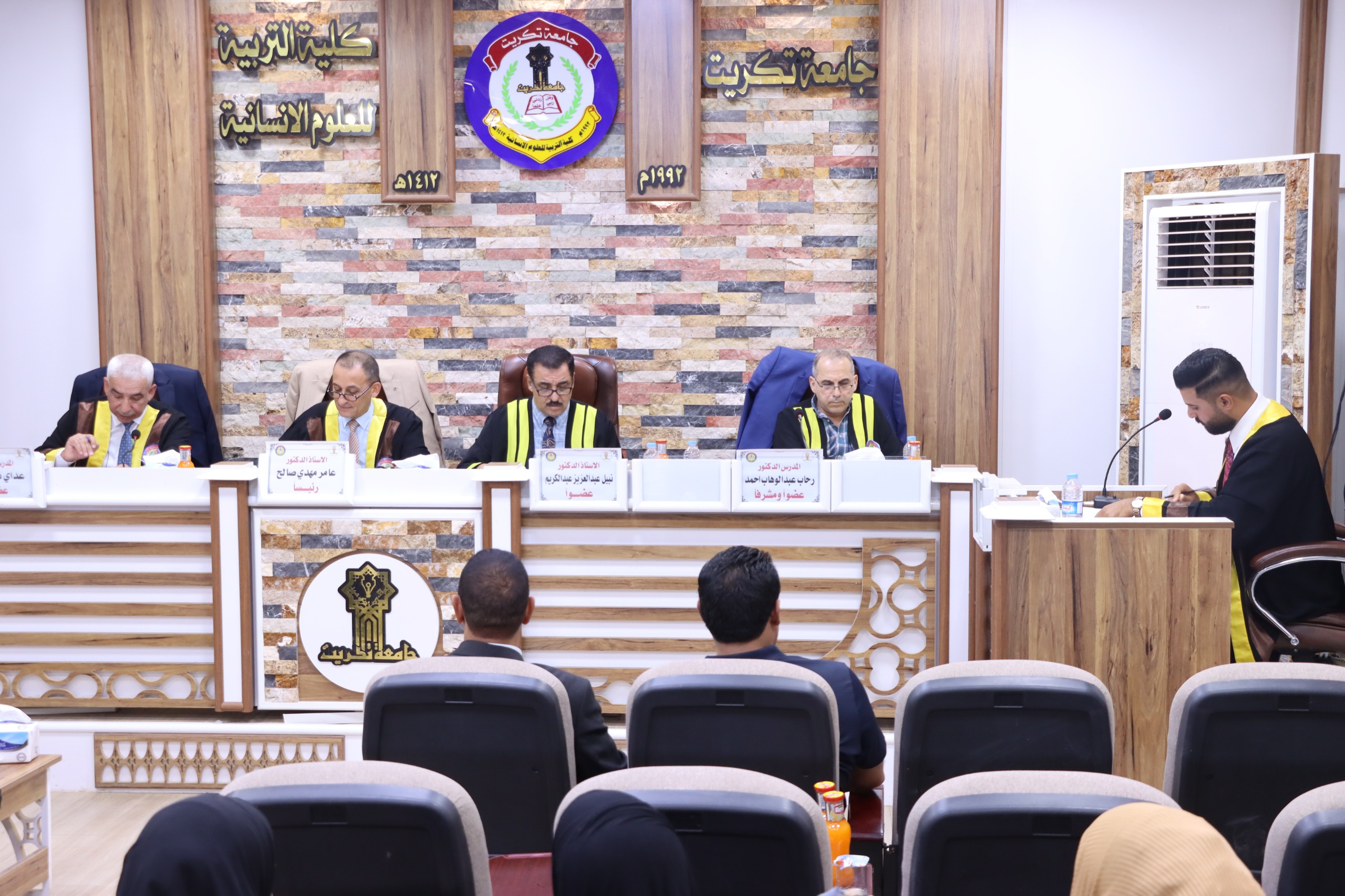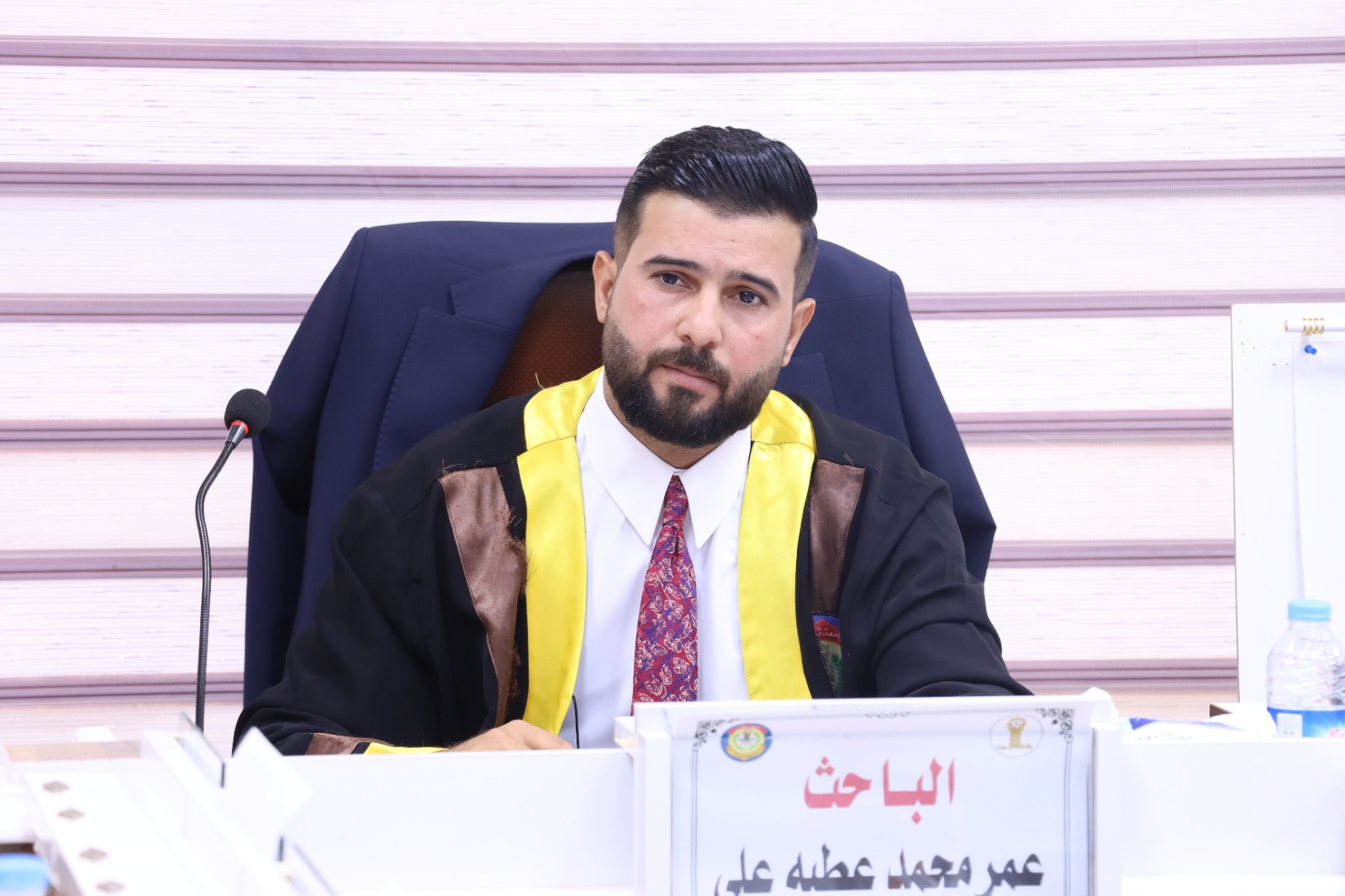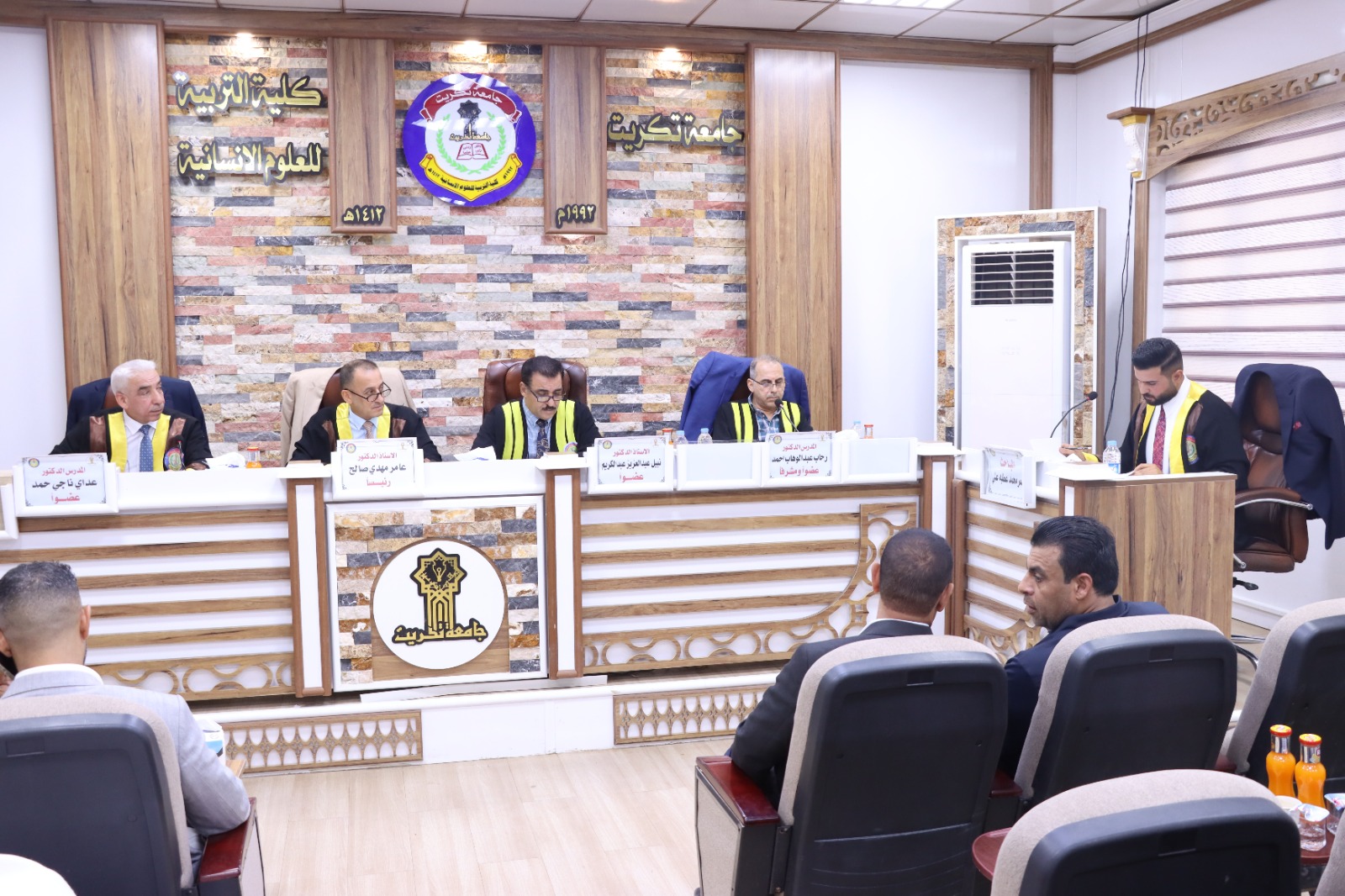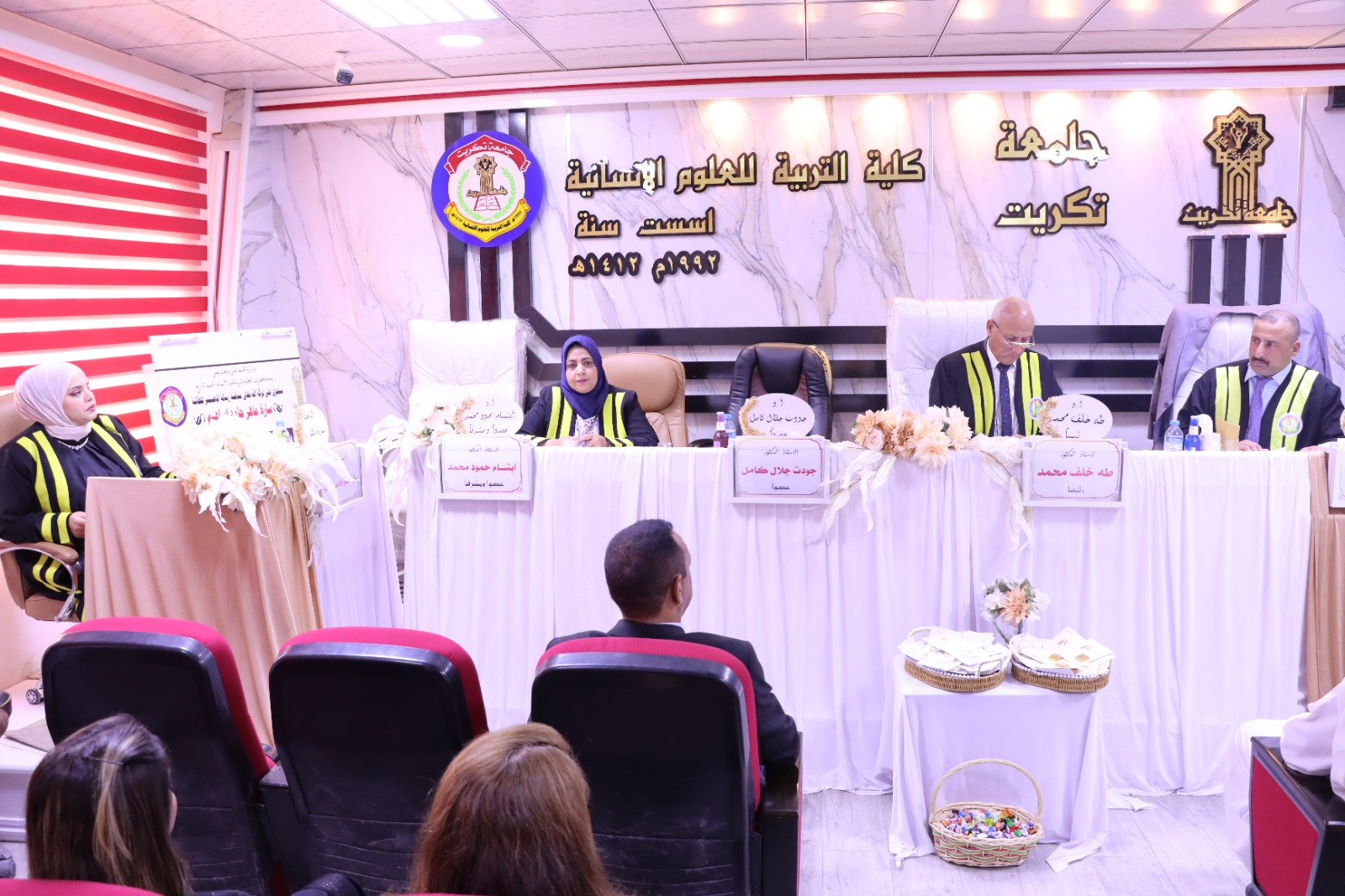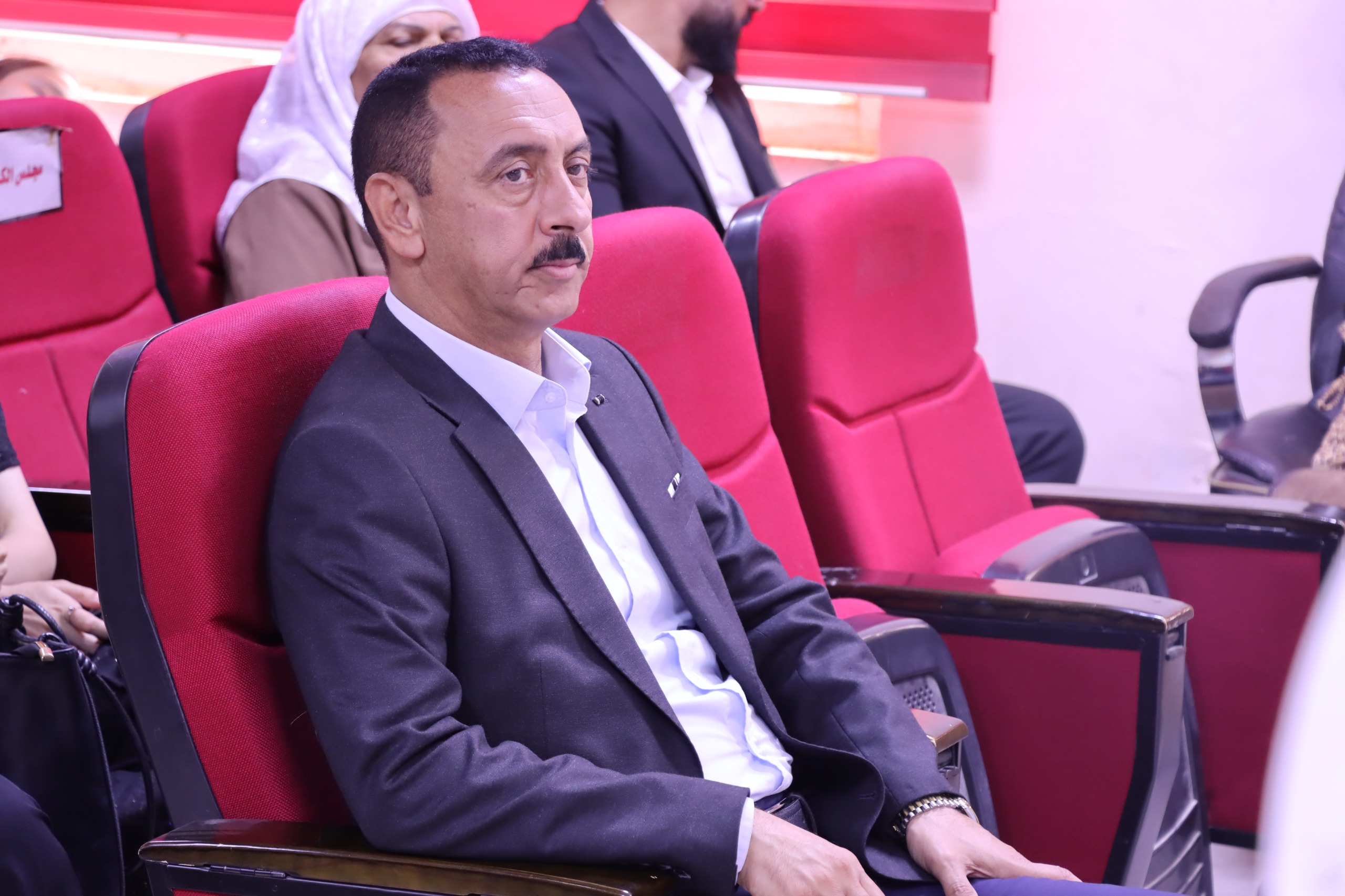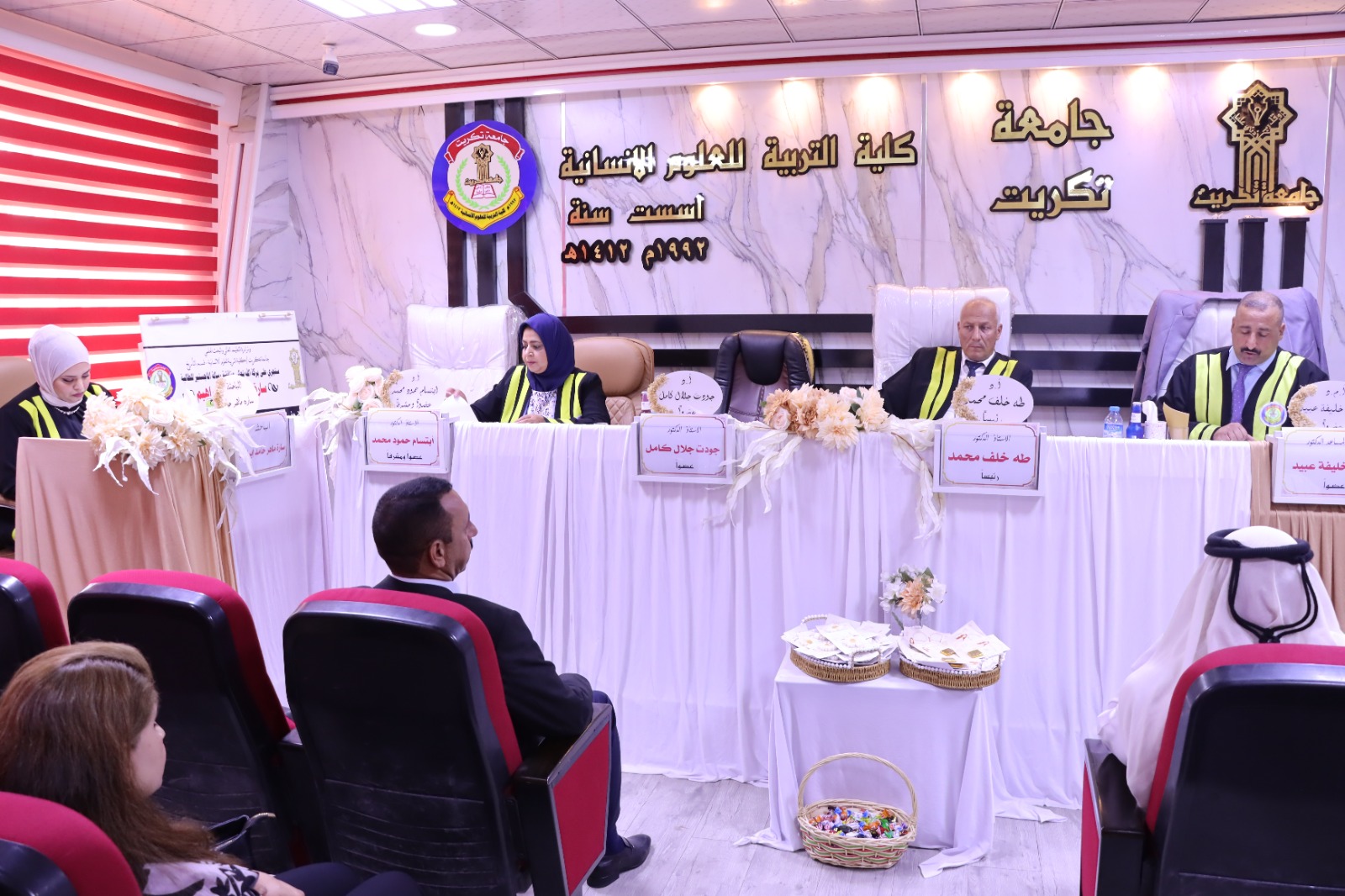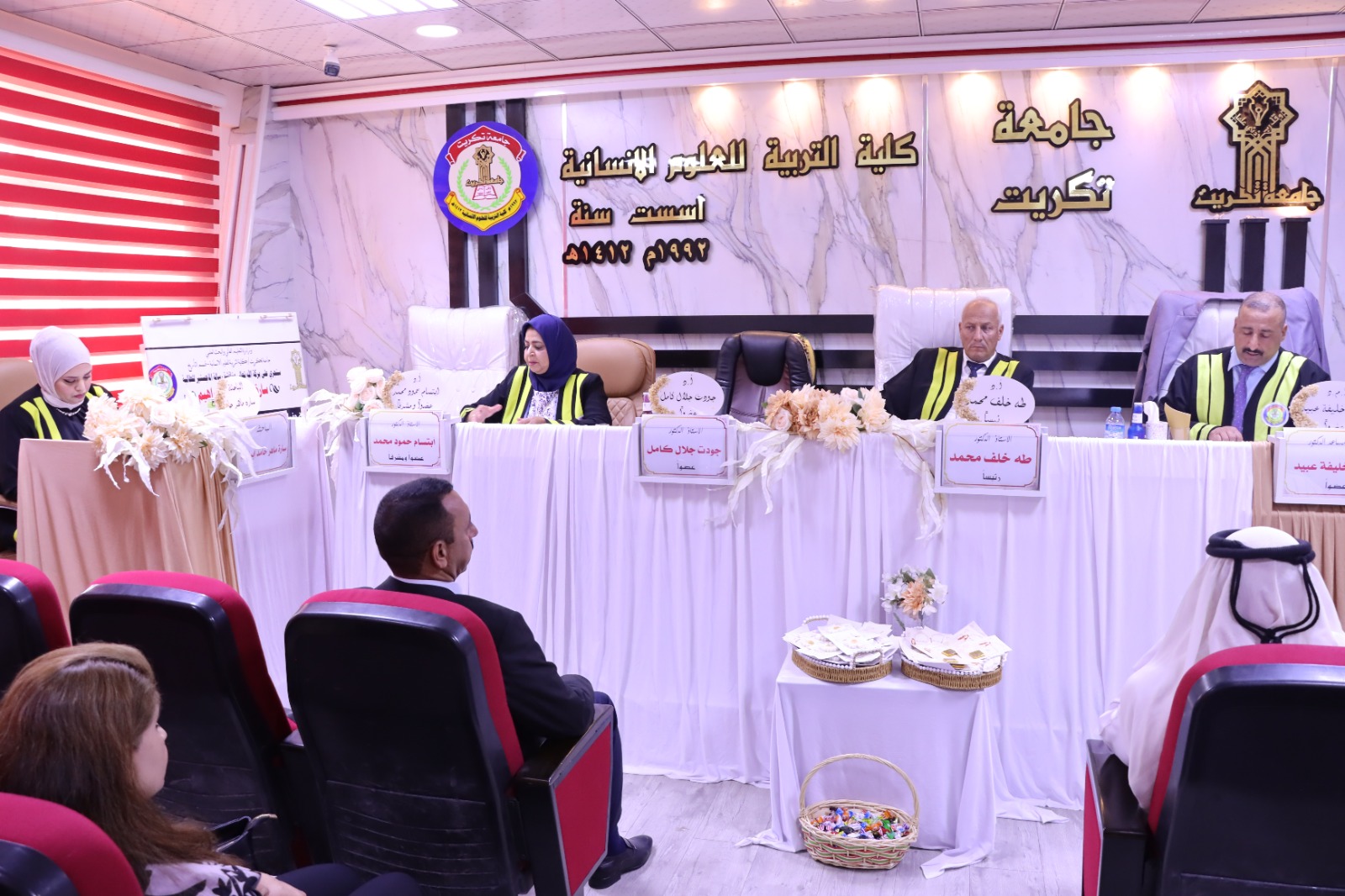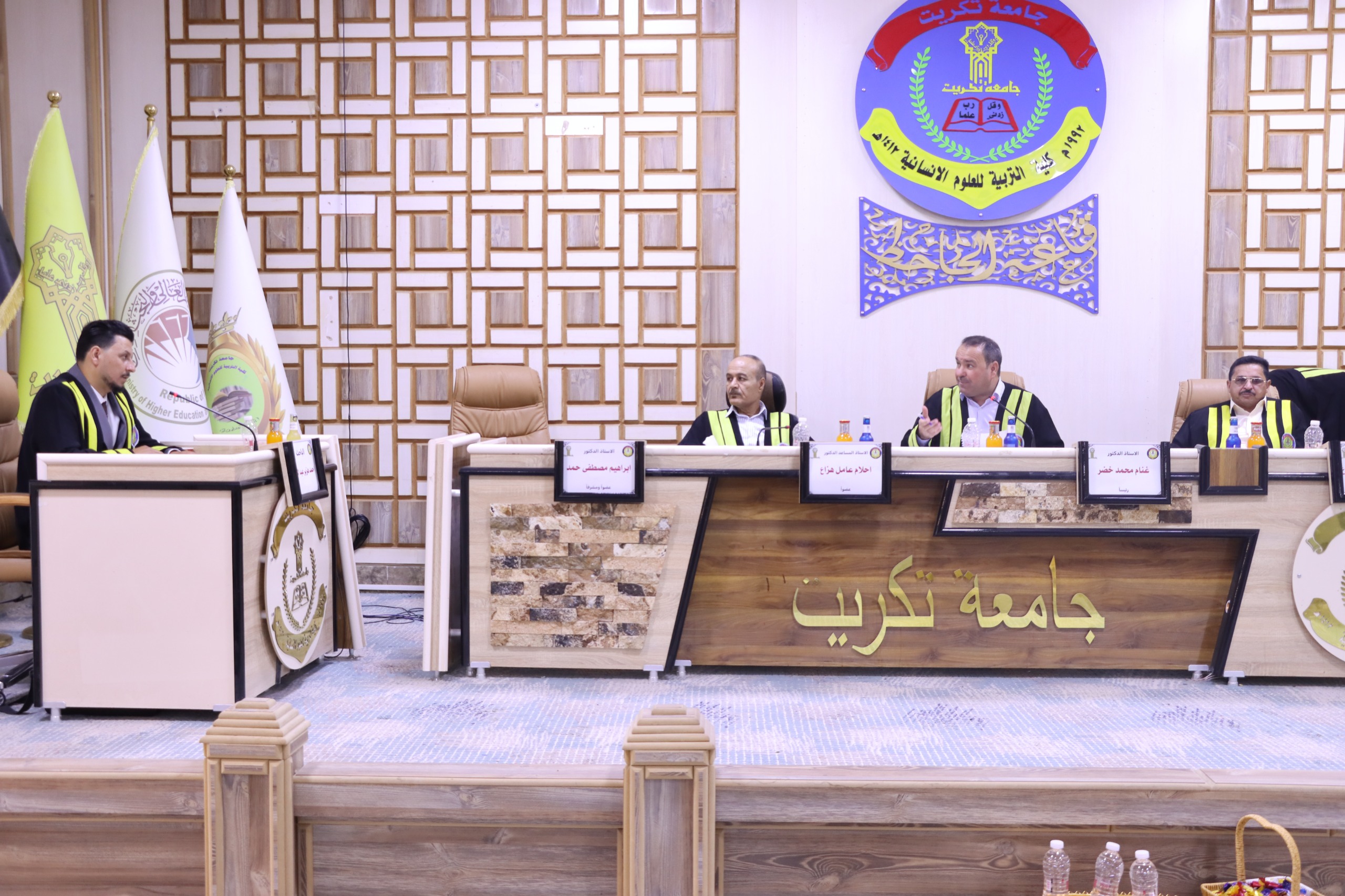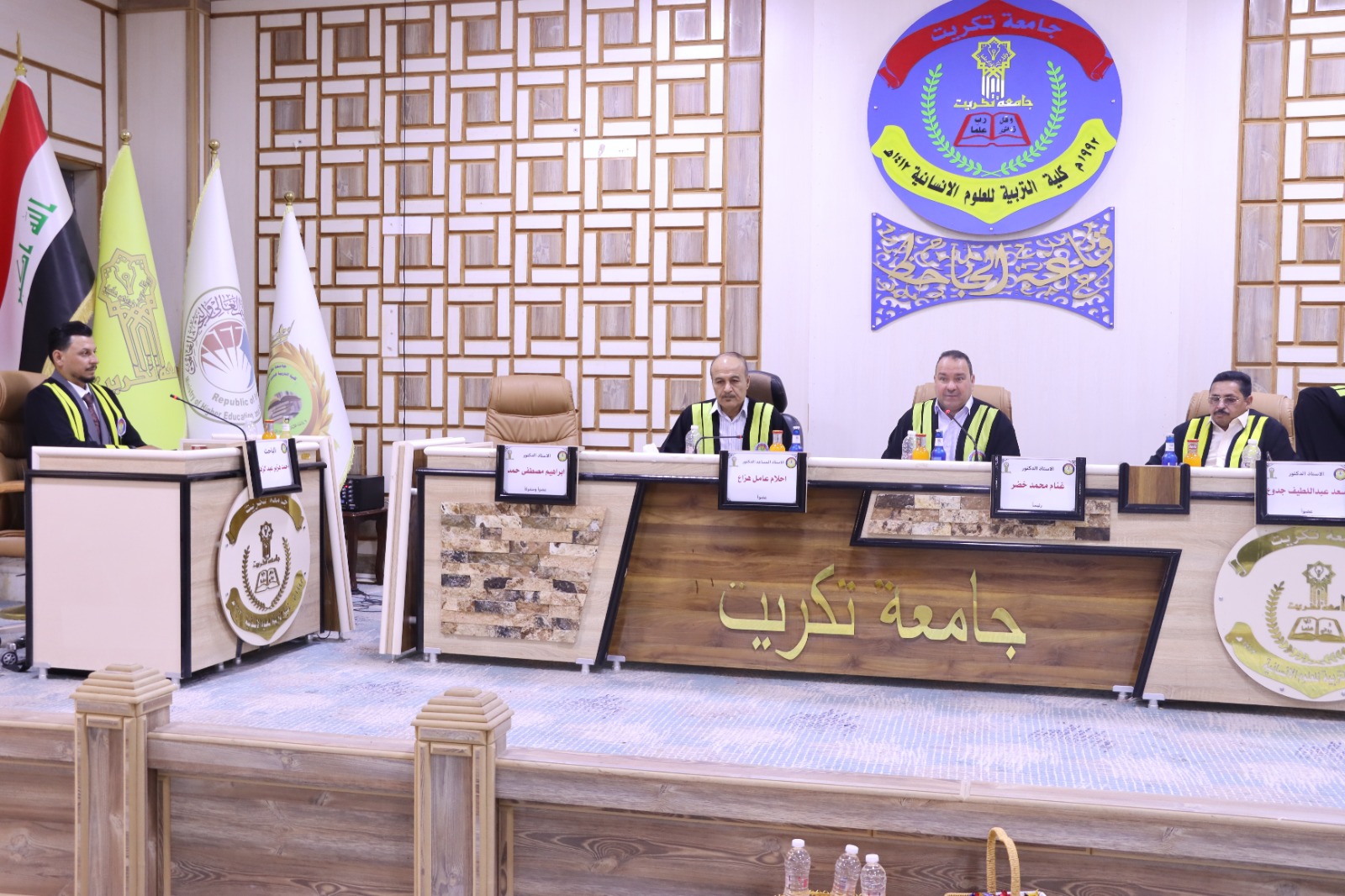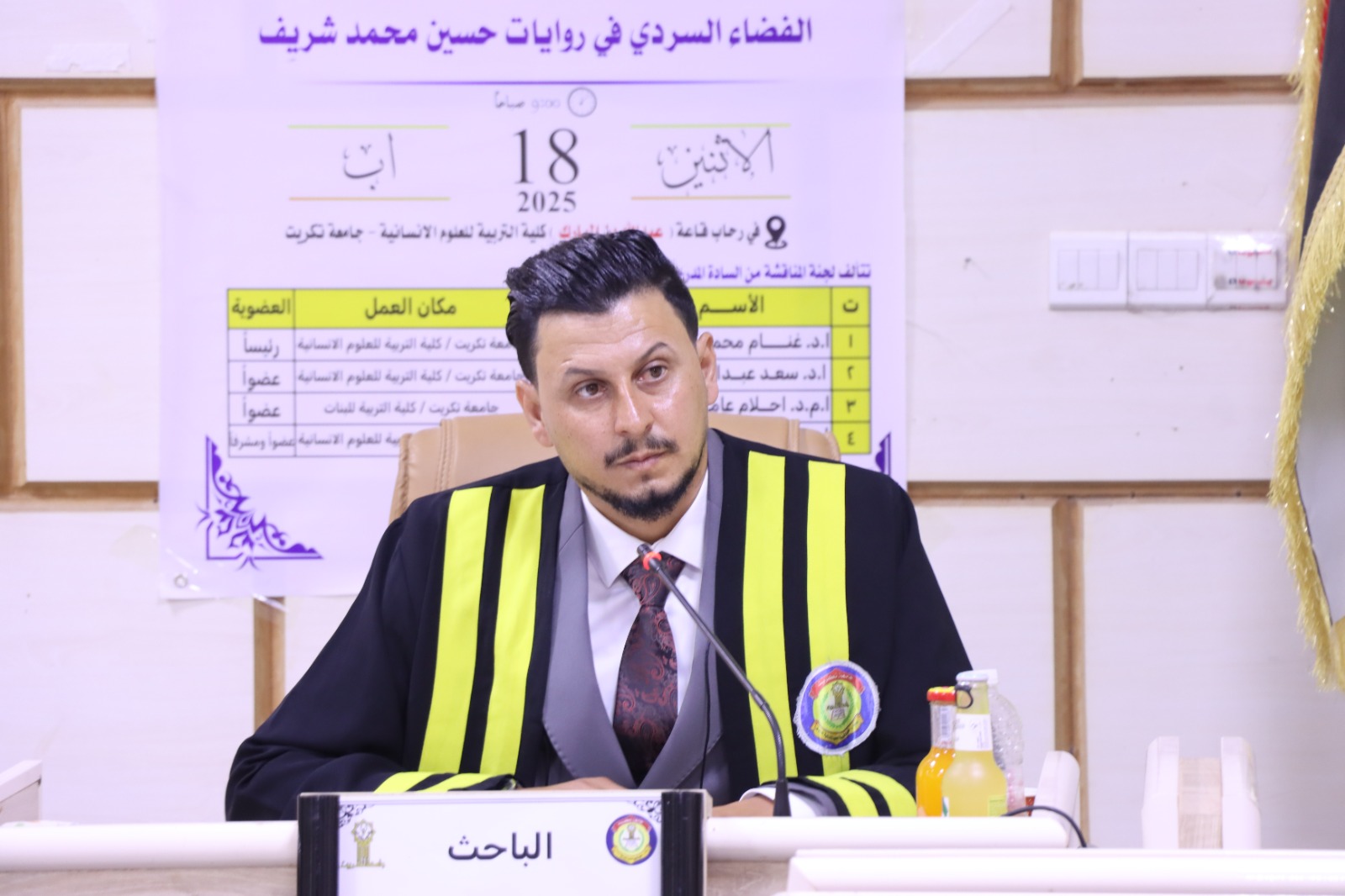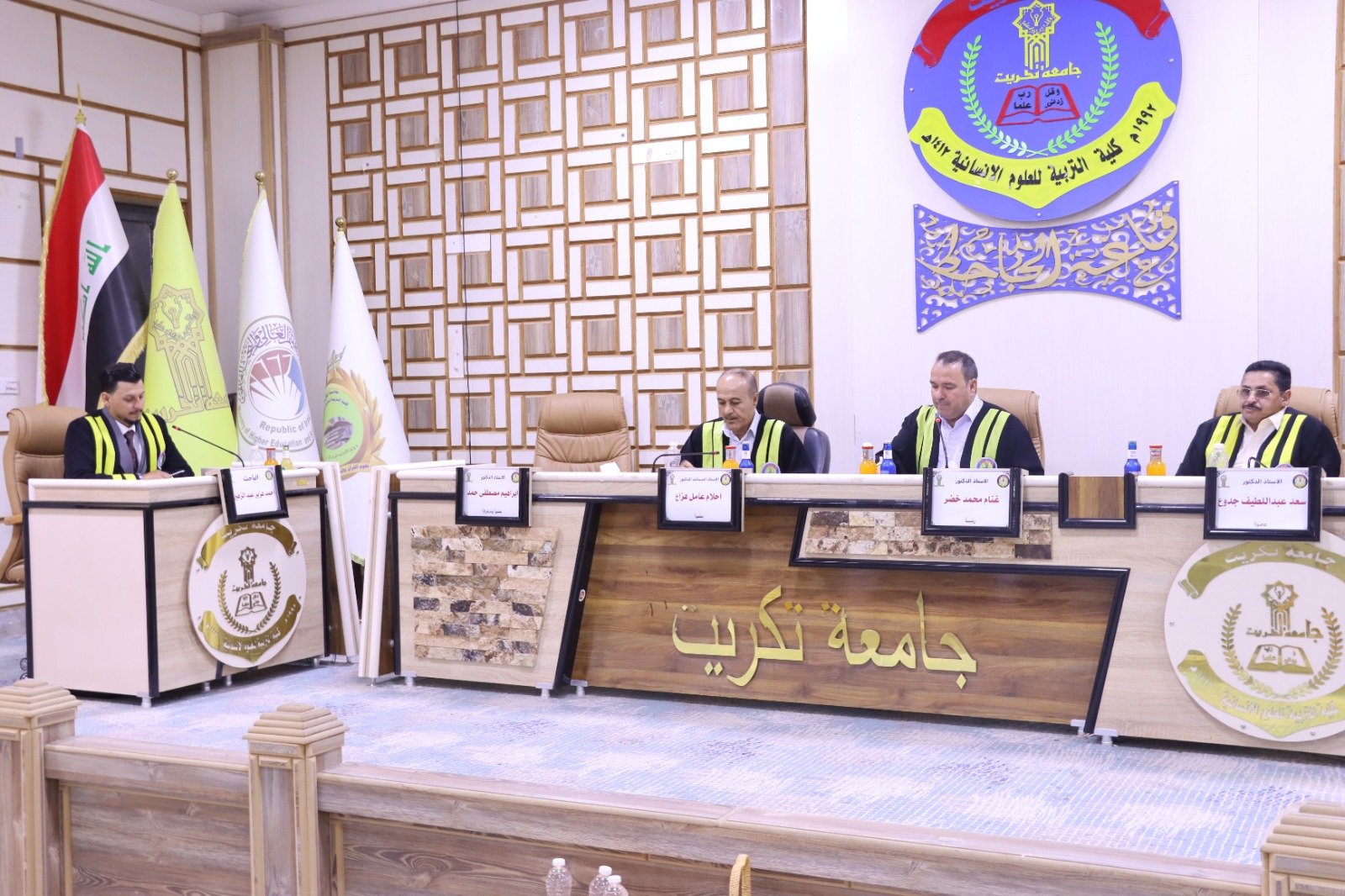
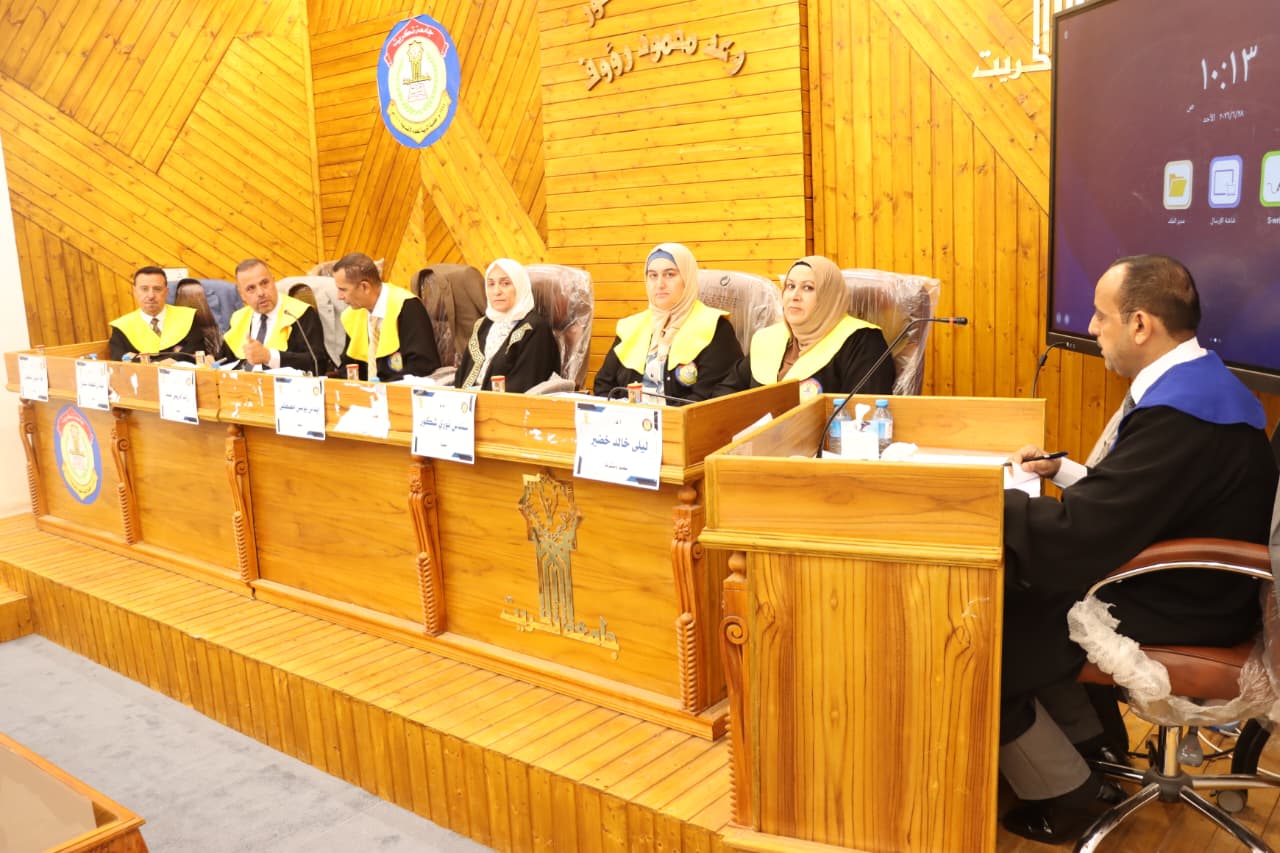
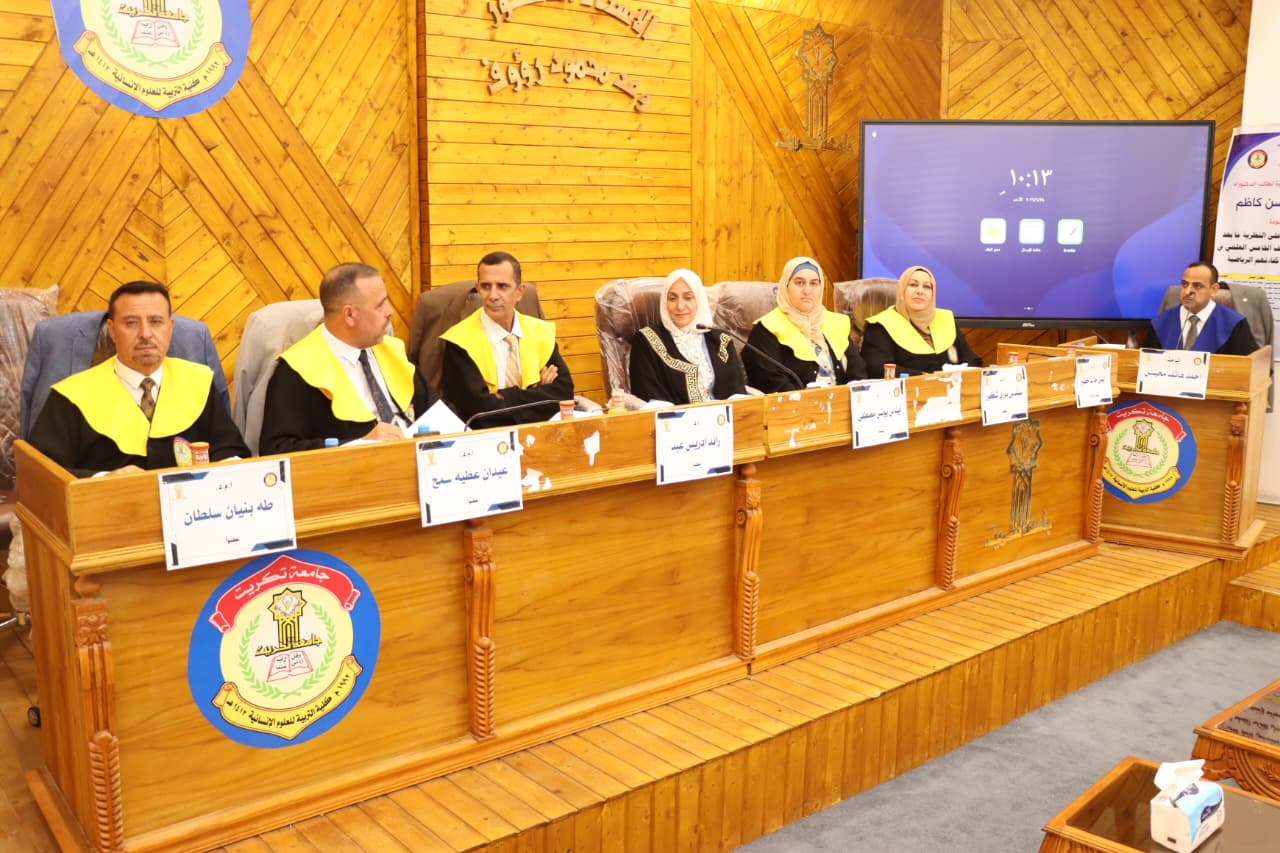
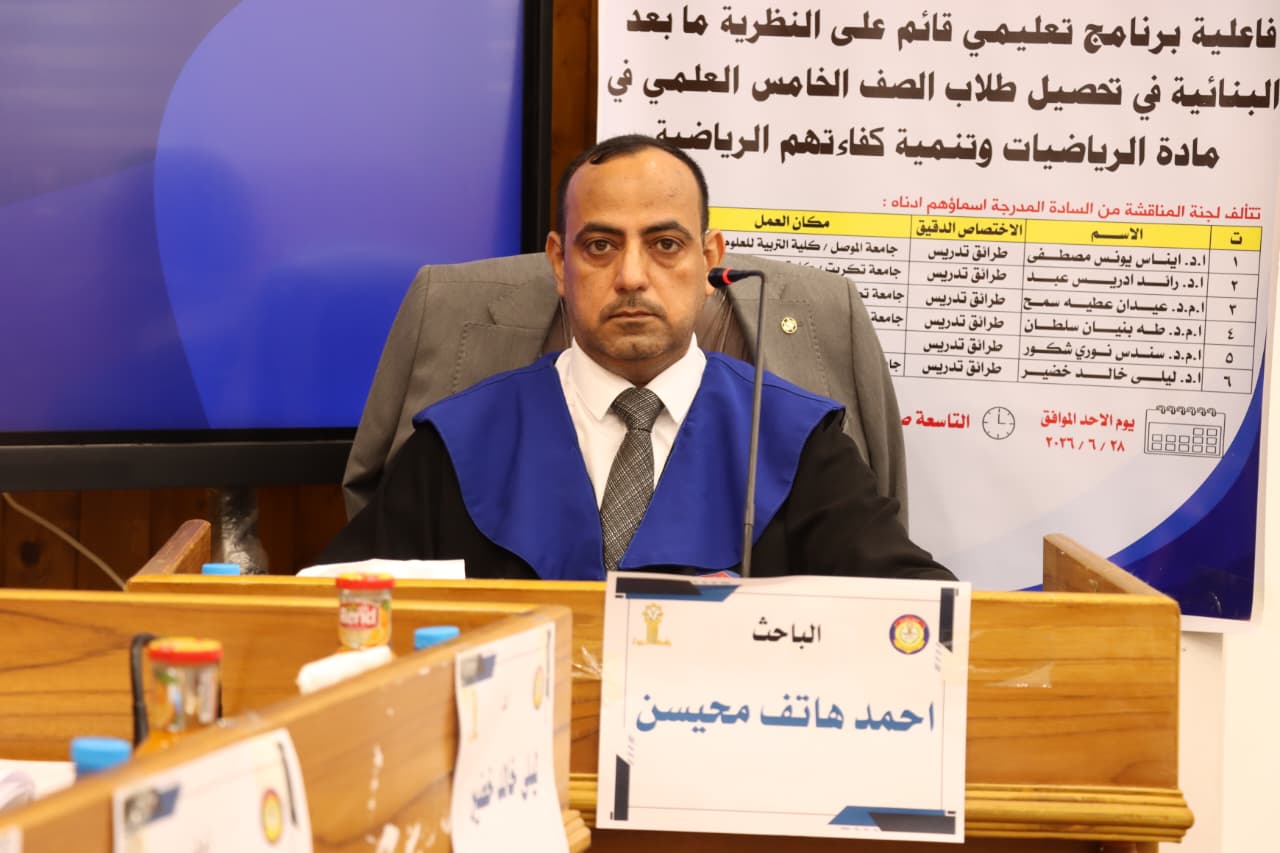
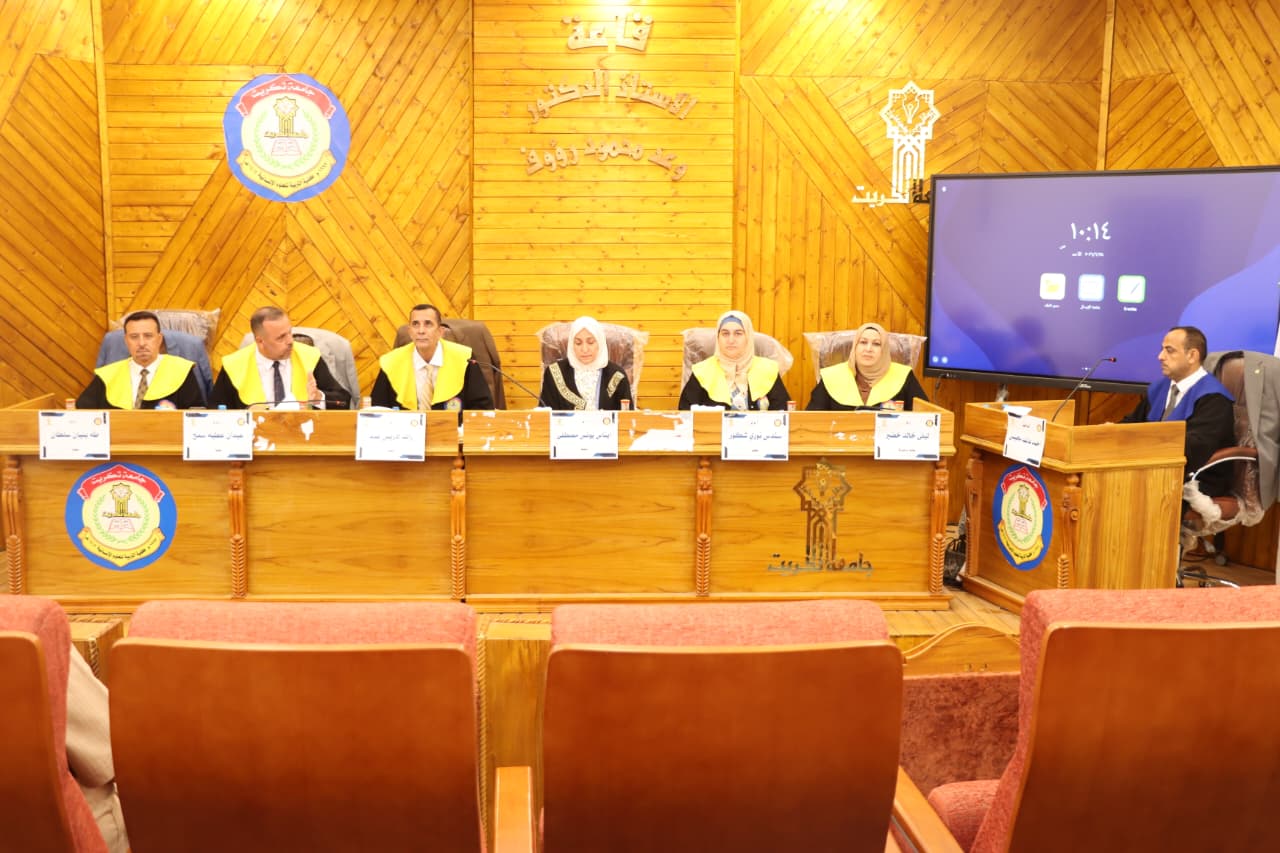
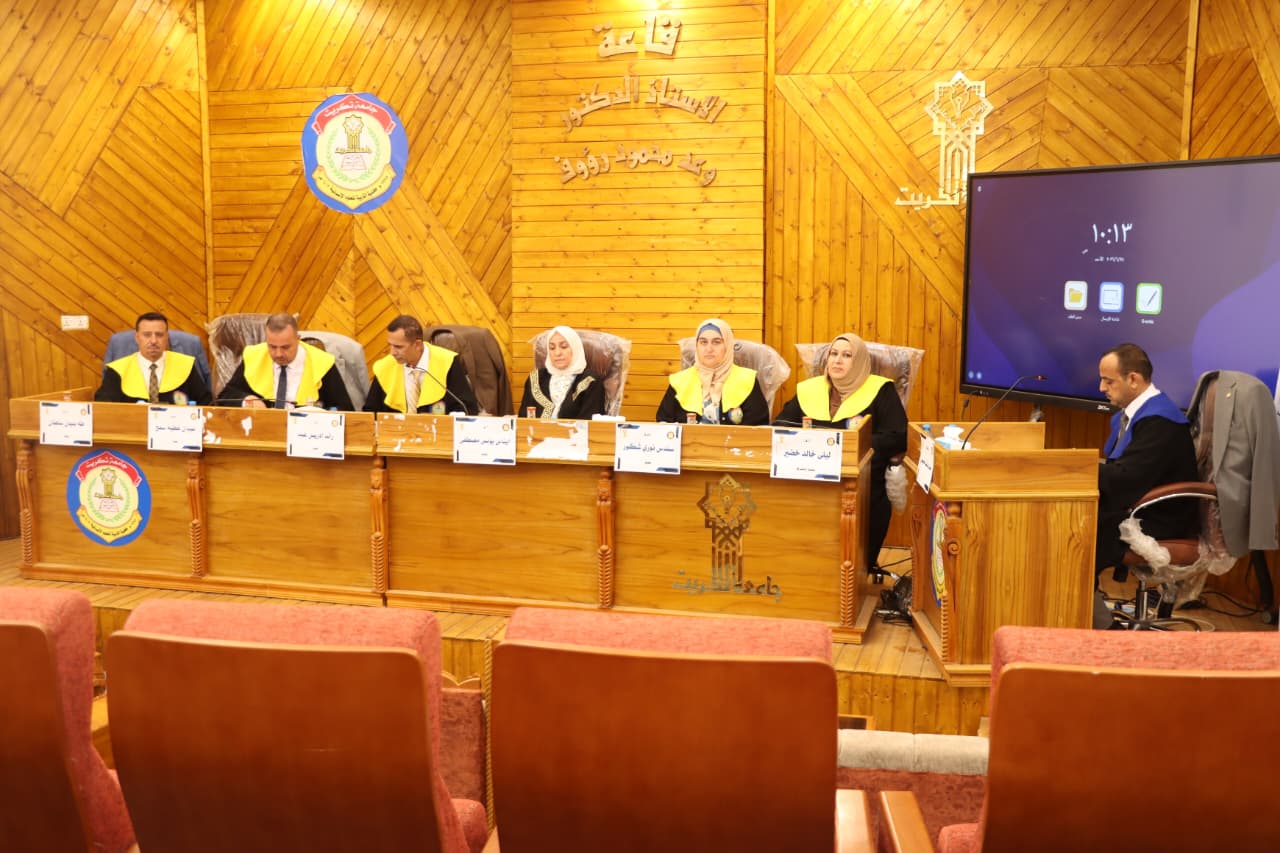
A doctoral dissertation was defended at the Department of Educational and Psychological Sciences, College of Education for Humanities, University of Tikrit, on Sunday, June 28, 2026, by the student Ahmed Hatif Muhsin Al-Omari, entitled “The Effectiveness of an Instructional Program Based on Post-Constructivist Theory in Improving Mathematics Achievement and Developing Mathematical Proficiency among Fifth-Grade Scientific Students.”
The present study aimed to develop an instructional program based on Post-Constructivist Theory and investigate its effectiveness in improving mathematics achievement and developing the mathematical proficiency of fifth-grade scientific students. To achieve the research objectives, the researcher formulated the study hypotheses and employed the descriptive approach in designing the instructional program, while the experimental approach was adopted to examine its effectiveness.
A partially controlled experimental design involving two equivalent groups with pre- and post-tests was utilized. The research sample consisted of 58 students, who were purposively selected from the study population. Equivalence between the experimental and control groups was established prior to the experiment. The researcher also prepared all necessary research requirements, including identifying the instructional content, formulating behavioral objectives according to Bloom’s six cognitive levels, and designing lesson plans for both groups. The experimental group was taught using the instructional program based on Post-Constructivist Theory, whereas the control group received instruction through the conventional teaching method.
The research instruments included an achievement test, a mathematical proficiency test, and a productive disposition scale. Appropriate statistical analyses were conducted, and the findings revealed that students in the experimental group significantly outperformed their counterparts in the control group in terms of mathematics achievement and mathematical proficiency.
The study reached several significant conclusions, including:
- The instructional program based on Post-Constructivist Theory provided an interactive learning environment that enabled students in the experimental group to play an active role in managing the learning process. By encouraging them to generate mathematical ideas, the program enhanced their ability to transfer learning and effectively apply acquired knowledge to new mathematical situations and problems, which positively influenced their academic achievement in mathematics.
- The instructional program offered meaningful opportunities for fifth-grade scientific students to engage in higher-order cognitive processes through dialogue and discussion. During the implementation of the program, students demonstrated a high level of enthusiasm and active participation.
- The instructional models incorporated into the Post-Constructivist program enabled students to understand and analyze mathematical problems using inductive reasoning, deductive reasoning, and logical inference. Consequently, students became more capable of careful planning before making decisions, thereby contributing to the development of their mathematical proficiency.
The examination committee consisted of the following faculty members:
- Prof. Dr. Enas Younis Mustafa – University of Mosul, College of Education for Pure Sciences – Chairperson.
- Prof. Dr. Raed Idris Abd – University of Tikrit, College of Education for Pure Sciences – Member.
- Asst. Prof. Dr. Aidan Atiyah Samah – University of Tikrit, College of Education for Humanities – Member.
- Asst. Prof. Dr. Taha Bunyan Sultan – University of Tikrit, College of Education for Humanities – Member.
- Prof. Dr. Sundus Nouri Shakour – University of Mosul, College of Education for Women – Member.
- Prof. Dr. Layla Khalid Khudair – University of Tikrit, College of Education for Humanities – Member and Supervisor.
Media and Government Communication Division
College of Education for Humanities – University of Tikrit