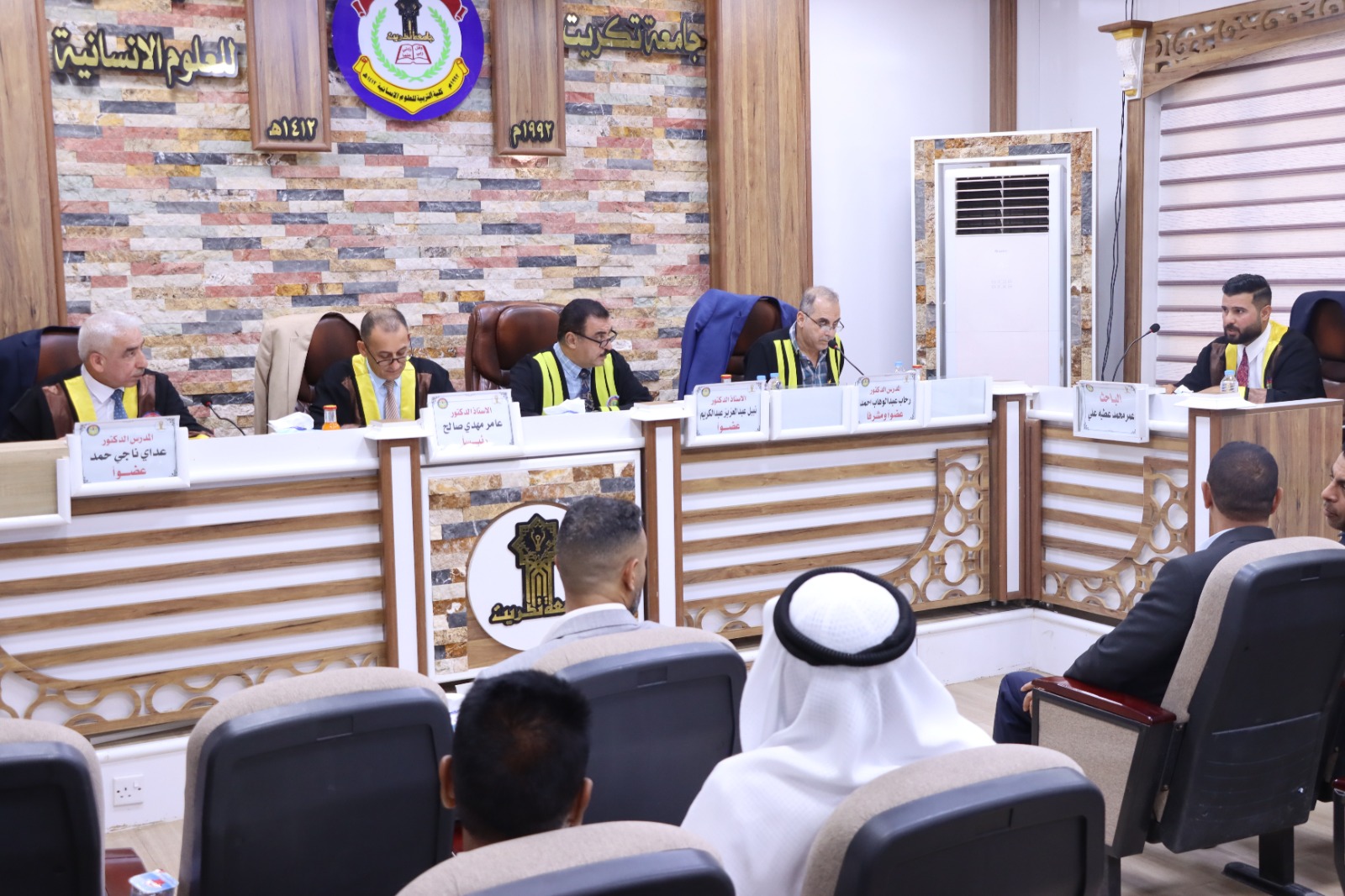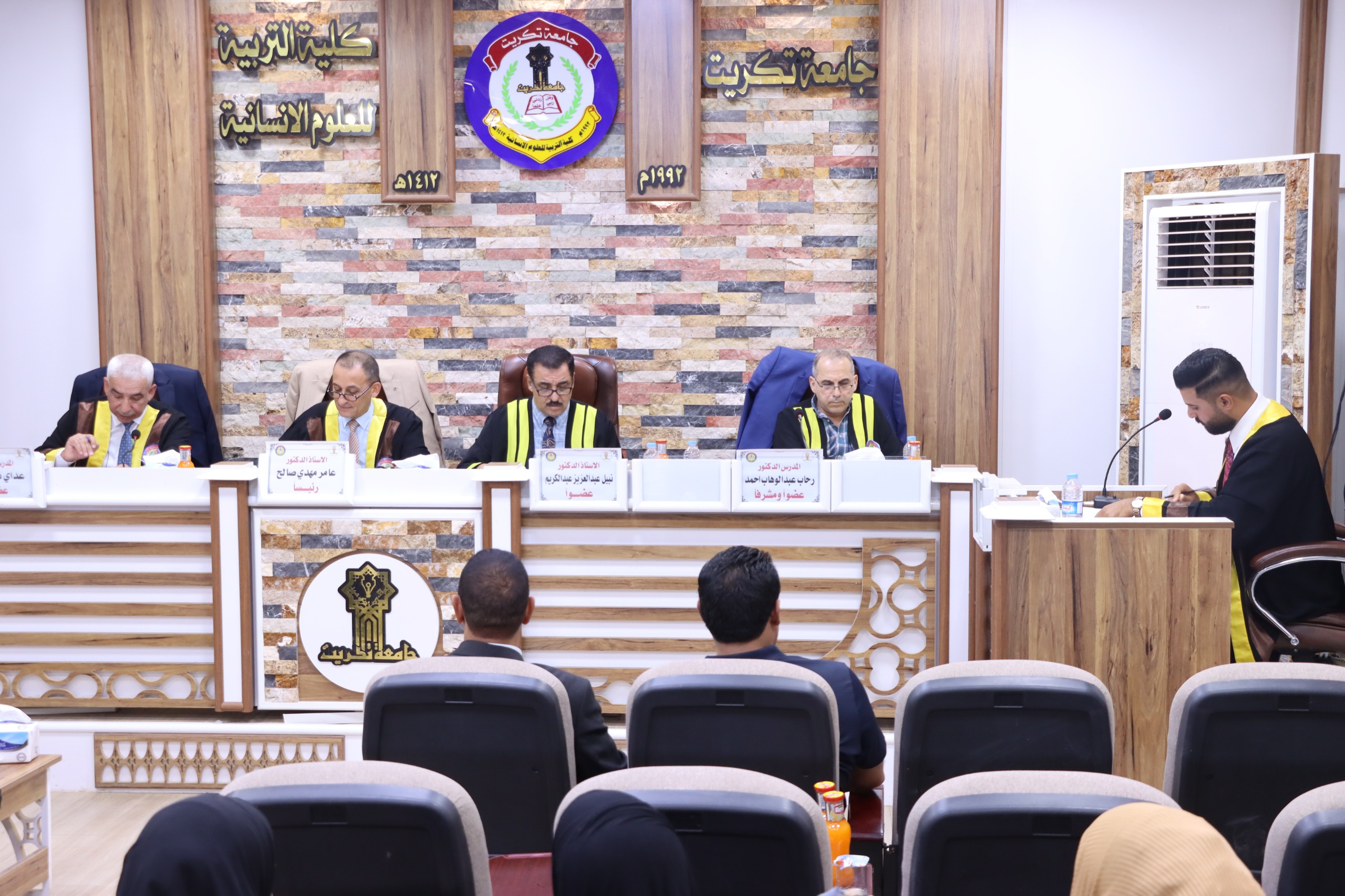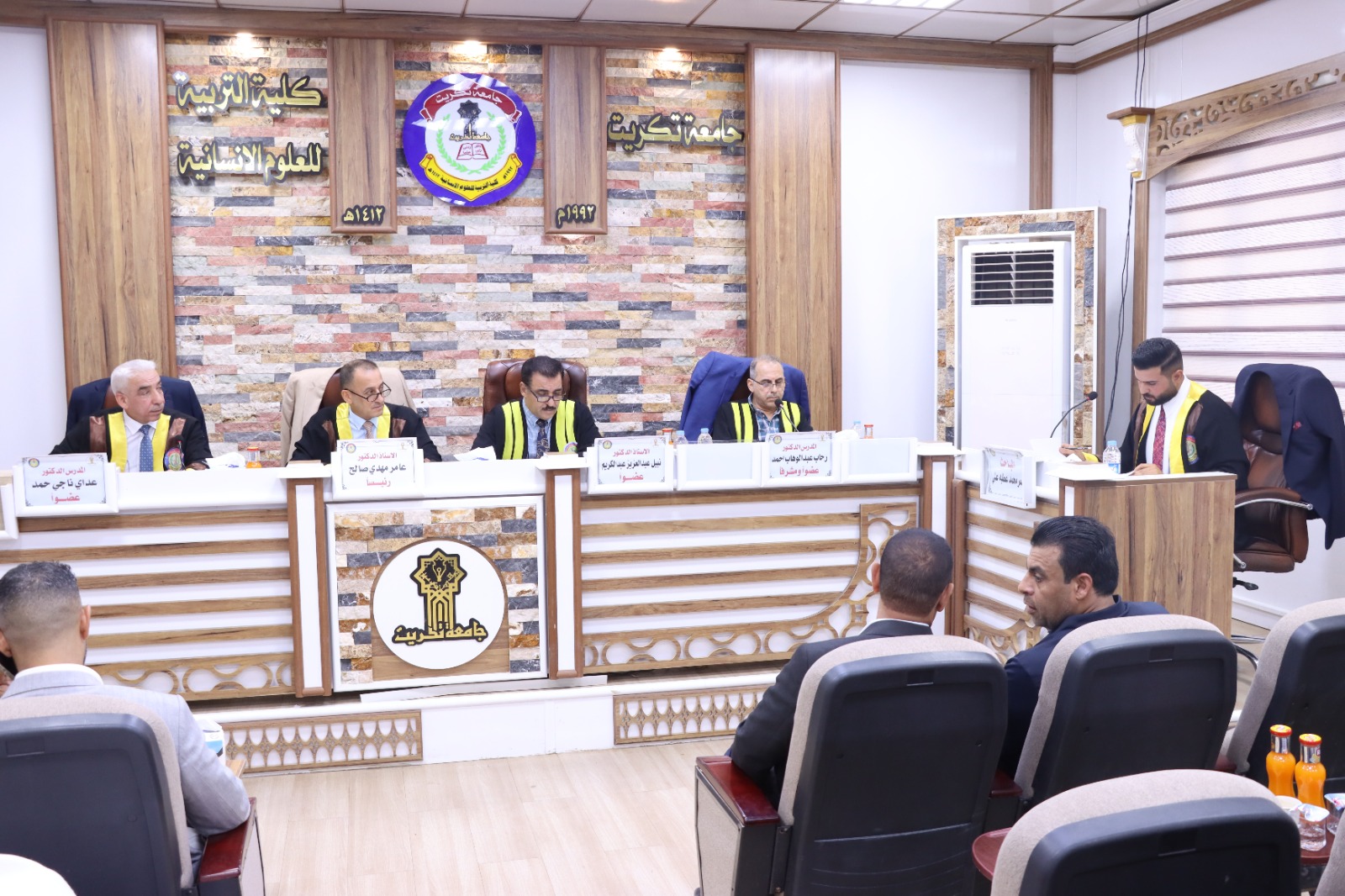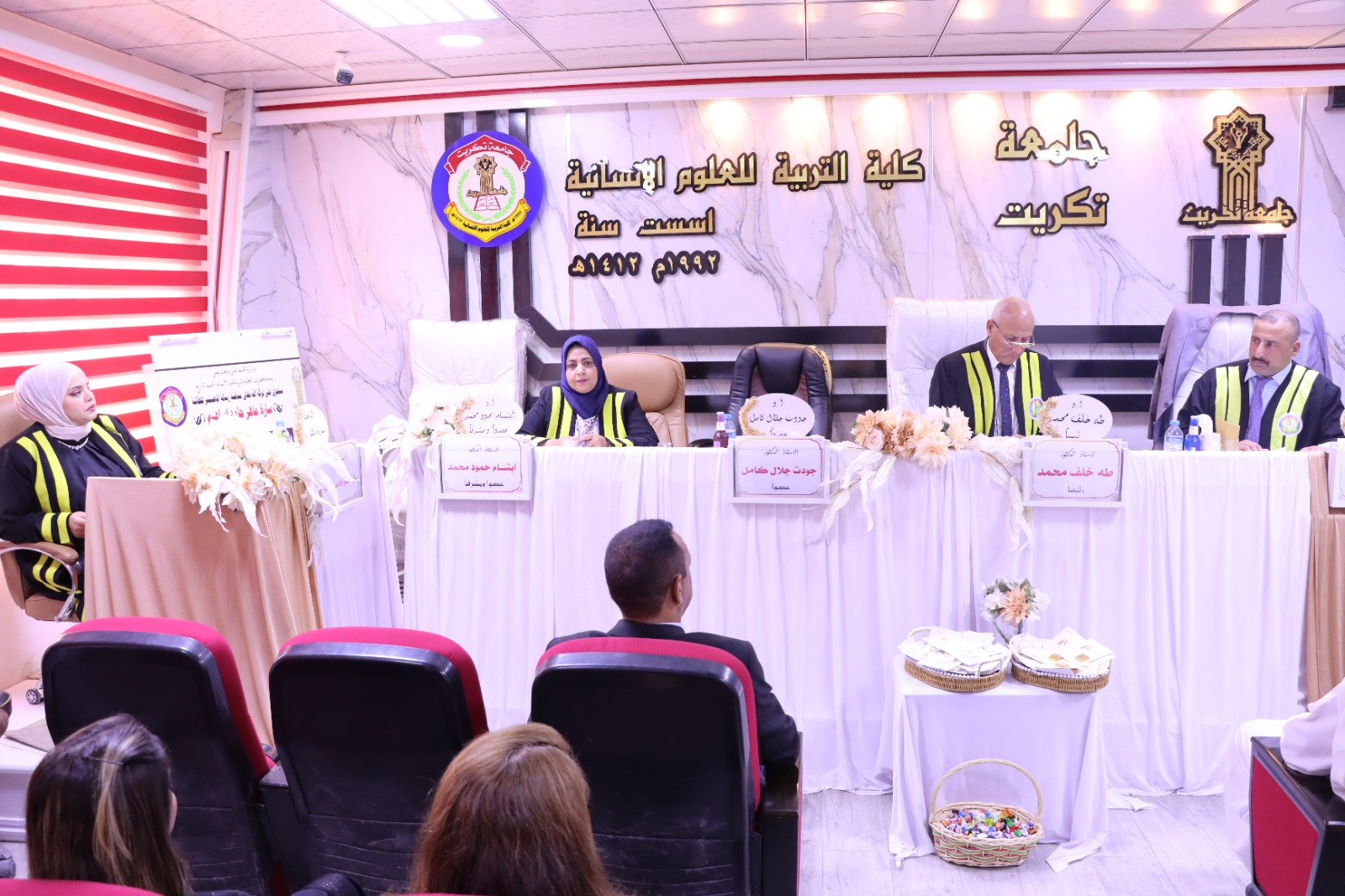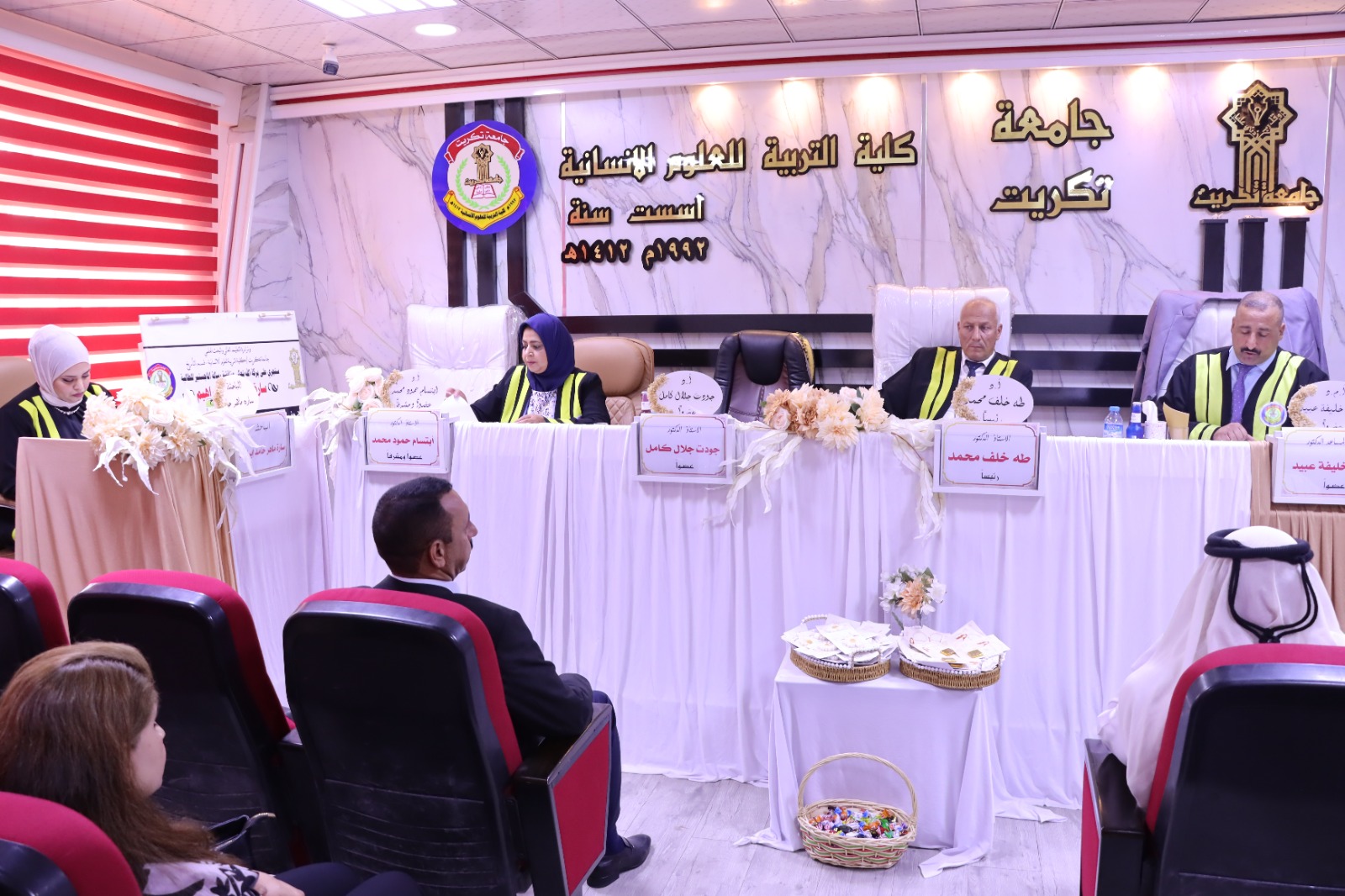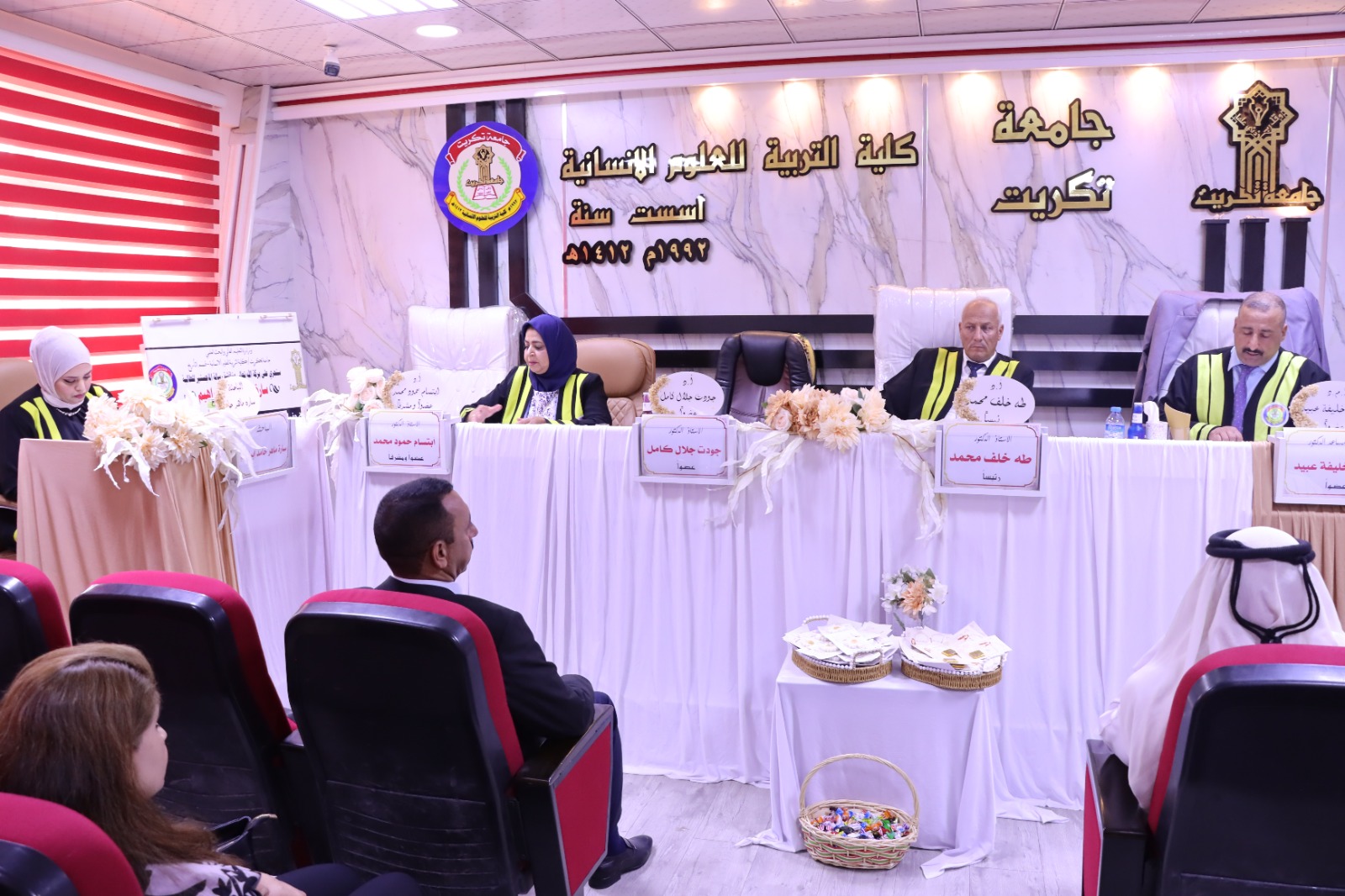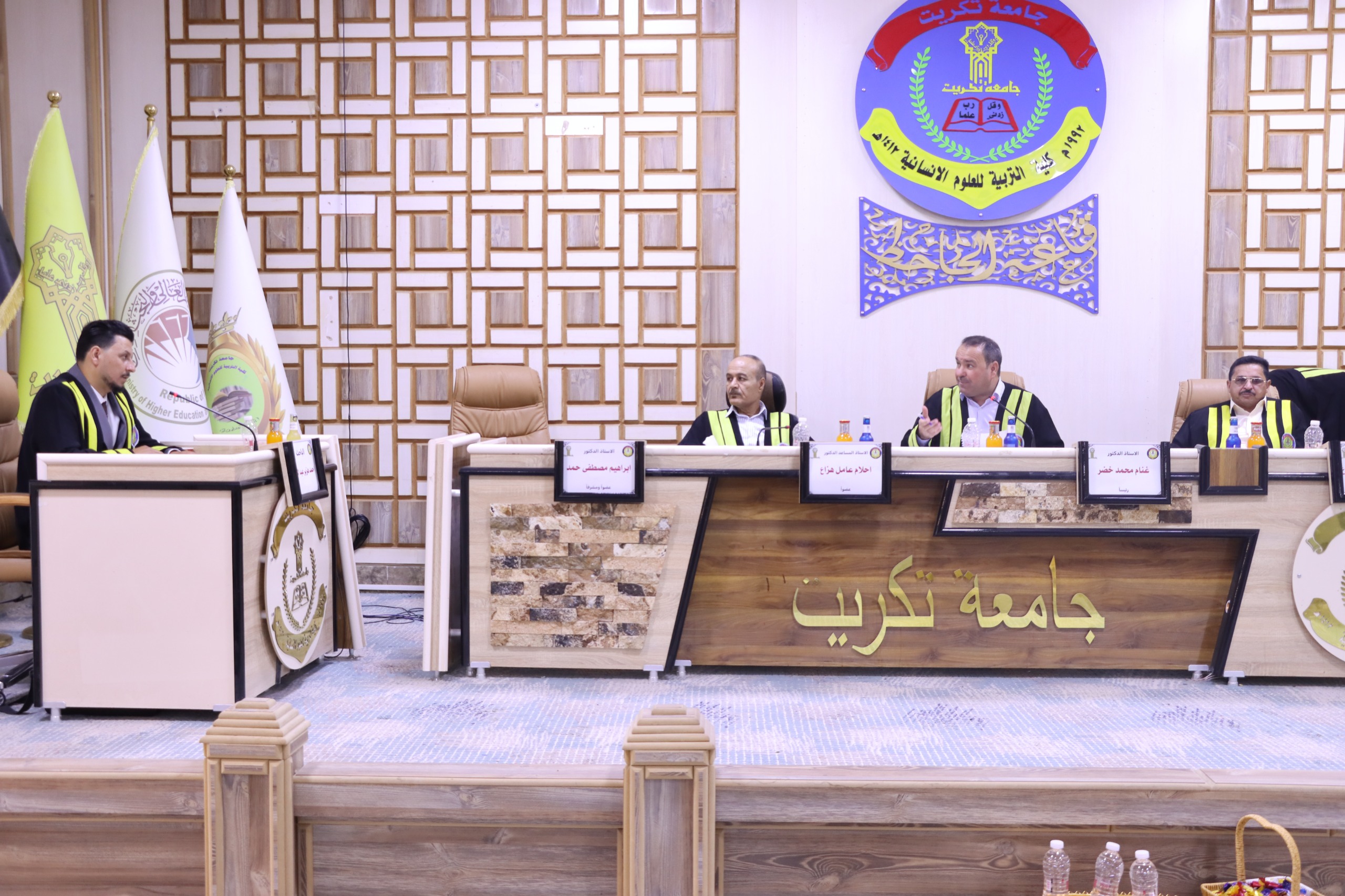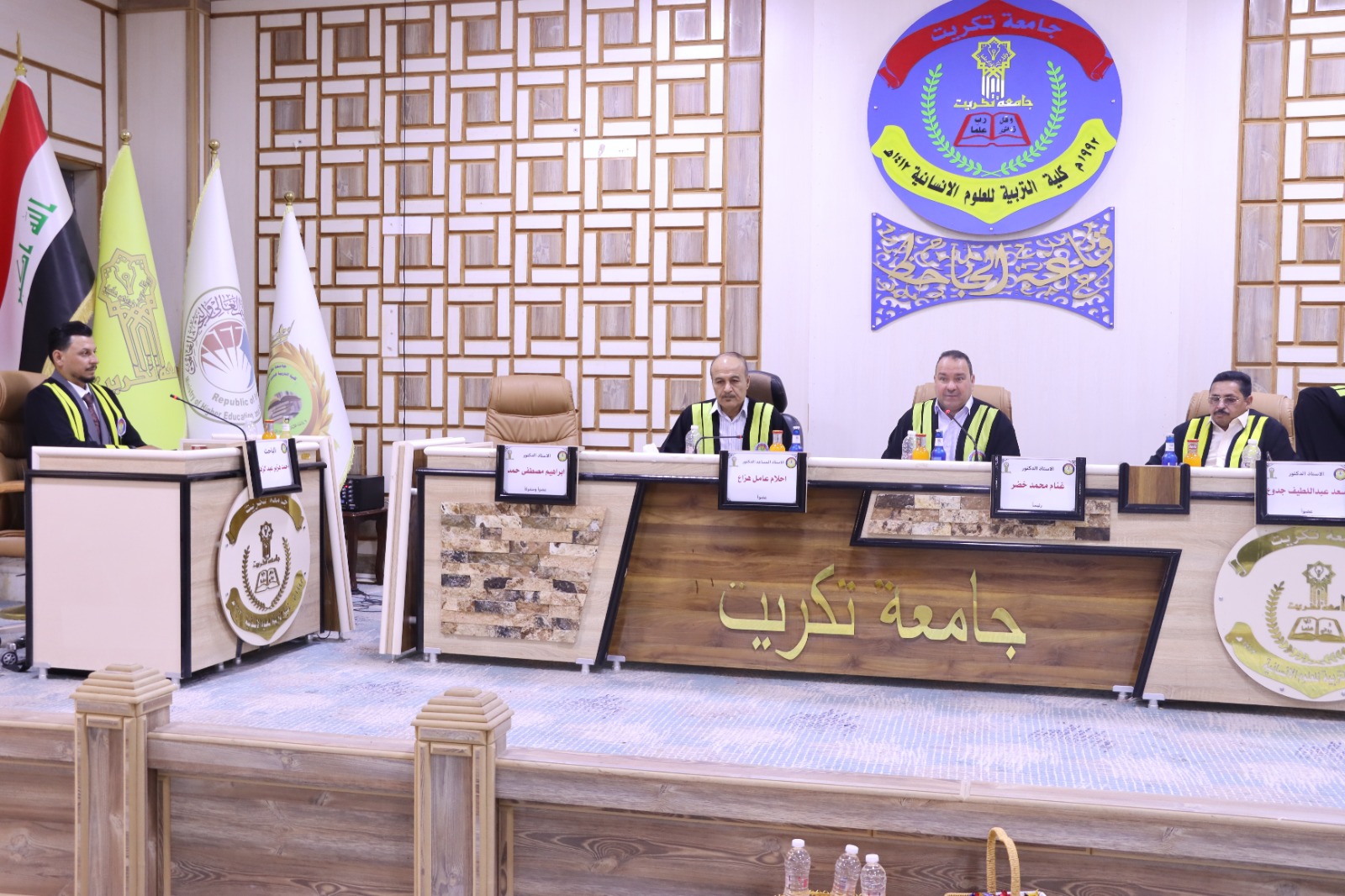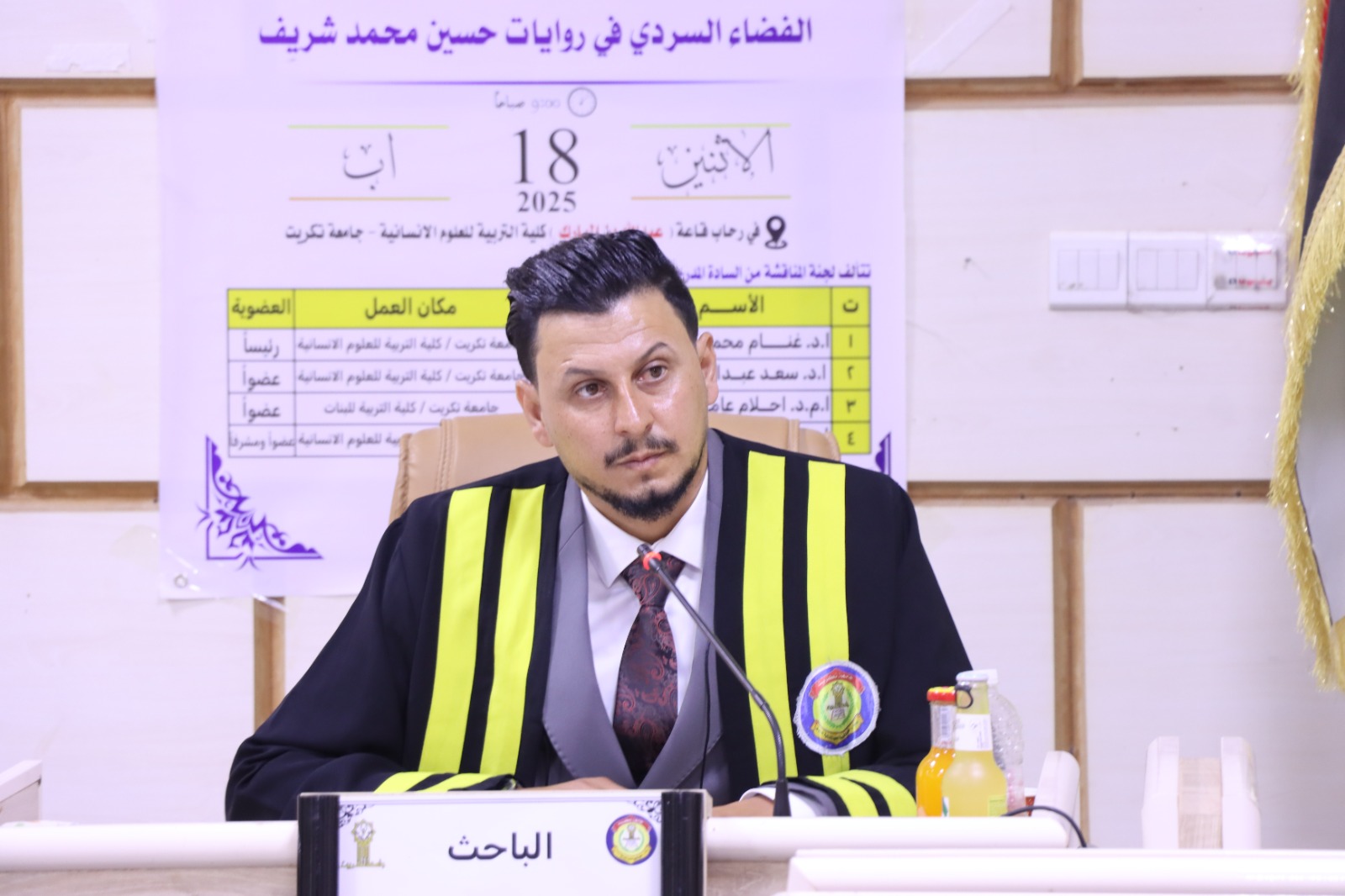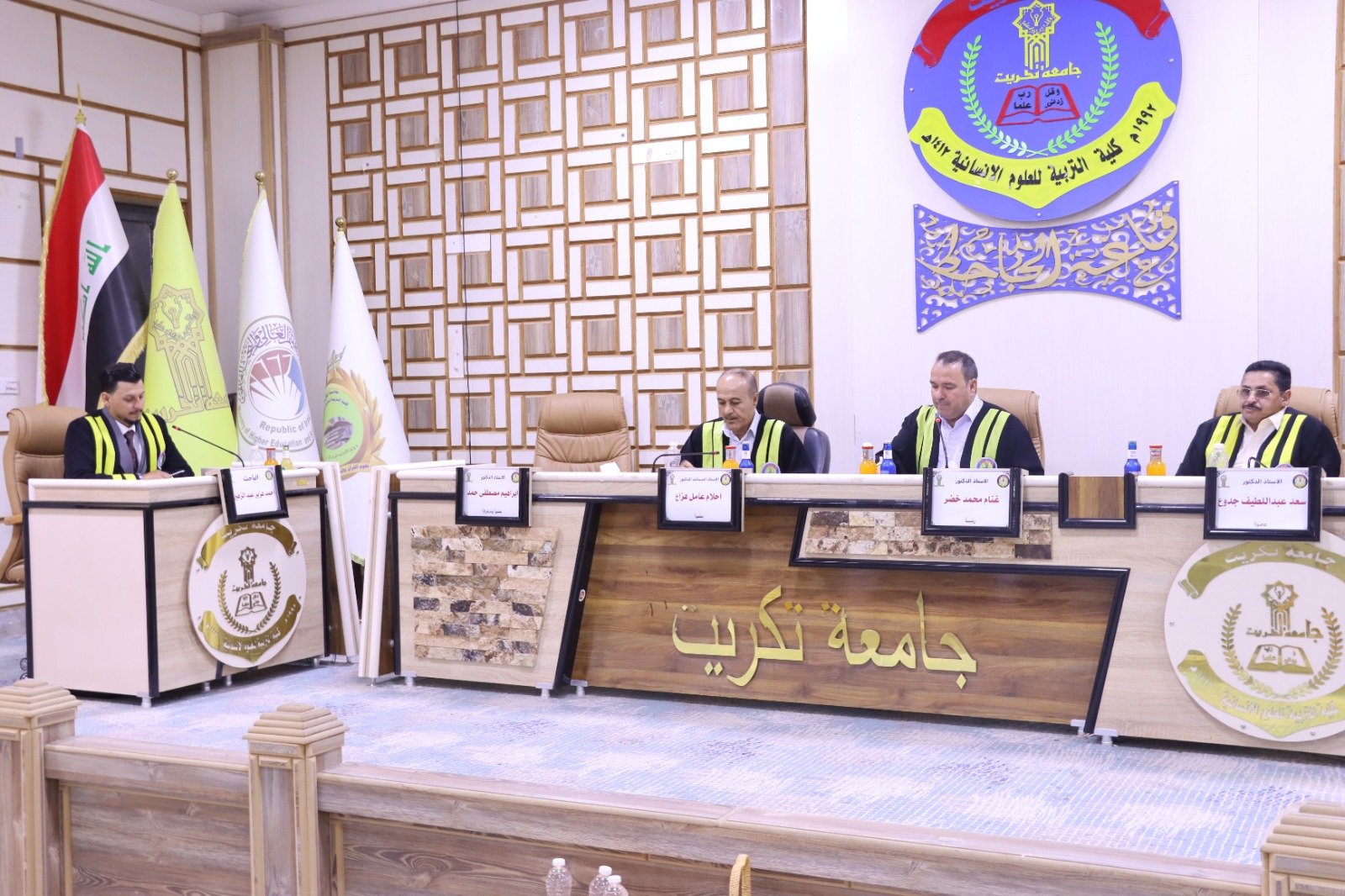
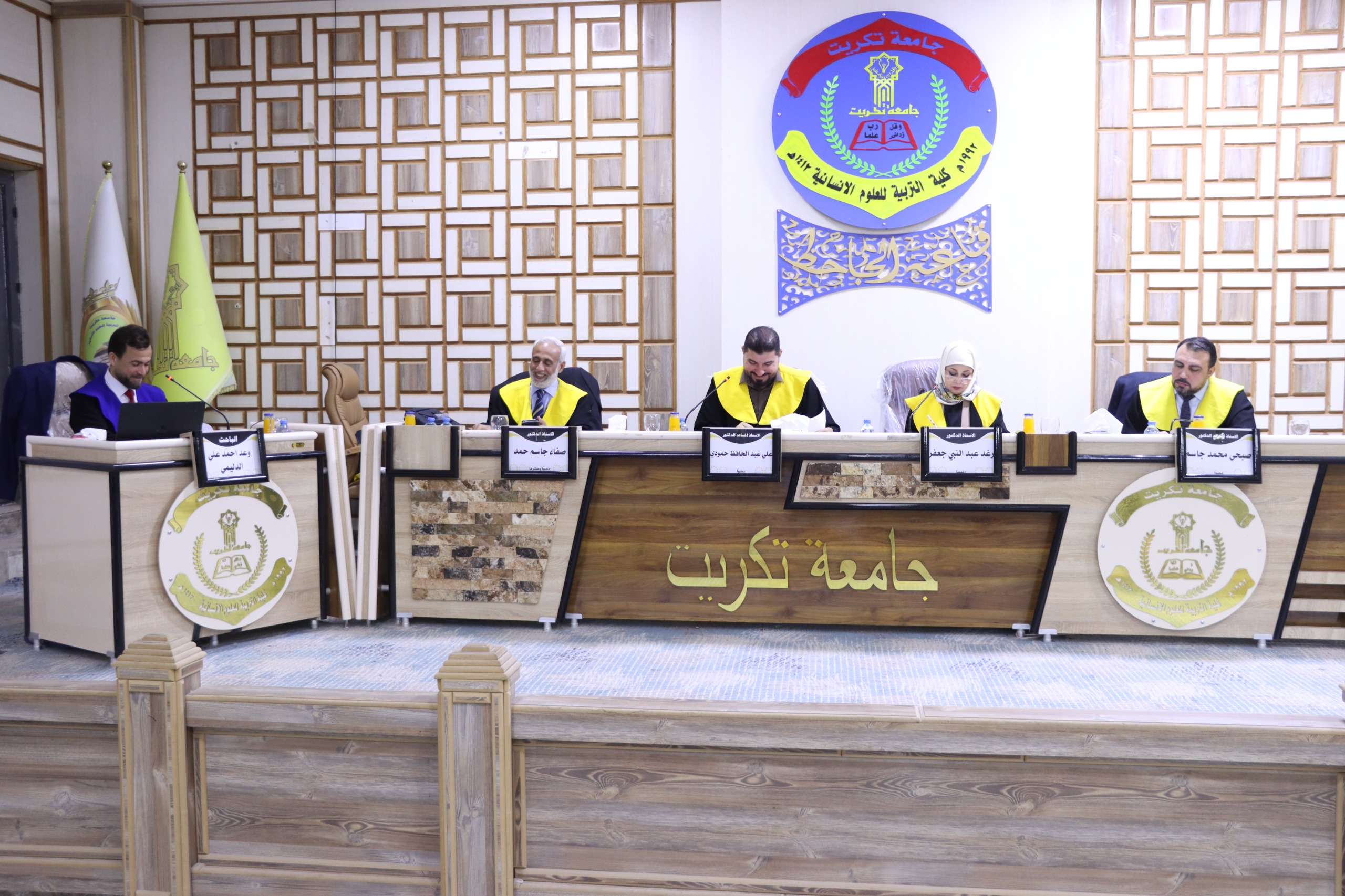
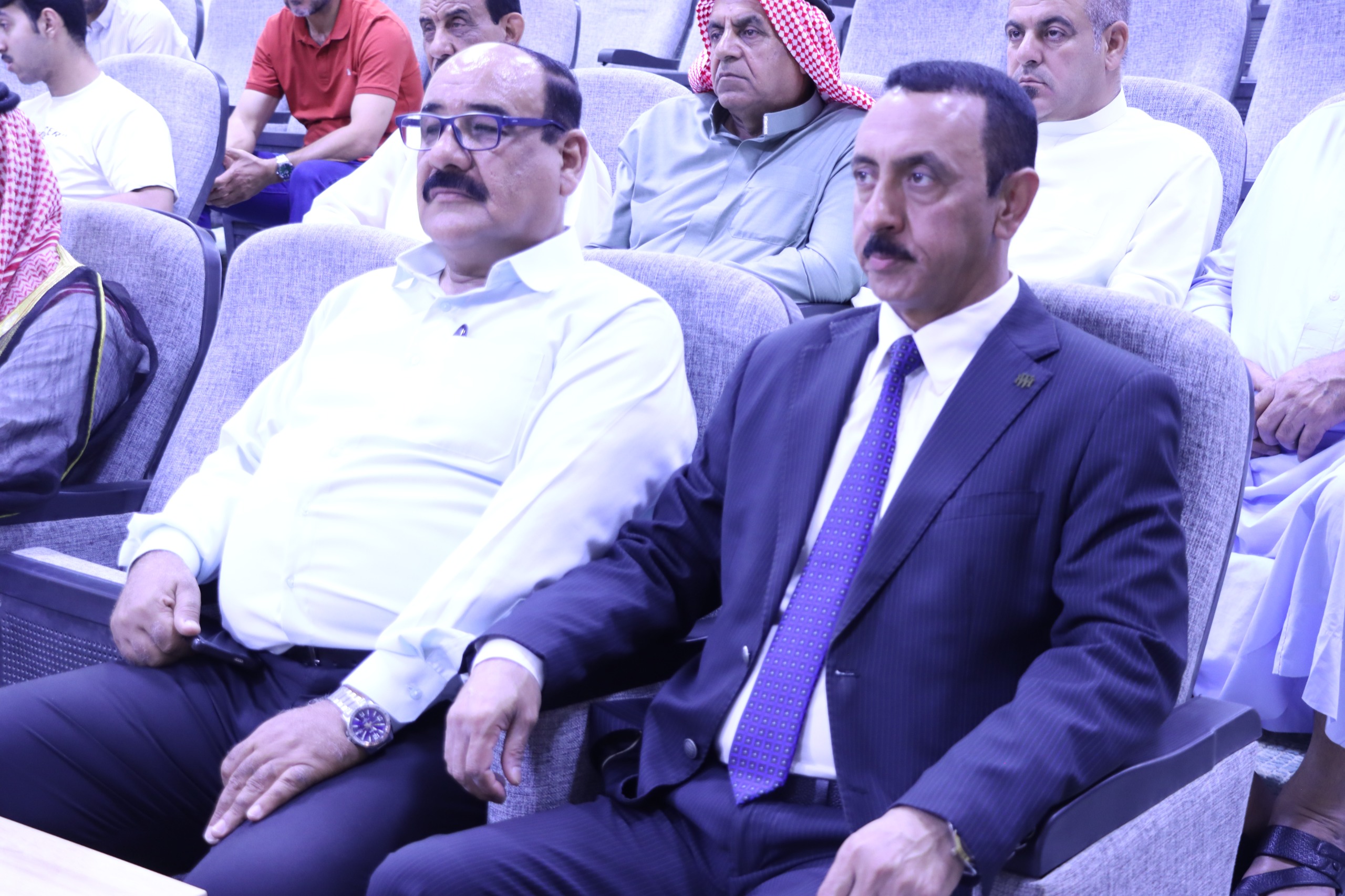
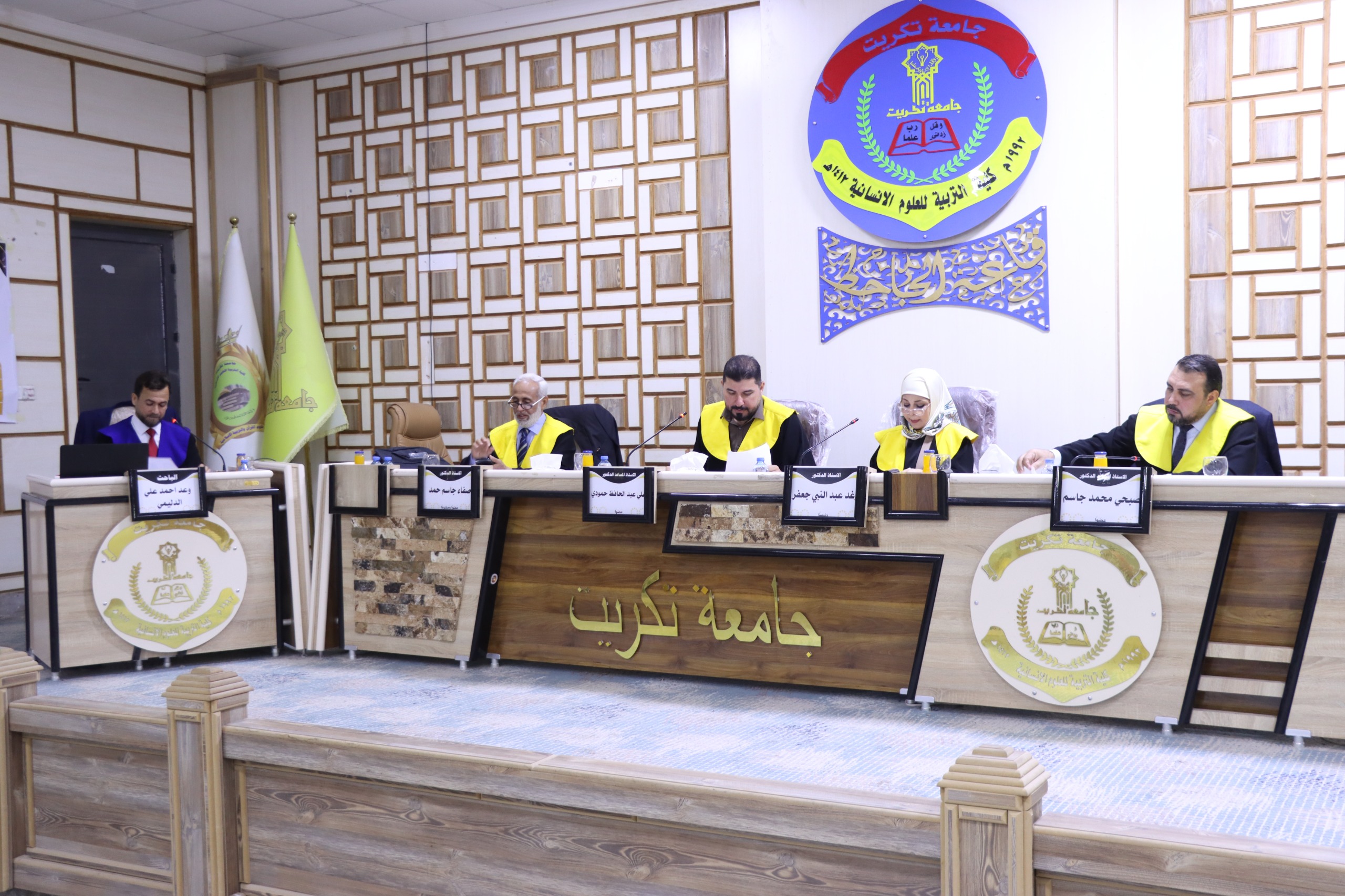
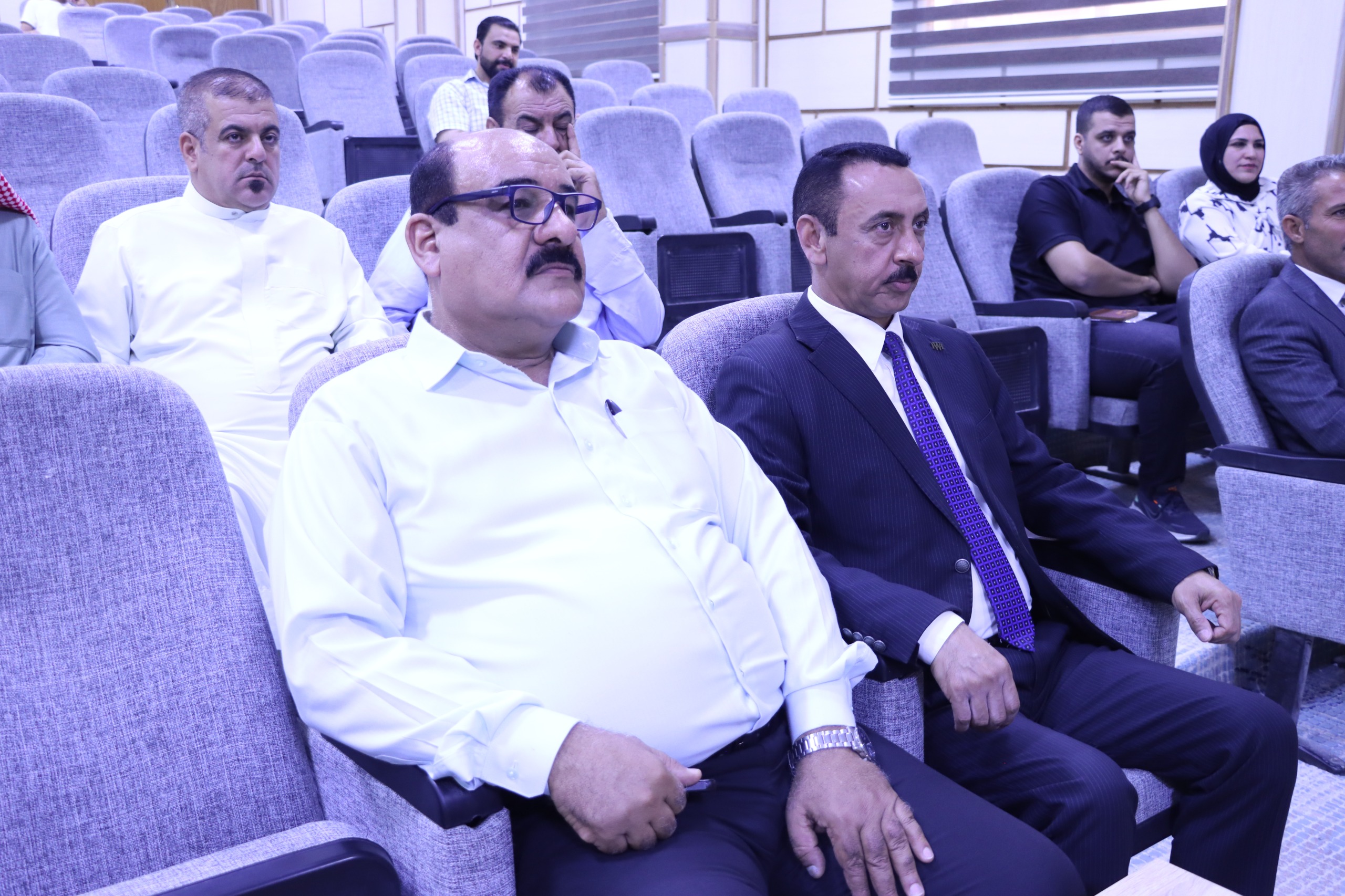
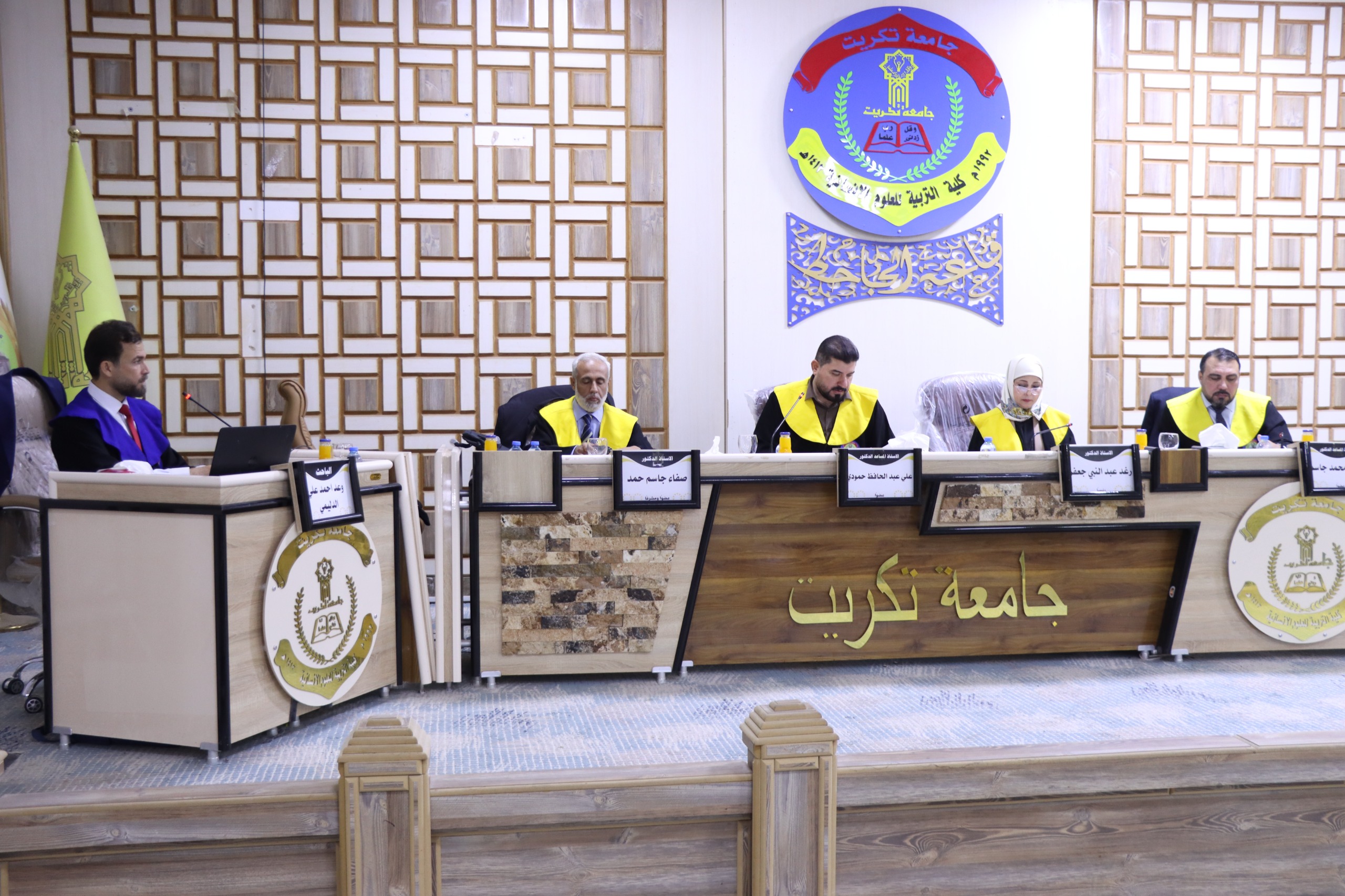
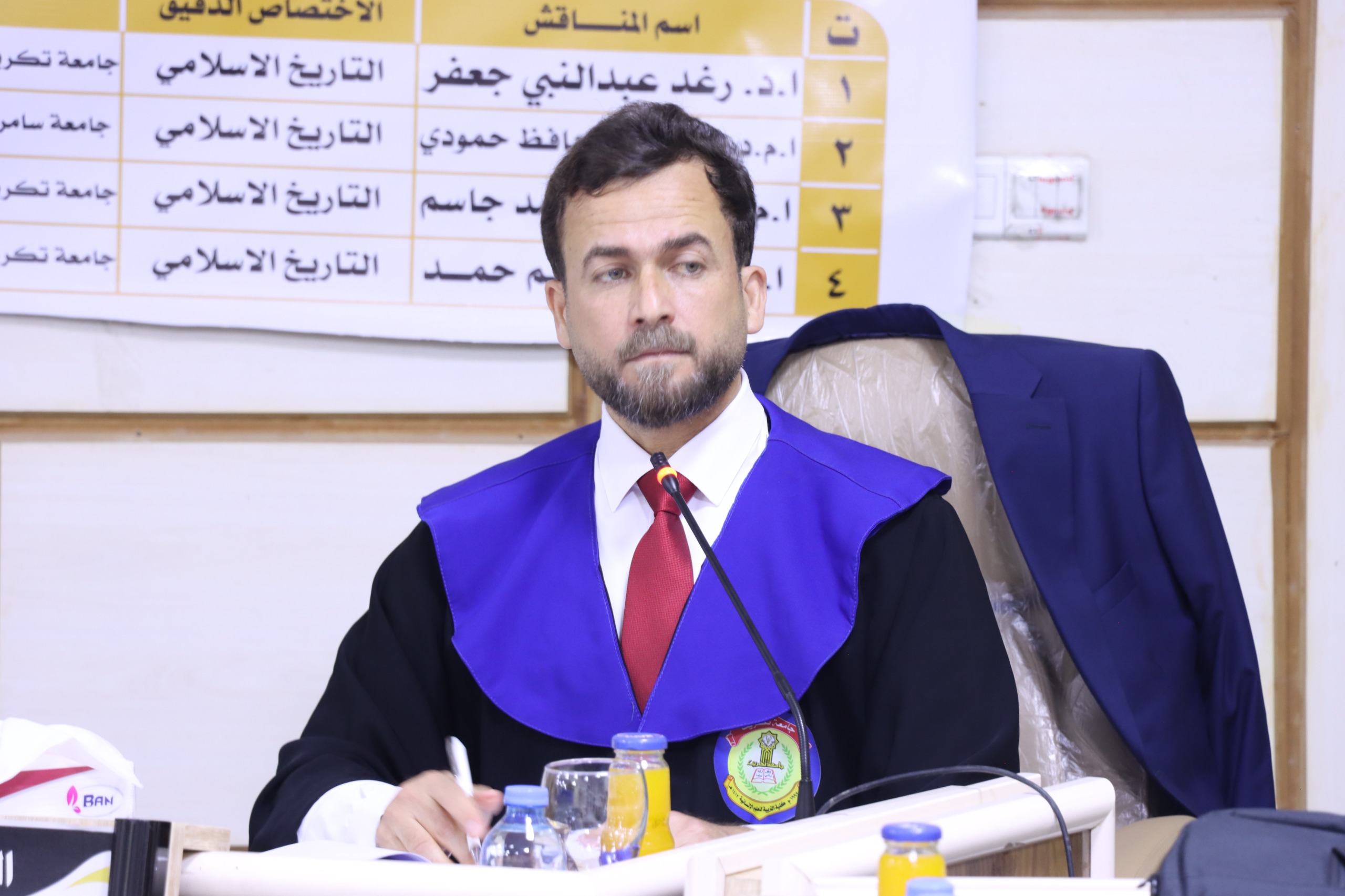
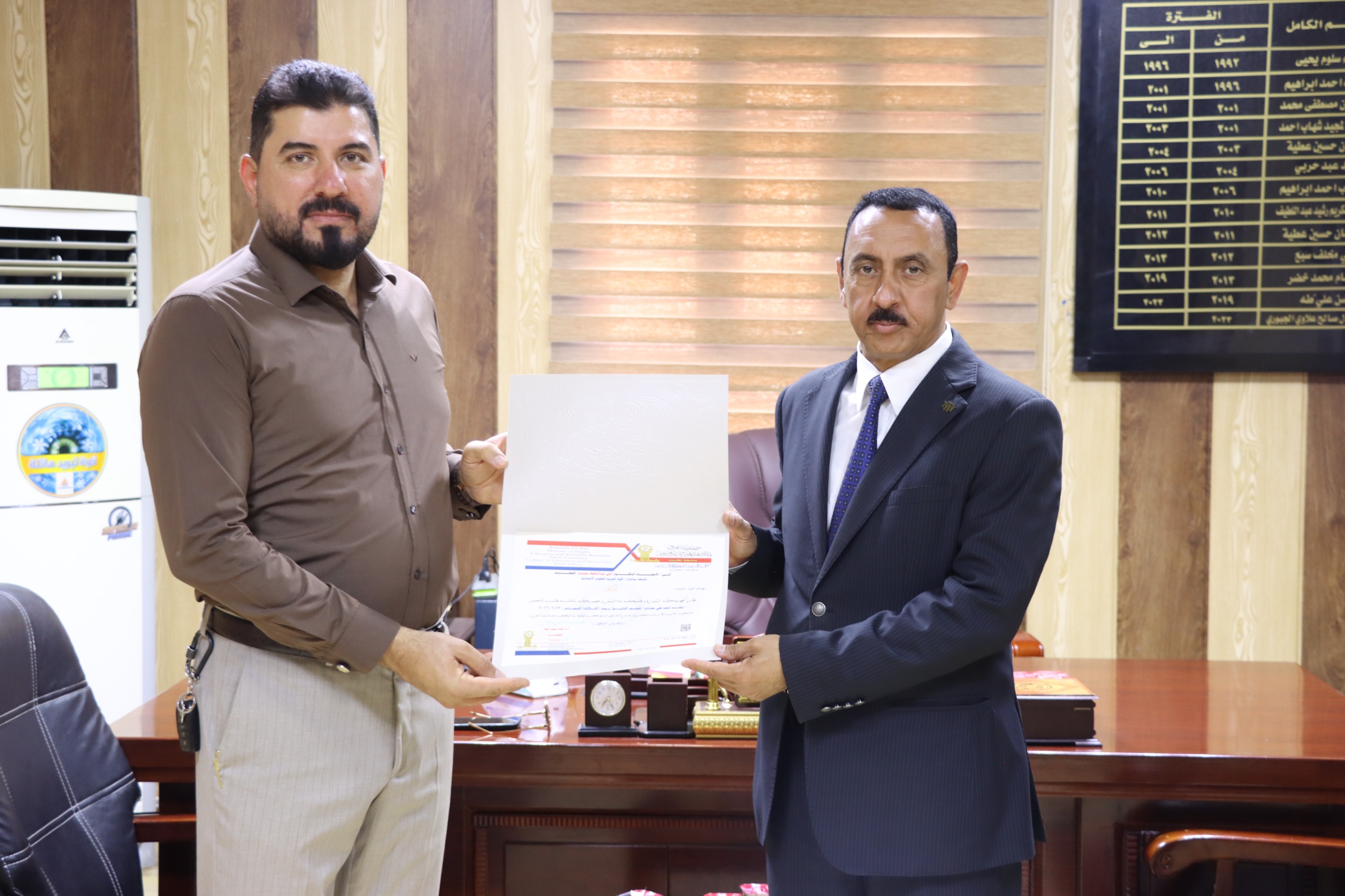
A Master’s thesis was defended at the Department of History, College of Education for Humanities, on Tuesday, June 23, 2026, by the student Waad Ahmed Ali Al-Dulaimi, entitled “The Prophetic Biography (The Madinan Period) Through Al-Tabari’s Jāmiʿ al-Bayān fī Tafsīr al-Qur’ān al-Karīm (d. 310 AH): A Historical Study.”
The thesis examines the life of Prophet Muhammad (peace be upon him) during his residence in Al-Madinah Al-Munawwarah, a period regarded as the most significant stage in the establishment of the first Islamic society. This era witnessed the transition of the Islamic call from the phase of doctrinal formation in Makkah to the phase of legislative and political empowerment in Madinah, representing the culmination of the foundation of the Islamic state and the consolidation of its principles.
The study relied primarily on the Qur’anic exegesis of Imam Muhammad ibn Jarir Al-Tabari as a principal source for investigating the events of the Prophetic biography. Al-Tabari, born in 224 AH in Tabaristan, was renowned for his vast scholarship, intellectual brilliance, dedication to the pursuit of knowledge, asceticism, and piety. He authored numerous influential works in Qur’anic exegesis, history, and the principles of Islamic jurisprudence. Among his most celebrated contributions is his monumental Qur’anic commentary, which constitutes the central source of this study.
The study reached several significant findings, including:
- State-building and the consolidation of its foundations: The study demonstrated that the Prophetic mission in Madinah progressed through integrated stages, beginning with the establishment of a cohesive society capable of confronting military and political challenges.
- Social and political transformation: The findings revealed that Prophet Muhammad (peace be upon him) successfully united the Arab tribes within a new value-based framework founded upon the principles of faith and brotherhood, replacing tribal partisanship and division.
- Jurisprudence of confrontation and the management of power: The study showed that, within the Prophetic methodology, power was employed as a means to achieve peace rather than as an instrument of oppression. The Prophet combined strategic planning with reliance upon Allah.
- Prophetic statesmanship and the art of negotiation: The research confirmed that political engagement and diplomatic skill constituted essential factors in the success and stability of the Islamic state.
- Internal cohesion as a prerequisite for empowerment: The study concluded that external victories were closely linked to the unity and stability of the internal front and the elimination of sources of treachery and discord.
The examination committee consisted of:
- Prof. Dr. Raghad Abdulnabi Jaafar – University of Tikrit, College of Education for Humanities (Chair)
- Asst. Prof. Dr. Ali Abdulhafidh Hamoudi – University of Samarra, College of Education for Humanities (Member)
- Asst. Prof. Dr. Subhi Mohammed Jassim – University of Tikrit, College of Education for Humanities (Member)
- Prof. Dr. Safaa Jassim Mohammed – University of Tikrit, College of Education for Humanities (Member and Supervisor)
Media and Government Communication Division
College of Education for Humanities – University of Tikrit